The Short Answer
If you're lifting weights or doing HIIT, you need a gym mat. If you're doing yoga or pilates, you need a yoga mat. If you're doing a bit of everything, read on, because the wrong mat will either slide out from under you or fail to protect your floor.
What's Your Workout?
This is the fastest way to decide. Find your workout style below:
- Weight training, deadlifts, kettlebells: Gym mat. You need thickness and density to absorb impact and protect flooring. Look for dense rubber around 15mm thick, heavy enough (a 1m x 1m mat weighs about 14kg) that it won't budge when you set a dumbbell down.
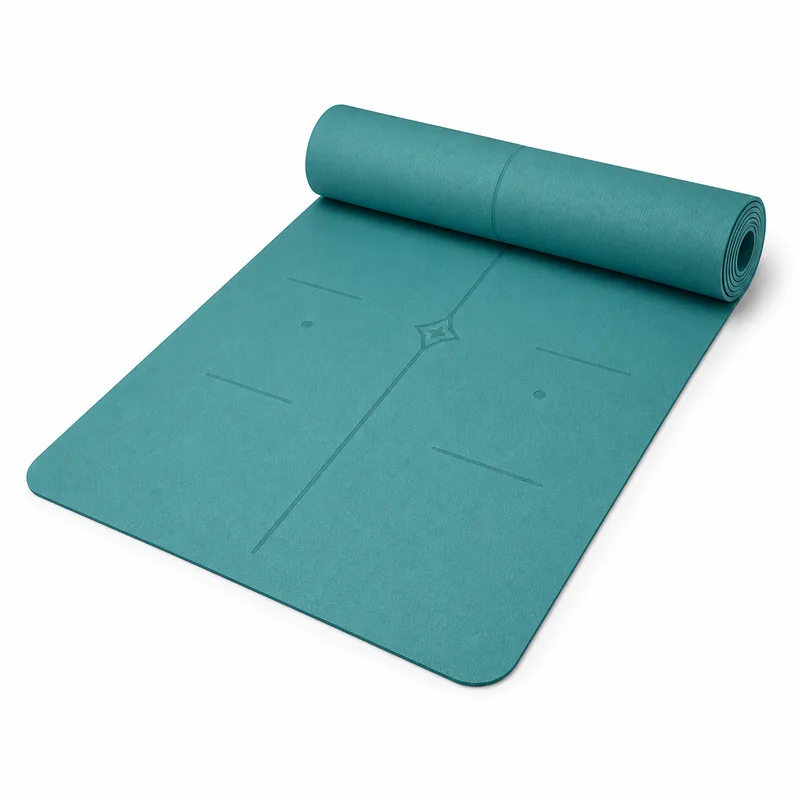
- Yoga, pilates, stretching: Yoga mat. You need grip, cushioning for joints, and a surface that doesn't slide on timber or tile. Our 6mm Non-Slip TPE Yoga Mat is non-slip on both sides.
- Mixed training (weights + bodyweight + stretching): Get both: a rubber gym mat where the weights live and a yoga mat for floor work and stretching.
- Full room coverage (garage gym, spare room): Interlocking foam tiles. They cover any area and provide consistent padding across the whole space.
- 360-degree movement (functional training, animal flow): A circular rubber mat, around 1.2m across, gives you equal reach in every direction without worrying about stepping off an edge.
Head-to-Head Comparison
Thickness & Density
This is where gym mats and yoga mats differ most. Gym mats are thicker and denser to absorb impact from weights hitting the floor. Yoga mats are thinner to keep you close to the ground for balance poses.
- Rubber gym mat: Heavy-duty rubber, often recycled, commonly sold in 1m × 1m squares around 15mm thick and 14kg. That density absorbs a set-down dumbbell without bouncing and won't compress underfoot, so you get a stable platform for squats and deadlifts.
- 6mm Non-Slip TPE Yoga Mat: 6mm thick, which is the sweet spot for yoga. Thin enough for balance (tree pose, warrior III) but thick enough to cushion knees during lunges and tabletop positions.
- Foam tiles: EVA foam, interlocking. Softer than rubber, which makes them comfortable for bodyweight work but less ideal for heavy lifting. The foam can compress under heavy loads over time.
- Round rubber mat: The same rubber construction as a square gym mat, in a circle about 1.2m across. Same density, different shape.
Material Comparison
- Recycled rubber (most gym mats): Usually made from recycled car tyres. Extremely durable, naturally grippy, absorbs shock. Has a slight rubber smell when new that fades within a week or two.
- PVC (many yoga mats): Cheap to produce, decent grip. Not great for the environment. Tends to get slippery when wet with sweat.
- TPE (our yoga mat): Thermoplastic elastomer. Better grip than PVC, especially when wet. Lighter, latex-free and PVC-free. Our 6mm mat is a double-layer TPE build.
- EVA foam (foam tiles): Soft, lightweight, affordable. Good for general exercise areas. Won't survive heavy dumbbell drops as well as rubber, but covers large areas cheaply.
Can You Use a Yoga Mat for Weight Training?
Not ideal. Yoga mats are designed to be lightweight and portable, they're typically 1-2kg. A dropped dumbbell will punch right through a 6mm yoga mat and damage your floor underneath. The mat itself will also get dented and compressed where the weights land. For bodyweight exercises like push-ups and planks, a yoga mat works fine. For anything involving free weights, you need something denser.
Can You Use a Gym Mat for Yoga?
You can, but it's not great. A rubber gym mat is grippy enough for basic poses, but a 1m × 1m square is too short for most yoga flows, which need the full length of a yoga mat (1.7m+). The surface texture is also different: gym mats prioritise durability over the soft, sticky feel that keeps your hands and feet planted in downward dog.
Our Yoga Mat
Our Recommendation
- Weight training at home: a dense rubber gym mat, 15mm or thicker, under your dumbbell station to protect the floor and give you a solid platform.
- Yoga or pilates: the 6mm Non-Slip TPE Yoga Mat ($60, delivery included to most of Australia). It grips on both sides, so it won't slide on timber or tile.
- Full garage gym conversion: interlocking foam tiles to cover the area, with a rubber mat on top for your lifting station.
- Functional training or martial arts: a round rubber mat suits any workout where you rotate, pivot, or move in multiple directions.
- Tight budget, mixed workouts: start with the mat that suits most of your sessions. If that is mostly floor work and stretching, a yoga mat; if it is mostly weights, rubber.
Related Guides
- Gym Mat Thickness Guide: how thick does your mat actually need to be?
- Best Home Gym Mats Australia: full ranking of gym mats by use case
- Garage Gym Flooring Australia: covering an entire garage
- How to Clean Gym Equipment: maintenance tips to make your mat last
- Circular Gym Mat Benefits: why round mats work for functional training
- Bodyweight vs Weights: Which Is Better for Home Training?: Bodyweight vs weights for home training: honest pros, cons and science.
- Thick vs Thin Yoga Mat: Which Is Right for You?: Thick vs thin yoga mat compared, stability vs joint comfort, which thickness suits your style of yoga and...
Found Your Mat?
Delivery is calculated by postcode in the cart, and we deliver within Australia.
Shop Mats