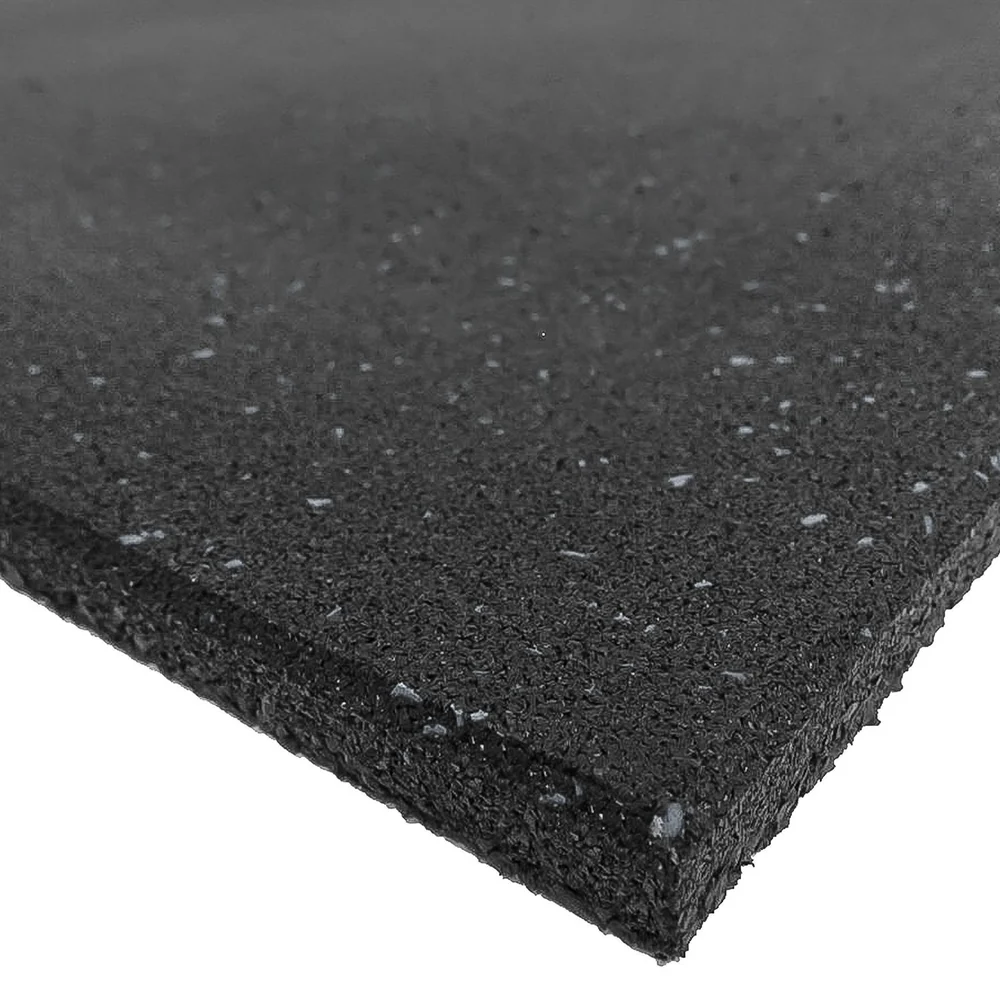
Short answer: a gym mat for home use with dumbbells and kettlebells should be 15 to 20mm thick and made of dense rubber. Yoga, Pilates and bodyweight work need only 4 to 8mm. HIIT, skipping and light dumbbell circuits sit comfortably at 10 to 15mm. Only Olympic lifting and deliberately dropped barbells need 25mm or more, and at that point you are shopping for stall mats, not a home gym mat. Thickness on its own is not the whole story. A 20mm EVA foam tile compresses to almost nothing under a 20kg dumbbell, while 15mm of tyre rubber does not. Density decides how a mat performs; thickness decides how much cushioning you feel.
Thickness by Exercise Type
| Training | Thickness | Material | Why |
|---|---|---|---|
| Yoga, Pilates, stretching | 4 to 8mm | TPE or PVC yoga mat | Thin enough to balance on, grippy, cushions knees and wrists |
| Bodyweight, HIIT, skipping | 10 to 15mm | EVA foam or rubber | Absorbs repeated landings without feeling spongy |
| Dumbbells, kettlebells, bands | 15 to 20mm | Dense rubber | Stable under load, protects timber and tile from a set-down weight |
| Barbell, deadlifts, drops | 25mm or more | Vulcanised rubber stall mat | Spreads the shock of a dropped bar across the slab |
Bodyweight and Yoga (4 to 8mm)
Thin mats keep you close to the floor so single-leg balances and plank variations feel stable. They protect knees and elbows during floor work but do nothing for a dropped weight. Our 6mm Non-Slip TPE Yoga Mat is 6mm, which is the middle of this range: thick enough for kneeling lunges, thin enough for tree pose.
General Fitness (10 to 15mm)
Light dumbbell circuits, band work, burpees and skipping. Interlocking foam tiles suit this range because you can cover a whole corner of the room, and the softness is welcome when you are on your back or knees a lot. Foam is the wrong choice once dumbbells go past about 10kg, because it compresses and the weight rocks.
Free Weights and Kettlebells (15 to 20mm)
This is where most home gyms live. Look for dense rubber, ideally recycled tyre rubber at around 14kg per square metre, so the mat does not creep across the floor when you set down a 20kg pair. Go to 20mm if you swing kettlebells or move in every direction.
Heavy Lifting and Drops (25mm or more)
If you deadlift a loaded barbell and let it go from the top, or do Olympic lifts, you need 25mm or thicker stall mats laid over concrete, and ideally a platform. A 15mm mat is not designed for that job. Most people who think they need this actually set their weights down under control, and 15 to 20mm covers them.
Floor Type Changes the Answer
- Concrete garage: 15mm minimum for dumbbells, 20mm if you train with kettlebells or drop anything. Concrete has no give, so the mat provides all of it.
- Timber and floating floors: 15mm minimum. Timber dents from a corner strike, and floating boards can crack at the join. Rubber spreads the load.
- Tile: 20mm minimum. Tiles crack rather than dent, and a cracked tile is a repair job, not a mark.
- Carpet: 10 to 15mm of dense rubber. Carpet already cushions; the problem is instability. A firm mat gives you a flat platform for squats and presses.
Density Matters More Than Thickness
Two mats of the same thickness can behave completely differently. EVA foam weighs roughly 100 to 150 grams per litre; tyre rubber weighs around 1,000 grams per litre. That tenfold difference is why a 15mm rubber mat stops a 15kg dumbbell dead while a 20mm foam tile lets it sink to the floor. When you compare mats, check the weight. A 1m x 1m mat under 5kg is foam, whatever the listing says.
Does Body Weight Change the Recommendation?
Slightly. Heavier lifters over about 100kg put more force through the mat during jumps and landings, and can feel a thin mat bottom out. Go to the top of each range: 8mm for yoga, 15mm for HIIT, 20mm for weights. The same applies if you train barefoot, because you lose the cushioning of a shoe sole.
Common Mistakes
- Buying a thick foam mat for weights. It feels plush in the shop and rocks under a squat.
- Using a yoga mat under dumbbells. It tears at the first corner strike and offers no floor protection.
- Stacking two thin mats. They slide against each other and create a trip hazard.
- Choosing thickness for noise. Density and weight reduce noise more than thickness does. A 14kg rubber mat is quieter than a 30mm foam one.
Frequently Asked Questions
Is a 10mm gym mat thick enough for dumbbells?
For dumbbells up to about 10kg that you set down under control, a dense 10mm rubber mat is fine. Beyond that, move to 15mm. A 10mm foam mat is not enough for any dumbbell work.
Is a 15mm mat enough for a home gym?
Yes, for dumbbells, kettlebells, bands and bodyweight training. Only barbell drops need more.
Are thicker gym mats always better?
No. Past 20mm, a mat becomes less stable to stand on for pressing and squatting unless it is very dense. Thickness beyond what your training needs adds cost and weight without protecting the floor any better.
How thick should a gym mat be for a treadmill or bike?
Cardio machines need 6 to 10mm of firm rubber to spread the load and stop vibration. See our guide to mats for exercise bikes and treadmills.
Related Guides
- Gym Mat Size Guide: What Size Mat Do You Need?: A practical gym mat size guide, how much floor you really need for dumbbells, cardio machines, yoga and full...
- How Much Does a Home Gym Cost in Australia? (2026): Realistic home gym costs in Australia for 2026, starter, intermediate and full setups with itemised AUD...
- Gym Mat vs Yoga Mat: Which One Do You Need?: Not sure whether you need a gym mat or yoga mat?
- Home Workout Essentials: The Only Checklist You Need: The home workout essentials checklist: a dense rubber mat, one or two pairs of rubber hex dumbbells,...
- Best Yoga Mat in Australia: Thickness, Grip & Materials: How to choose the best yoga mat in Australia, ideal thickness, grip, material and length for your style of...
- Yoga for Beginners at Home: Start yoga at home with zero experience.
Ready to Gear Up?
Browse our full range of fitness gear, shipped from Australian warehouses.
Shop Now