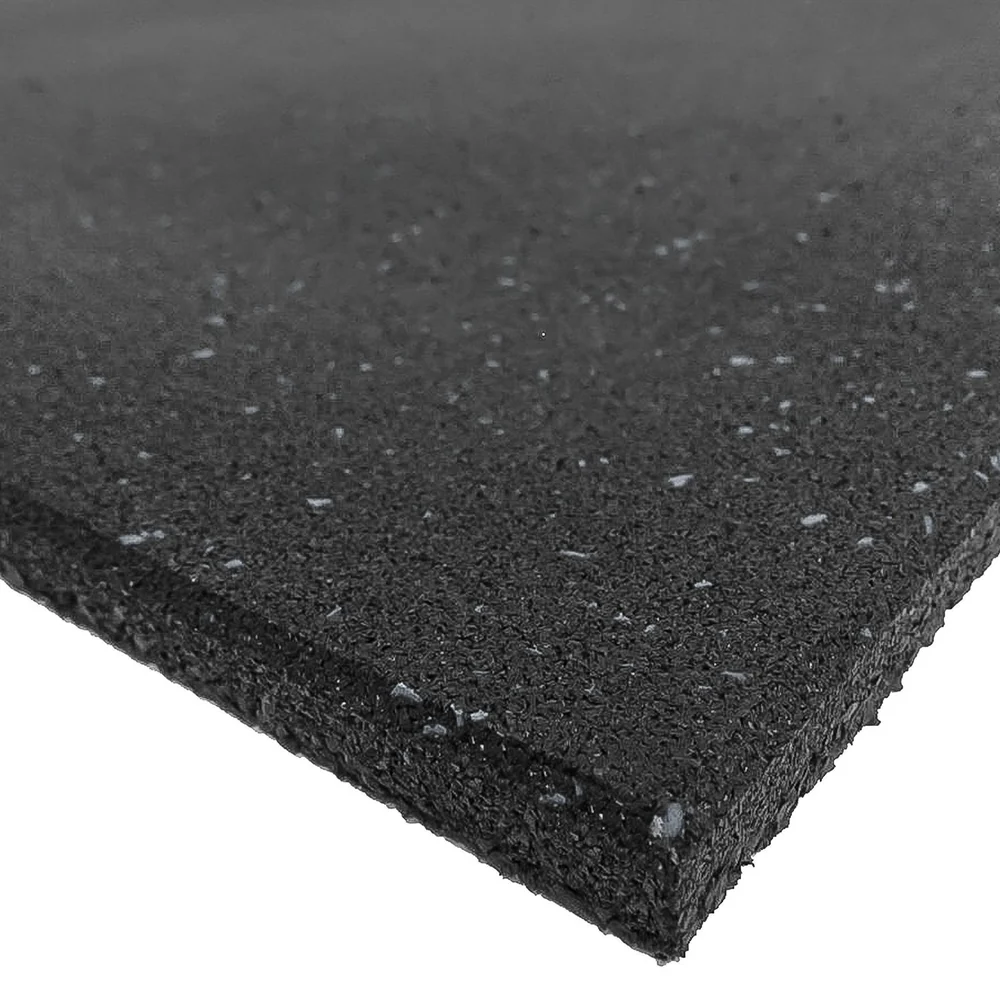
Short answer: put dense rubber where weights land and cheaper foam tiles everywhere else. For a typical single-car garage corner, that means one or two 1m x 1m rubber mats under the dumbbell or kettlebell station and a run of interlocking EVA tiles for the cardio and stretching area. Rubber handles Australian garage heat, moisture coming up through the slab and set-down weights. Foam is light, cheap per square metre and comfortable, but compresses under anything heavier than a 10kg dumbbell. Lay everything loose on a clean, dry slab with a small expansion gap at the walls. Budget roughly $80 to $90 per square metre for rubber and $45 per square metre for foam tiles.
Why Garage Floors Are Different in Australia
An uninsulated garage in Perth, Adelaide or western Sydney can sit above 40 degrees on a summer afternoon. Cheap foam softens and off-gasses in that heat, and adhesives let go. In winter, moisture wicks up through an unsealed slab and sits under a mat, which is where mould starts on foam. Concrete also has no give at all, so every impact goes into the weight, the floor or your joints. Flooring has to do three jobs: protect the slab, protect the equipment, and stay flat through the seasons.
Garage Gym Flooring Options Compared
| Option | Cost per m² | Heat and moisture | Dropped weights | Comfort | Verdict |
|---|---|---|---|---|---|
| Recycled rubber mats (15 to 20mm) | About $80 to $90 | Unaffected | Excellent | Firm | Under any station with weights |
| EVA foam tiles | About $45 | Softens in heat, can hold moisture | Poor above 10kg | Soft | Cardio, stretching, general cover |
| Roll-out rubber (6 to 8mm) | $40 to $70 plus freight | Good | Fair | Firm | Whole-garage cover if you can handle 100kg rolls |
| Bare sealed concrete | $0 | Fine | Chips, cracks, ruins dumbbells | None | Not for weights |
| Carpet offcuts | Cheap | Holds moisture, mould risk | Poor | Soft | Avoid |
Rubber Mats: The Lifting Zone
Dense rubber mats, typically 1m x 1m, 15mm thick and around 14kg, are usually made from recycled tyre rubber, the same material that survives years on a highway. They do not soften in heat, do not absorb water, and spread the load of a set-down 25kg dumbbell so the slab does not chip. Two of them side by side make a 2m x 1m station for pressing, rows, squats and deadlifts with dumbbells. A round rubber mat about 1.2m across and 20mm thick suits a kettlebell station in the middle of the floor.
Foam Tiles: The Rest of the Floor
Interlocking EVA tiles cover area cheaply and are comfortable for burpees, skipping, stretching and rolling. Buy them for everywhere weights do not land. Keep them out of the hottest part of the garage if you can, and lift a tile every few months to check for moisture underneath.
Roll-out Rubber
Commercial gyms use 6 to 8mm rolled rubber over the whole floor. It works in a garage too, but the rolls weigh 80 to 120kg, freight to regional Australia is expensive, and at 6mm it still needs a thicker mat under a drop zone. For most home garages, mats plus tiles cost less and are easier to move if you rent.
How Much Flooring Do You Need?
- Dumbbell station: 1m x 1m rubber mat, or 2m x 1m if you do floor presses and rows lying down.
- Kettlebell or functional area: a 1.2m round mat or a 1.5m x 1.5m square of rubber.
- Cardio and stretching: 2m x 2m of foam tiles (that is about 11 tiles at 60cm).
- Whole single-car garage bay: about 15 square metres. Rubber everywhere would be around $1,300; the mixed approach above is usually $300 to $500.
Installing on Concrete
- Sweep, then mop with a mild degreaser. Old oil stains under a mat will eventually soften rubber.
- Let the slab dry for a full day. If the garage floods or sweats, seal the concrete first.
- Lay mats and tiles loose. Their weight holds them. No glue, which matters if you rent.
- Leave a 5 to 10mm gap at the walls so foam can expand in summer.
- Put rubber where the weights live and foam around it. Do not stack foam under rubber; the foam compresses unevenly and the rubber rocks.
Noise, Neighbours and Shared Walls
Concrete transmits impact noise through the slab into adjoining rooms and, in townhouses, into the neighbour's wall. Mass stops it. A 14kg rubber mat under a dumbbell station makes far more difference than 30mm of foam. If noise is the main complaint, add a second layer of rubber under the drop zone rather than more foam.
Frequently Asked Questions
What is the best flooring for a garage gym in Australia?
Dense rubber mats of 15 to 20mm where weights are used, with EVA foam tiles for the rest of the area. Rubber handles the heat, moisture and impact that Australian garages deal with.
Can I put gym mats straight on concrete?
Yes. Clean and dry the slab and lay them loose. Rubber mats are heavy enough to stay put without adhesive.
Do foam tiles work in a hot garage?
They work for light use but soften in extreme heat and can trap moisture against the slab. Keep weights on rubber and check under the tiles a few times a year.
How thick should garage gym flooring be?
15mm dense rubber for dumbbells and kettlebells, 20mm if you drop anything, 25mm or more only for loaded barbell drops. Foam thickness matters less because it compresses.
Installation Tips for Concrete Garage Floors
- Clean the concrete thoroughly, sweep, then mop with a mild degreaser
- Let the floor dry completely (24 hours minimum)
- Lay mats or tiles without adhesive, gravity and weight do the work
- Leave a small gap at walls for expansion in heat
- If using foam tiles, place rubber mats in heavy lifting zones for extra protection
Related Guides
- How to Set Up a Garage Gym in Australia: Set up a garage gym in Australia, handling concrete floors, heat and humidity, the right rubber flooring, and...
- Home Gym Flooring Options Compared (Australia): Every home gym flooring option compared for Australia, rubber mats, foam tiles, rubber rolls and stall mats.
- Noise-Reducing Gym Flooring for Apartments (Australia): How to stop your home workout annoying the neighbours below, why gym noise travels and the flooring that...
- Yoga for Beginners at Home: Start yoga at home with zero experience.
- Women's Home Gym Essentials Australia: The home gym equipment guide for Australian women.
- What Size Dumbbells Should I Buy?: Find your perfect dumbbell weight with our decision guide.