The Trade-Off in One Sentence
Thinner mats give stability and floor feel; thicker mats give joint cushioning at the cost of balance. Every other detail flows from that single tension. The right thickness depends on which you need more, and for most people, the answer is a middle ground, not an extreme.
Thin Mats (3-4mm)
Best for: balance-heavy and standing practice (vinyasa, power yoga, ashtanga), travel, and anyone who wants maximum stability and connection to the floor.
Trade-off: minimal padding, kneeling, seated and spine-on-floor poses can be uncomfortable on hard surfaces, and they're tough on sensitive knees.
Thick Mats (8mm+)
Best for: restorative and gentle yoga, Pilates, sensitive knees/wrists/spine, and floor-based practice with lots of kneeling and lying work.
Trade-off: standing balances feel wobbly because your foot sinks and destabilises, a real problem in tree, warrior III and arm balances. Heavier and bulkier to roll and carry.
The Middle Ground (5-6mm), Why Most Should Buy It
A 5-6mm mat is the answer for the majority because it refuses to be terrible at either job: enough cushion that knees and spine survive floor work, enough firmness that standing balances stay stable. Unless your practice is strongly specialised toward either pure power yoga (go thinner) or pure restorative/Pilates (go thicker), 5-6mm is the safe, versatile choice and the reason it's the standard premium thickness.
Match Thickness to Your Practice
- Vinyasa / power / ashtanga / lots of balances → 3-5mm
- General / mixed home practice → 5-6mm (the default)
- Restorative / gentle / Pilates / sensitive joints → 6-8mm+
- Bad knees doing a mixed practice → 6mm mat + a folded towel or block under the knee for direct-contact poses, rather than going very thick and losing stability
Don't Solve Joint Pain With Extreme Thickness
The common mistake: buying a very thick mat to fix knee pain, then wobbling through every standing pose. Better approach, a stable 5-6mm mat plus targeted padding (a folded towel, a block, or knee pads) only where direct contact hurts. You keep stability everywhere and add cushion exactly where it's needed.
Our Recommendation
For almost everyone: the 6mm Premium Yoga Mat ($59), the versatile middle ground that's stable enough for balances and cushioned enough for floor work. Add Yoga Blocks ($25) for targeted support in poses you can't yet reach. Only go thinner for dedicated power yoga or thicker for dedicated restorative/Pilates.
Recommended Gear
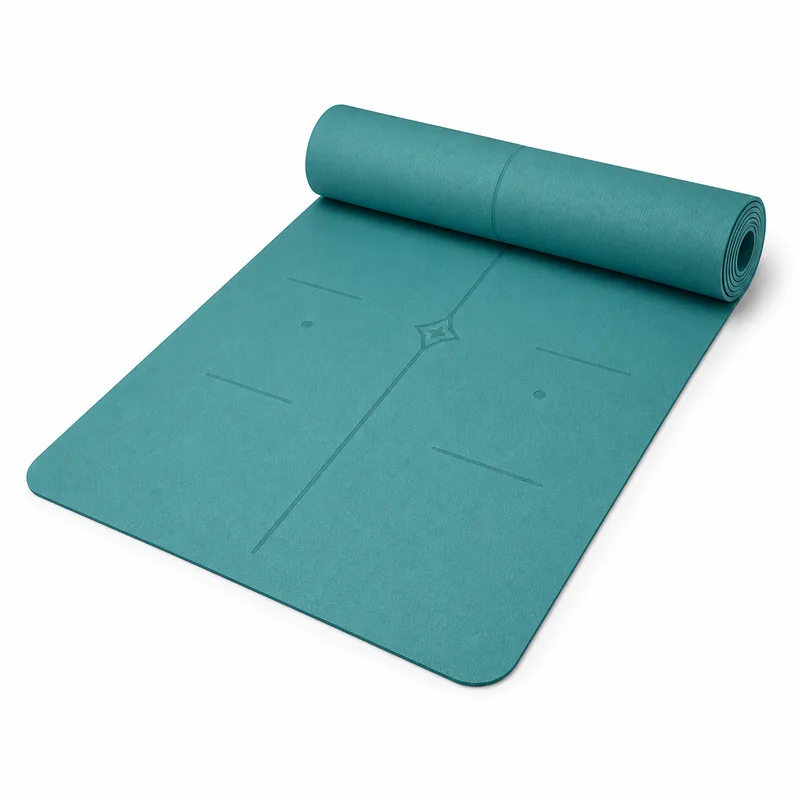
6mm non-slip mat with alignment marks, grippy and supportive for yoga, Pilates and floor work.
$59 Yoga BlocksBring the floor closer in tight poses, essential beginner support.
$25 Interlocking Foam Tiles (4-Pack)EVA tiles, 60×60cm, soft, expandable, ideal for a quiet floor-work zone.
$65 Yoga StrapExtend reach in stretches and deepen flexibility safely.
$15 PeterMat RoundCircular mat for mobility, kettlebell and stretching zones.
$89 Carrying StrapRoll and carry a mat to class or the park in one hand.
$18Frequently Asked Questions
Is a thick or thin yoga mat better?
Thin gives stability and floor feel (best for balance-heavy practice); thick gives joint cushioning at the cost of balance (best for restorative/Pilates and sensitive joints). For most people a 5-6mm middle ground is best.
What yoga mat thickness is best for bad knees?
A stable 5-6mm mat plus targeted padding (folded towel, block or knee pads) under the knee for direct-contact poses. Going very thick to fix knee pain just makes every standing balance wobbly.
What thickness for power or vinyasa yoga?
3-5mm. Balance-heavy, standing-dominant practice needs stability and floor connection, which a thinner mat provides. Thick mats make warrior III and arm balances feel unstable.
What thickness for restorative yoga or Pilates?
6-8mm or more. These practices are floor- and kneeling-dominant with few standing balances, so joint cushioning matters more than stability.
Why is 6mm the most common premium thickness?
Because it isn't bad at either job, enough cushion for knees and spine in floor work, enough firmness for stable standing balances. Unless your practice is strongly specialised, it's the safe versatile choice.
Can one mat cover all styles of yoga?
A 6mm mat covers general, mixed home practice well. Only highly specialised practice (pure power yoga or pure restorative/Pilates) benefits from going to a thickness extreme.
Related Guides
- Best Yoga Mat Australia: the full buying guide
- Gym Mat vs Yoga Mat: different tools entirely
- Best Mat for Pilates: Pilates-specific
- Best Mat for Bad Knees: joint-friendly choice
- Yoga for Beginners: starting out
The Versatile Middle Ground
The 6mm Premium Yoga Mat ($59) is stable enough for balances and cushioned enough for floor work, the right thickness for most.
Shop Now