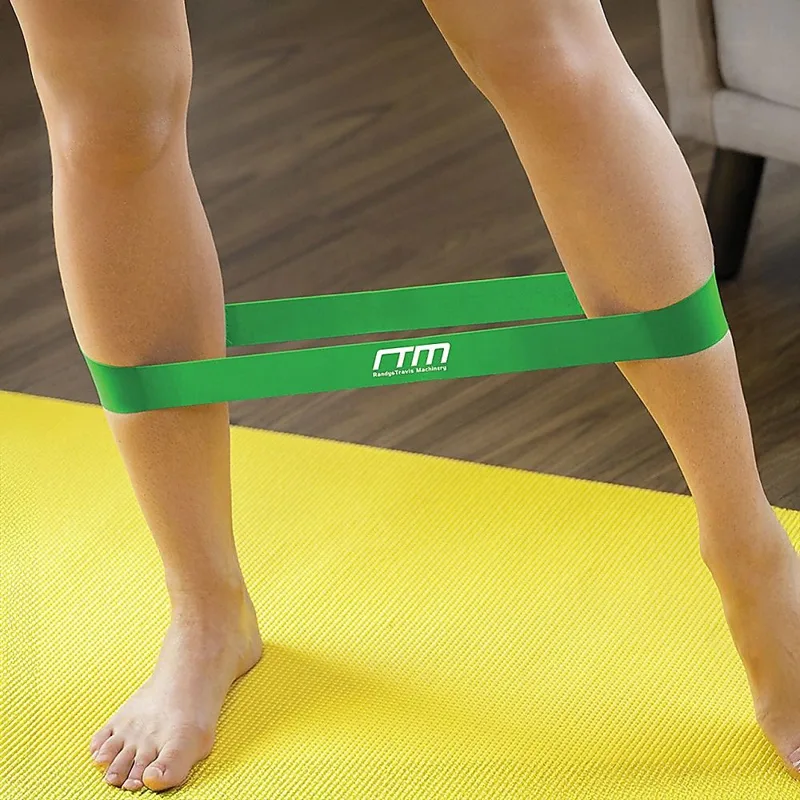
Short answer: resistance bands build strength because tension rises as the band stretches, so the hardest part of every rep is at the top of the movement where your muscles are strongest. A 5-pack of bands from extra-light to extra-heavy covers rehab work through to assisted pull-ups and heavy squats. Train three times a week with 3 sets of 12 to 15 reps, moving to a heavier band when 15 reps feel easy. Bands are not a replacement for dumbbells in heavy lower-body work, but combined with one pair of dumbbells they cover a complete program in a space the size of a doormat.
Why Resistance Bands Work
A dumbbell weighs the same at every point in a rep. A band gets harder the further you stretch it. That matching curve, light at the bottom where you are weak and heavy at the top where you are strong, is why bands feel easy on joints and hard on muscles. Bands also load movements that dumbbells cannot, such as pull-aparts, lateral walks and anything pulled horizontally. The downside is a ceiling on load: an extra-heavy band gives roughly 20 to 25kg of resistance at full stretch, so squats and deadlifts eventually need dumbbells.
Which Band for Which Exercise
| Band | Approximate resistance | Use it for |
|---|---|---|
| Extra light (yellow) | 2 to 5kg | Rehab, face pulls, rotator cuff, warm-ups |
| Light (red) | 5 to 8kg | Lateral raises, curls, front raises, glute activation |
| Medium (green) | 8 to 12kg | Rows, presses, squats for beginners, pull-aparts |
| Heavy (blue) | 12 to 18kg | Chest press, deadlifts, squats, seated rows |
| Extra heavy (black) | 18 to 25kg | Assisted pull-ups, heavy squats, good mornings |
Resistance figures are approximate and depend on how far the band is stretched. Our Resistance Bands Set (5-Pack) includes all five. Fabric loop bands suit glute and hip work because they do not roll, and the Leg Resistance Band Set adds short clip-on bands and ankle straps for kickbacks and side leg raises.
20-Minute Full-Body Band Workout
Three rounds, 12 to 15 reps each, 45 seconds rest between exercises. Start with the medium band and adjust.
- Banded squat: stand on the band, hold the ends at your shoulders, sit back and down, drive up.
- Banded row: anchor the band at waist height (a door anchor or a post), pull to your ribs with elbows tucked.
- Banded chest press: band around your upper back, press both hands forward until your arms are straight.
- Banded Romanian deadlift: stand on the band, hinge at the hips with a flat back, stand tall and squeeze your glutes.
- Band pull-apart: hold the band at shoulder height, pull it apart until it touches your chest.
- Banded lateral raise: stand on the band, raise your arms to the side to shoulder height.
- Banded curl: stand on the band, curl to your shoulders without swinging.
Lower-Body and Glute Session
- Lateral band walks with a fabric loop above the knees, 15 steps each way
- Glute bridge with the loop above the knees, 15 reps, pressing knees out
- Banded squat, heavy band, 12 reps
- Banded good morning, heavy band around the back of the neck and under the feet, 12 reps
- Standing kickbacks with the loop around the ankles, 15 each leg
- Clamshells with the loop above the knees, 20 each side
How to Progress
- Move to the next band when you can do 15 clean reps.
- Shorten the band by gripping lower or standing wider to raise tension.
- Double up two bands for squats and deadlifts before moving to dumbbells.
- Slow the lowering phase to three seconds; bands make this brutal.
- Add a pause at the point of highest tension.
Bands Plus Dumbbells
The best home setup uses both. Bands for warm-ups, pull-aparts, face pulls, glute activation and finishers; rubber hex dumbbells for goblet squats, Romanian deadlifts, rows and presses once band tension stops being enough. A 10kg pair and a 5-pack of bands is $173 and covers a full program on a single rubber mat.
Looking After Bands
Check for nicks before each session, keep bands out of direct sun, and never stretch a band more than about two and a half times its resting length. Latex bands last years with that treatment. Anchor bands on smooth surfaces; a door anchor is safer than a hinge.
Frequently Asked Questions
Can you build muscle with resistance bands only?
Yes for beginners and for upper-body and glute work at any level. Heavy lower-body strength eventually needs dumbbells because an extra-heavy band tops out around 25kg of resistance.
How often should I do resistance band workouts?
Three full-body sessions a week with a day between them. Bands are joint-friendly, so daily light work such as pull-aparts and glute activation is fine.
Which resistance band should a beginner start with?
The medium (green) band for most exercises, the light band for shoulders and arms. A 5-pack gives you room to progress without buying again.
Are resistance bands or dumbbells better?
They do different jobs. Bands are better for warm-ups, shoulder health, glute work and travel. Dumbbells are better for heavy squats, deadlifts and presses. Most people should own both.
5 levels, light to extra heavy
$59 Fabric Loop Bands (3-Pack)Non-slip, great for glutes
$30 Leg Resistance Band Set (13 Piece)Short bands, ankle straps, pouch
$52Related Guides
- Resistance Bands Buying Guide (Australia): A resistance bands buying guide for Australia, loop vs tube vs fabric bands, tension levels, and the cheapest...
- Resistance Bands vs Dumbbells: Which Should You Buy?: Resistance bands vs dumbbells, honest comparison for home gym buyers.
- Fitness Gift Ideas for Every Budget: Fitness gift ideas for Australians at every budget: resistance bands and massage balls under $30, dumbbells...
- The 15-Minute Home Workout That Maximises Every Minute: Six 15-minute home workouts designed to maximise results in minimum time.
- Yoga for Beginners at Home: Start yoga at home with zero experience.
- Women's Home Gym Essentials Australia: The home gym equipment guide for Australian women.
Ready to Gear Up?
Browse our range of fitness gear, shipped from Australian warehouses. Delivery is calculated by postcode in the cart.
Shop Now