Why Recovery Equipment Matters
Here's the thing most people get wrong about getting fitter: you don't get stronger during a workout. You get stronger between workouts, when your muscles repair and adapt. Without proper recovery, you're limited to training 2-3 times a week because you're too sore to move. With proper recovery, you can train 4-5 times a week, and each session is better because you're starting fresh instead of stiff.
Recovery tools aren't luxury items. They're the difference between consistent training and constant soreness. Five minutes of rolling after a workout can cut next-day soreness in half. A massage gun before bed can turn a two-day recovery into one. Over months, that adds up to dozens more training sessions and significantly better results.
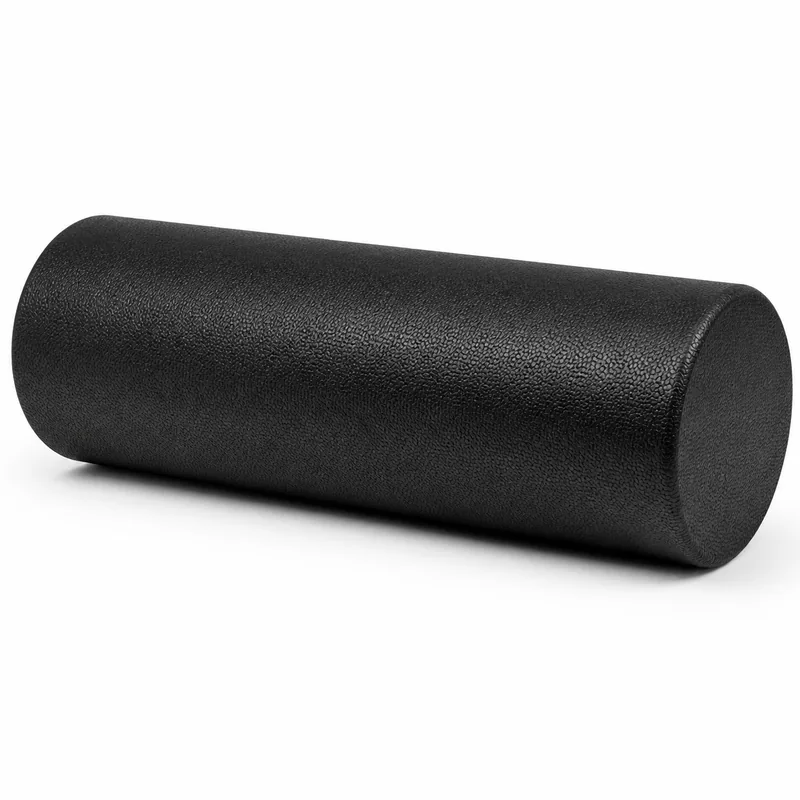
#1 Foam Roller, Best Overall Value
Why it's #1: If you buy one recovery tool, make it this one. A foam roller covers the most muscle area in the least time. Roll your quads, hamstrings, calves, IT band, upper back, and glutes in under five minutes. The firm EVA surface provides myofascial release, essentially a deep tissue massage you can do yourself, any time, for free after the initial purchase.
Best for: Post-workout cooldowns, reducing next-day soreness (DOMS), improving mobility before training, breaking up tight spots in the upper back and legs.
How to use it: Place the roller on the floor, position the target muscle on top, and slowly roll back and forth using your body weight. When you find a tender spot, pause on it for 20-30 seconds. It shouldn't be pleasant, but it shouldn't be agonising either. If it's excruciating, you're pressing too hard. For a full routine, see our foam roller recovery guide.
#2 Massage Gun, Best Targeted Relief
Why it's #2: A massage gun is the precision instrument to the foam roller's broad brush. Where a foam roller covers large muscle groups quickly, a massage gun lets you zero in on a specific knot, trigger point, or tight spot with percussive therapy. The rapid pulses penetrate deeper into muscle tissue than static pressure alone. Thirty speed levels and six interchangeable heads mean you can adjust intensity and coverage for any body part.
Best for: Deep knots in shoulders and neck, targeted glute and hip release, pre-workout muscle activation, travel recovery (it's portable).
How to use it: Start on the lowest speed. Float the gun over the target muscle, don't press it in hard. Let the percussion do the work. Spend 30-60 seconds per muscle group. Use the round head for large muscles, the bullet head for deep trigger points, and the flat head for broad coverage. Never use a massage gun directly on bones, joints, or your spine. Full details in our massage gun benefits guide.
#3 A Massage Ball, Best for Trigger Points
Why it's #3: Massage balls get into places a foam roller can't reach. Between your shoulder blades, under your feet, deep in your glutes, around your hip flexors, these small, dense balls concentrate your body weight into a tiny contact point for intense, targeted release. If you buy one, a set with more than one density lets you start soft and work up to firm as your tolerance builds. A tennis ball works as a soft starter.
Best for: Plantar fasciitis (under the foot), upper back knots between the spine and shoulder blade, piriformis tightness deep in the glute, and tight forearms from desk work or grip training.
How to use it: Place the ball between your body and the floor (or a wall for upper back work). Find the sore spot, apply pressure with your body weight, and hold for 30-60 seconds until the tension releases. The soft ball is for sensitive areas, the firm ball is for dense muscles like glutes and quads.
#4 Yoga Stretch Strap, Best for Post-Workout Stretching
Why it's #4: Rolling loosens tissue, and stretching uses the range you get back. A strap lets you hold hamstring, shoulder and hip stretches you can't reach on your own. The 10 fixed loops mean you move hand by hand through a stretch without retying, so you can see progress loop by loop.
Best for: Tight hamstrings after leg days, shoulder mobility after pressing, hip stretches for desk workers, and cool-downs after running or cycling.
How to use it: Loop it around your foot or hand, hold each stretch for 30-60 seconds, and breathe out as you move one loop deeper. Never bounce into a stretch.
#5 Knee Sleeves, Best for Joint Support
Why it's #5: Not a massage tool, but a recovery tool in a different sense. Knee sleeves provide compression that increases blood flow to the joint, reduces swelling, and keeps your knees warm during training. That warmth matters, cold joints are stiff joints, and stiff joints get injured. If you squat, lunge, or do any lower body work, knee sleeves let you train more frequently with less joint soreness between sessions.
Best for: Squats and lunges (during training), post-workout compression to reduce swelling, anyone with existing knee issues who wants to train through them safely, and cold-weather training in garages and sheds.
Build Your Recovery Kit
You don't need everything at once. Start with what fits your budget and add over time.
Starter Kit, $45
Just the foam roller. Covers 80% of your recovery needs for under $50. This is where everyone should start.
Standard Kit, $69
Total: $69. The roller handles large muscles, and the strap handles the hamstring, hip and shoulder stretches that follow.
Premium Kit, $117
Daily post-workout use
$45 Percussion Massage GunDeep targeted percussion
$48 Yoga Stretch Strap with 10 Loops10 loops for deeper stretches
$24Total: $117. Three tools covering broad rolling, deep percussion, and stretching. This is the kit that lets you train five or six days a week without accumulating fatigue.
Complete Kit, $142
Broad release
$45 Percussion Massage GunDeep percussion
$48 Yoga Stretch Strap with 10 LoopsStretching between sessions
$24 Yoga Blocks (2-Pack)Support for seated and hip stretches
$25Total: $142. The roller for quick daily sessions, the gun for targeted work, the strap for stretching, and the blocks to support seated and hip stretches. Add a massage ball if you want pinpoint trigger-point work.
Related Guides
- Foam Roller Recovery Guide: full rolling routine for every muscle group
- Massage Gun Benefits Guide: how to use percussion therapy effectively
- Post-Workout Recovery Guide: nutrition, sleep, and active recovery
- Best Exercises for Back Pain: recovery exercises for a common problem
- Stretching Routine for Flexibility: mobility work to complement recovery tools
Start Recovering Smarter
Delivery is calculated by postcode in the cart, and we deliver within Australia. The massage gun includes delivery to most of Australia.
Shop Recovery