Upper Body Training Without a Bench
The biggest excuse people give for skipping upper body work at home is "I don't have a bench." Fair enough, a flat bench is useful. But it's not essential. The floor is a bench. A wall is a cable machine. Gravity works the same in your living room as it does at the gym.
This guide covers 12 exercises that hit every upper body muscle group using only dumbbells, resistance bands, a pull-up bar, and a gym mat. No bench, no cables, no machines. Three complete workout routines are included, beginner, intermediate, and advanced, so you can start wherever you are and progress over time.
Upper Body Muscle Groups, A Quick Overview
Understanding which muscles you're targeting helps you build balanced workouts and avoid the classic home-gym trap of training only "mirror muscles" (chest and biceps) while ignoring everything else.
- Chest (pectorals): Push movements, push-ups, floor presses, flyes. The chest has an upper portion (trained by incline angles) and a lower portion (trained by decline angles or dips).
- Back (lats, rhomboids, traps): Pull movements, rows, pull-ups, band pull-aparts. The back is a large, complex muscle group that needs volume and variety to develop properly.
- Shoulders (deltoids): Three heads, front (presses), side (lateral raises), and rear (reverse flyes, face pulls). Most people overtrain the front and undertrain the rear, which creates posture problems.
- Biceps: Curling movements. The biceps are small muscles that respond well to moderate weight and controlled reps. They also get significant work during all pulling exercises.
- Triceps: Pressing and extension movements. The triceps make up two-thirds of your upper arm size, if arm size is your goal, triceps matter more than biceps.
- Core: Your core stabilises every upper body exercise. Renegade rows, plank variations, and anti-rotation work all train the core while you're working other muscles.
The 12 Exercises
Chest Exercises
1. Push-Up (Bodyweight)
The foundational chest exercise. Hands slightly wider than shoulder-width on your mat, body in a straight line from head to heels. Lower until your chest nearly touches the floor, then press back up. Keep your core tight, no sagging hips or piked bums.
Beginner modification: Knees on the mat. Still maintain a straight line from knees to shoulders.
Advanced modification: Raise feet on a step or chair for decline push-ups (more upper chest). Or place a resistance band across your back and hold the ends under your palms for added resistance.
2. Dumbbell Floor Press
Lie on your mat, knees bent, feet flat. Hold dumbbells above your chest with arms extended. Lower until your upper arms touch the floor, this is your natural range limiter and actually protects your shoulders compared to a bench press. Pause briefly, then press back up.
Beginner: 3 × 8 with 3-5kg each
Advanced: 3 × 12 with 10-15kg each
3. Dumbbell Floor Flye
Same starting position as the floor press. With a slight bend in your elbows, lower the dumbbells out to the sides in an arc until your upper arms touch the floor. Squeeze your chest to bring them back together above you. This isolates the chest without tricep involvement.
Use lighter weight than your floor press. The leverage is much longer, so 5kg flyes feel significantly harder than 5kg presses.
Back Exercises
4. Bent-Over Dumbbell Row
Hinge at the hips with a slight knee bend, torso at roughly 45 degrees. Dumbbells hang below you. Pull them to your lower ribcage, squeezing your shoulder blades together at the top. Lower under control for 2-3 seconds. Don't jerk the weight up, if you need momentum, the dumbbells are too heavy.
Beginner: 3 × 8 with 5kg each
Advanced: 4 × 12 with 15-20kg each
5. Pull-Up (Bodyweight)
Grip a doorway pull-up bar with hands slightly wider than shoulder-width, palms facing away. Hang with straight arms, then pull yourself up until your chin clears the bar. Lower slowly, the eccentric (lowering) phase is where most of the muscle-building stimulus happens.
Can't do a full pull-up yet? Start with negatives: jump to the top position and lower yourself as slowly as possible (aim for 5 seconds). Five sets of 3-5 negatives will build pull-up strength faster than any other method. Or loop a resistance band over the bar and place your foot in it for assisted pull-ups.
6. Band Face Pull
Anchor a resistance band at face height (over a closed door, around a post, or on your pull-up bar). Hold both ends with palms facing each other. Pull the band toward your face, flaring your elbows out and squeezing your rear deltoids and upper back. This is the single best exercise for posture and shoulder health, it trains the muscles that counteract sitting at a desk all day.
Do these every session. 3 sets of 15-20 reps with a light to medium band. They're low-fatigue and high-reward.
Shoulder Exercises
7. Overhead Dumbbell Press
Stand tall, core braced, dumbbells at shoulder height with palms facing forward. Press straight up until arms are fully extended. Lower under control. If you find yourself leaning back to press the weight, it's too heavy, reduce the load or switch to a seated position on the floor with your back against a wall.
Beginner: 3 × 8 with 3kg each
Advanced: 4 × 10 with 10-15kg each
8. Lateral Raise
Stand with dumbbells at your sides, slight bend in elbows. Raise the dumbbells out to the sides until your arms are parallel to the floor. Lower slowly. This targets the side deltoid, the muscle responsible for shoulder width. Use lighter weight than you think you need. A 3kg lateral raise done with strict form and a 2-second pause at the top will humble anyone.
Common mistake: Swinging the dumbbells up using momentum. If you're shrugging your traps to get the weight up, drop to a lighter dumbbell.
Arm Exercises
9. Dumbbell Bicep Curl
Stand with dumbbells at your sides, palms facing forward. Curl the weight up by bending at the elbow, keep your upper arm pinned to your torso. Squeeze at the top, then lower for 2-3 seconds. Slow eccentrics build more muscle than fast reps.
Variation: Hammer curls (palms facing each other) target the brachialis and forearms in addition to the biceps. Alternate between standard and hammer curls between sessions.
10. Overhead Tricep Extension
Hold one dumbbell with both hands behind your head, elbows pointing forward. Extend your arms overhead, keeping your elbows close to your ears. Lower behind your head until you feel a stretch in your triceps, then press back up. This is the most effective tricep isolation exercise you can do without a cable machine.
Beginner: 3 × 10 with 3-5kg
Advanced: 3 × 12 with 10-15kg
11. Diamond Push-Up
Push-up position but with hands close together, thumbs and index fingers forming a diamond shape under your chest. Lower your chest to your hands and press back up. This shifts the load from your chest to your triceps and is one of the most effective bodyweight tricep exercises available.
Too hard? Do them from your knees. Still challenging? Start with regular push-ups and gradually move your hands closer together over several weeks.
Compound / Core
12. Renegade Row
Push-up position with hands gripping dumbbells on your mat. Row one dumbbell to your hip while keeping your hips square, no rotating. Lower and repeat on the other side. This is simultaneously a back exercise, a core exercise, and a chest exercise (your supporting arm is doing an isometric push-up).
The key: Widen your feet for stability. The narrower your stance, the harder the anti-rotation component becomes.
Three Complete Upper Body Routines
Beginner Routine (30 Minutes, 2x Per Week)
Focus on form first, strength second. Rest 60-90 seconds between sets.
- Push-Ups (knees if needed): 3 × 8-12
- Bent-Over Dumbbell Row: 3 × 8 (5kg)
- Overhead Dumbbell Press: 3 × 8 (3kg)
- Dumbbell Bicep Curl: 2 × 10 (3kg)
- Band Face Pull: 3 × 15 (light band)
- Plank Hold: 3 × 30 seconds
Intermediate Routine (40 Minutes, 2x Per Week)
You can do 15+ push-ups and have been training for 2+ months. Rest 60 seconds between sets.
- Push-Ups (standard or banded): 3 × 12-15
- Dumbbell Floor Press: 3 × 10 (8-10kg)
- Bent-Over Row: 3 × 10 (10kg)
- Pull-Ups or Band-Assisted Pull-Ups: 3 × 5-8
- Lateral Raise: 3 × 12 (3-5kg)
- Band Face Pull: 3 × 15
- Dumbbell Curl: 3 × 10 (5kg)
- Overhead Tricep Extension: 3 × 10 (5-8kg)
Advanced Routine (50 Minutes, 2x Per Week)
You can do pull-ups, handle 10kg+ dumbbells, and have a solid training base. Rest 45-60 seconds between sets.
- Pull-Ups: 4 × 6-10
- Dumbbell Floor Press: 4 × 10 (15-20kg)
- Renegade Row: 3 × 8 each side (10kg)
- Overhead Press: 4 × 8 (10-15kg)
- Dumbbell Floor Flye: 3 × 12 (8-10kg)
- Lateral Raise: 4 × 15 (5kg, slow tempo)
- Band Face Pull: 3 × 20 (medium band)
- Hammer Curl: 3 × 12 (8-10kg)
- Diamond Push-Up: 3 × 12-15
How to Progress Without a Bench
The floor limits your range of motion on pressing exercises by about 3-4cm compared to a bench. That's actually a feature, not a bug, it protects your shoulders at the bottom of the press where they're most vulnerable. But it does mean you'll eventually need other ways to increase difficulty.
- Increase weight. The most obvious. Once you can do 12 clean reps, move up. Our dumbbells range from 0.5kg to 25kg.
- Slow the tempo. A 3-second lowering phase doubles the time under tension compared to bouncing through reps.
- Add pauses. A 2-second pause at the bottom of a floor press (upper arms on the floor) eliminates the stretch reflex and makes each rep significantly harder.
- Add bands. A resistance band draped across your back during push-ups adds 5-15kg of resistance at the top of the movement where you're strongest.
- Use the pull-up bar. Bodyweight pulling exercises scale almost infinitely, from band-assisted to strict to weighted (hold a dumbbell between your feet).
Recovery for Upper Body Training
Your upper body muscles recover faster than your legs, but they're also more prone to tightness, especially the chest, shoulders, and upper back if you sit at a desk during the day.
After every session: Spend 3-5 minutes with a foam roller on your upper back (thoracic spine). Lie lengthwise on the roller and extend your arms overhead to open up your chest. Roll side to side on your lats for 30 seconds each side.
Between sessions: Band pull-aparts and face pulls on rest days keep your shoulders healthy without adding fatigue. 3 sets of 15 takes 5 minutes and prevents the chronic anterior shoulder tightness that plagues people who press a lot.
Recommended Gear
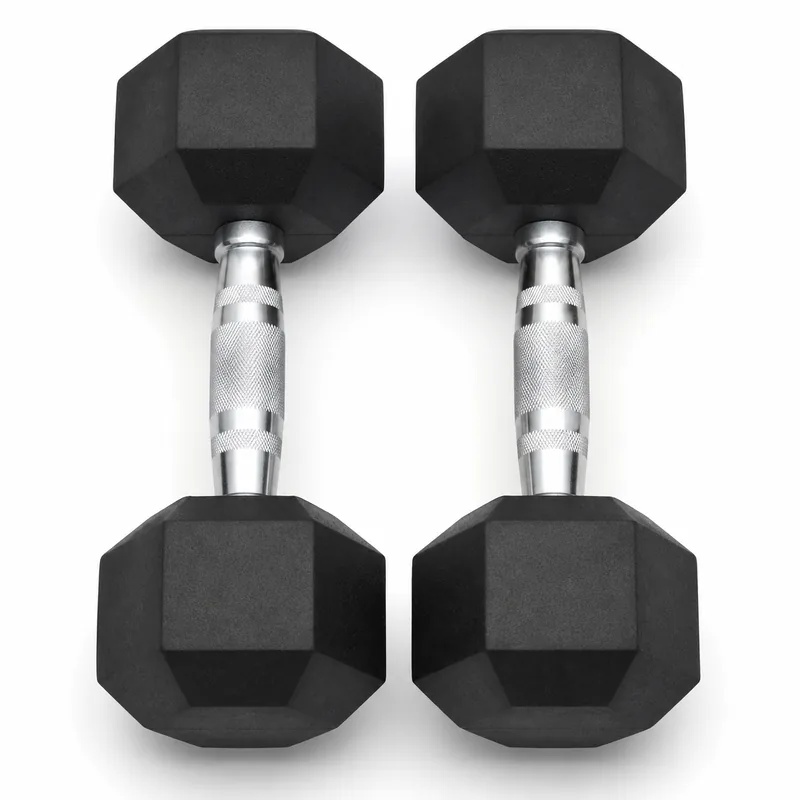
The ideal weight for intermediate upper body training. Rubber-coated, hex-shaped, chrome handles.
$79 Rubber Hex Dumbbell Pair (5kg)Perfect for lateral raises, curls, and overhead work. Start here if you're new to training.
$49 Resistance Bands Set (5-Pack)Face pulls, banded push-ups, assisted pull-ups, and warm-ups. Five resistance levels.
$29 Doorway Pull-Up BarNo screws, no damage. Fits standard Australian doorframes. Supports up to 130kg.
$55 PeterMat ZeroFloor presses, push-ups, renegade rows. Dense rubber surface that protects your elbows and wrists.
$79 Foam Roller (45cm)Upper back and lat recovery. Essential for anyone pressing and pulling multiple times per week.
$39Related Guides
- Full Body Dumbbell Workout: hit everything in one session when time is short
- Pull-Up Bar Exercises: get more from your doorway bar
- Dumbbell Exercises for Women: tailored programming for toning and strength
- Resistance Band Workout Guide: band-only sessions for active recovery days
- Lower Body Home Workout Guide: pair with this upper body guide for a complete split
Gear Up for Upper Body Day
Dumbbells, bands, a pull-up bar, and a mat. Everything you need for a complete upper body workout at home. Free shipping on orders over $75.
Shop Now