Why Your Rotator Cuff Matters More Than You Think
The shoulder is the most mobile joint in the human body, and the most unstable. Unlike the hip, which sits deep in a bony socket, the shoulder is essentially a ball balanced on a saucer. The only thing keeping it in place is the rotator cuff: four small muscles that surround the joint and stabilise it during movement. When those muscles are weak, the shoulder relies on the bony anatomy to stop dislocation, which produces grinding, impingement, tendinopathy, and pain.
Rotator cuff problems are the most common shoulder complaint in adults over 40. Most can be prevented or rehabilitated with a few minutes of light resistance training per week. You don't need machines or specialist equipment, light dumbbells and a resistance band cover everything you need.
The Four Rotator Cuff Muscles
- Supraspinatus: sits on top of the shoulder. Initiates abduction (lifting the arm to the side) and is the most commonly torn rotator cuff muscle.
- Infraspinatus: at the back of the shoulder blade. Externally rotates the arm.
- Teres minor: a smaller external rotator beneath infraspinatus.
- Subscapularis: sits on the front of the shoulder blade (between blade and ribcage). Internally rotates the arm and is often weak in people with shoulder pain.
Three of the four (supraspinatus, infraspinatus, teres minor) externally rotate the arm. The cuff is heavily biased toward external rotation training because internal rotators (lats, pecs, subscapularis) get plenty of work from everyday life and standard pressing. External rotators get almost none.
Equipment You Need
- Light dumbbells: start with 1-3kg. Most rotator cuff exercises use lighter weights than you'd expect because the muscles are small. Heavier weights recruit larger compensating muscles instead.
- A resistance band: bands are arguably better than dumbbells for rotator cuff work because they create resistance through full range of motion in any direction.
- A doorway anchor: many band exercises require the band to be fixed at chest or shoulder height. A door anchor that fits between the door and frame works perfectly.
- A non-slip mat for prone exercises and side-lying external rotations.
8 Rotator Cuff Exercises That Bulletproof Your Shoulders
1. Side-Lying External Rotation
Lie on your side. Hold a light dumbbell (1-2kg) in your top hand with your elbow tucked against your ribs and bent at 90 degrees. Keeping your elbow glued to your side, rotate your forearm upward toward the ceiling. Lower with control. The side-lying external rotation isolates infraspinatus and teres minor more than any other movement. Three sets of 12-15 per side.
2. Banded External Rotation
Anchor a resistance band at elbow height. Stand sideways to the anchor with the band in your far hand and your elbow tucked against your side at 90 degrees. Pull the band away from your body, rotating your forearm outward. Three sets of 15 per side. Bands give external rotators the variable resistance they crave.
3. Banded Internal Rotation
Same setup as above but with the band in your near hand. Rotate your forearm across your body. Three sets of 15 per side. Don't skip this one, many people overtrain external rotation and ignore internal rotation, creating the opposite imbalance.
4. Prone Y-T-W Series
Lie face-down on a mat with light dumbbells (1-2kg) in each hand. Perform three positions in sequence: Y (arms reaching forward at 45 degrees, lifting), T (arms straight out to the sides, lifting), W (elbows bent at your sides, hands lifting away from the floor). Eight reps in each position, three rounds. The prone Y-T-W trains the rotator cuff alongside the lower trapezius and rhomboids, the postural muscles that keep the shoulder blade in the right position.
5. Face Pull
Anchor a resistance band at face height. Stand facing it. Hold the band with both hands in an overhand grip. Pull the band toward your face, leading with your elbows so they finish out to the sides at shoulder height. Pause for 2 seconds, squeezing your shoulder blades together. Three sets of 15. The face pull is the single best exercise for rear deltoid and external rotator development simultaneously.
6. Scapular Wall Slide
Stand with your back flat against a wall. Bring your arms up into a goalpost position with elbows and wrists touching the wall. Slide your arms up the wall as high as you can while keeping contact, then slide them back down. Three sets of 10. The wall slide trains scapular control without load, perfect for rehab and warm-up.
7. Banded Pull-Apart
Hold a resistance band with both hands at chest height, arms straight. Pull the band apart by squeezing your shoulder blades together until the band touches your chest. Slow eccentric back to start. Three sets of 15. The pull-apart trains rear delts and rhomboids and counters the forward shoulder posture from desk work.
8. Empty Can Raise
Hold a light dumbbell (1-2kg) in each hand with your thumbs pointing down (as if pouring out a can). Raise your arms to shoulder height at a 45-degree angle in front of your body. Lower with control. The empty can raise targets supraspinatus directly, but use very light weights, as this exercise stresses the joint. Two sets of 8-10.
A 3-Day Shoulder Health Routine
These exercises take 10-15 minutes and can be done before any upper body session or as a standalone routine 3 times per week.
- Day 1: Side-lying external rotation 3×12, banded internal rotation 3×15, prone Y-T-W series 3 rounds, face pull 3×15.
- Day 2: Banded external rotation 3×15, scapular wall slide 3×10, banded pull-apart 3×15, empty can raise 2×10.
- Day 3: Full sequence, pick one exercise from each category for a comprehensive shoulder session.
Common Shoulder Mistakes That Cause Problems
- Pressing too much, pulling too little. Most home gym programmes are dominated by push-ups and overhead presses. The result is rounded forward shoulders and tight chests. Match every pushing exercise with a pulling exercise, face pulls, rows, pull-aparts.
- Heavy lateral raises with bad form. Lateral raises with dumbbells over 5kg performed with momentum cause supraspinatus impingement in many people. Use lighter weights with strict form.
- Sleeping on one side. Long-term side sleeping on the same shoulder compresses the joint for hours and can produce chronic discomfort. Switch sides regularly.
- Skipping the warm-up. The shoulder is the most mobile joint in the body and benefits from 5 minutes of light rotator cuff and band work before any upper body session.
- Ignoring pain. Mild shoulder pain that lasts more than 1-2 weeks usually means something is wrong. See a physio early, rotator cuff issues caught early heal in 4-8 weeks; ones ignored for months become chronic.
When to See a Physiotherapist
These exercises help most general shoulder discomfort, but see a physio if you have:
- Pain that wakes you at night
- A history of dislocation or significant injury
- Visible bruising or swelling
- Loss of range of motion that came on suddenly
- Numbness or tingling in your arm or hand
- Pain that hasn't improved with 4-6 weeks of consistent training
Recommended Gear
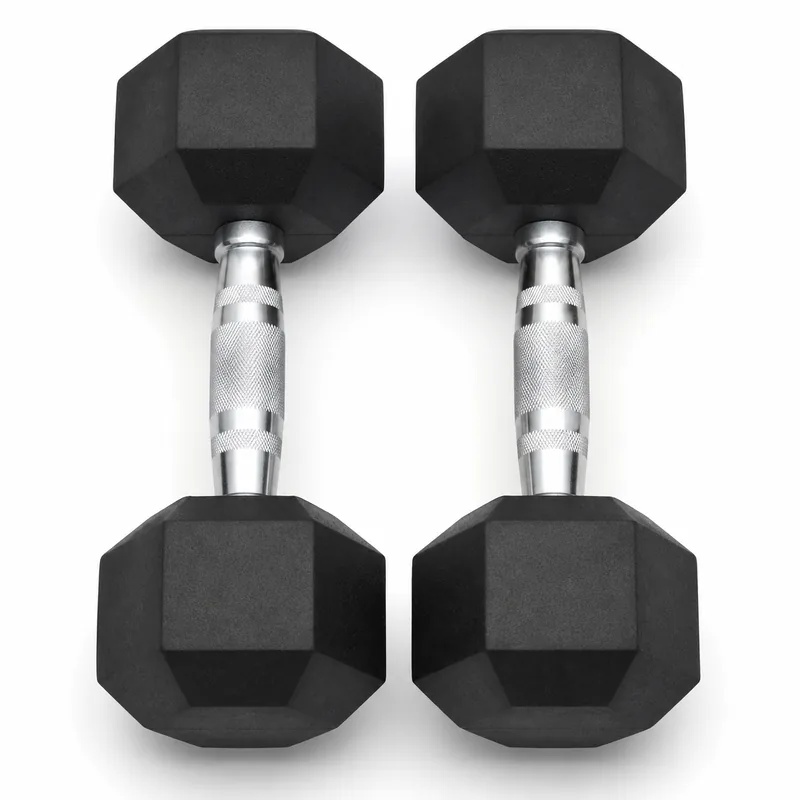
Ultra-light pair for rotator cuff isolation. Perfect for prone Y-T-W series, side-lying external rotations, and empty can raises.
$22 Rubber Hex Dumbbells (2kg pair)The progression weight for rotator cuff work once you can do 15 strict reps with 1kg.
$29 Resistance Tube Set with HandlesFive tubes with handles, door anchor, and ankle straps. Bands are arguably the best rotator cuff training tool that exists.
$45 Resistance Bands Set (5-Pack)Long bands for pull-aparts and face pulls. Five resistance levels.
$29 Premium Yoga MatCushion for prone Y-T-W series and side-lying exercises.
$59 Massage Ball Set (3-Pack)Pec minor and infraspinatus release. Tight pecs pull the shoulder forward, releasing them lets the cuff function.
$25Frequently Asked Questions
How heavy should rotator cuff weights be?
Light. Start with 1kg dumbbells. Progress to 2kg only when you can do 15 strict reps. The cuff muscles are small, heavy weights recruit larger compensating muscles, defeating the point. Even advanced lifters use 2-4kg for direct cuff work.
How often should I train rotator cuff?
Three times per week is the sweet spot. The cuff muscles recover quickly because they're small and trained with light loads. Daily training is acceptable for rehab but not necessary for maintenance.
Will rotator cuff training prevent injury?
Yes, research strongly supports prophylactic cuff training for people who lift weights, throw, swim, or play overhead sports. A 10-minute weekly programme reduces the rate of cuff injuries significantly.
Can I keep training upper body if my shoulder hurts?
Avoid the specific exercises that cause pain (often overhead pressing) and substitute pain-free alternatives (push-ups, dumbbell rows). Continue rotator cuff training, mobility work, and lower body training. Total rest usually delays recovery.
Should I ice or heat?
Heat for chronic stiffness, ice for acute injury. For most general cuff discomfort, gentle movement and warm showers help more than either.
What about kettlebell training?
Excellent for shoulder health when done properly. Halos, Turkish get-ups, and bottoms-up presses build incredible cuff stability. But form matters, start light and learn from a coach if possible.
Related Guides
- Shoulder Pain Exercises: broader shoulder pain rehabilitation
- Posture Correction Exercises: fix forward shoulder posture that drives cuff problems
- Upper Body Home Workout: incorporate cuff work into a full upper body routine
- Arm Toning Exercises: build the visible muscle around healthy shoulders
- Foam Roller Recovery: release the lats and pecs that compress the shoulder
Build Your Shoulder Health Kit
Light dumbbells (1kg + 2kg pairs), a resistance tube set with door anchor, a yoga mat, and massage balls. Under $180 buys you the complete shoulder protection toolkit. Free shipping on orders over $75.
Shop Now