What "Bad Posture" Actually Is
The classic poor-posture pattern has a name: upper crossed syndrome. It develops when years of sitting and looking at screens shorten certain muscles and lengthen their opposites. The chest, neck flexors, and upper traps become tight; the deep neck flexors, mid-back, and rear delts become weak and inhibited. The visible result is forward head posture, rounded shoulders, and a slumped upper back. The hidden result is shoulder pain, neck pain, headaches, and the slow degeneration of the cervical spine.
Posture correction isn't about willpower or constantly remembering to stand up straight. It's about retraining the underlying muscle balance. Once the right muscles are strong enough and the wrong ones flexible enough, good posture happens automatically. You can't think your way to good posture; you have to train your way there.
The Three Patterns Most People Need to Fix
Forward Head Posture
Your head should sit directly over your shoulders. For every inch your head migrates forward of that line, the load on your cervical spine increases by roughly 4.5kg. A head 7cm forward triples the effective load. The deep neck flexors atrophy, the upper traps and suboccipitals become chronically tight, and headaches and neck pain follow within years.
Rounded Shoulders
Tight pec minor (a small muscle that pulls the shoulder blade forward and down), tight pec major, weak rhomboids, and weak rear delts. The shoulder blades drift forward and downward, the chest collapses, and the rotator cuff loses its mechanical advantage.
Thoracic Kyphosis (Slumped Upper Back)
The mid-back rounds excessively. The thoracic spine loses extension capacity. Once kyphosis becomes structural (from prolonged sitting in your 30s and 40s), it's harder to reverse, but mobility work and strengthening can produce dramatic improvements at any age.
What You Need
- A non-slip mat for floor exercises.
- A resistance band or two: bands are the perfect tool for posture work because they produce constant tension through full range of motion.
- Light dumbbells (1-3kg) for prone Y-T-W series and other accessory work.
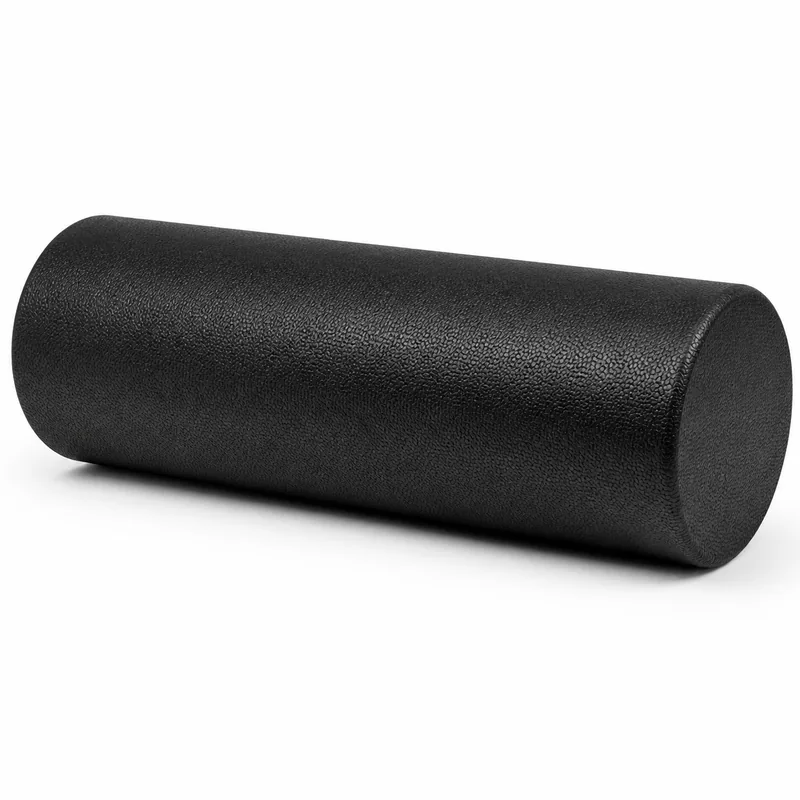
- A foam roller: the single best tool for thoracic mobility work.
- A doorway or sturdy beam for hanging, passive hangs decompress the spine and stretch the lats.
8 Posture Correction Exercises
1. Foam Roller Thoracic Extension
Lie on your back with a foam roller perpendicular to your spine, positioned at mid-back level. Place your hands behind your head to support the neck. Gently arch your upper back over the roller. Hold for 5 seconds. Move the roller up an inch and repeat. Work from mid-back to upper back. Five minutes daily reverses years of thoracic kyphosis. Three rounds of 5 positions, daily.
2. Doorway Pec Stretch
Stand in a doorway. Place one forearm against the doorframe with your elbow bent at 90 degrees and your upper arm parallel to the ground. Step forward with the same-side leg. You'll feel a stretch across the front of your chest and shoulder. Hold for 45 seconds. Switch sides. Three sets per side. The doorway stretch lengthens pec minor, the single most-shortened muscle in desk workers.
3. Banded Pull-Apart
Hold a resistance band with both hands at chest height, arms straight. Pull the band apart by squeezing your shoulder blades together until the band touches your chest. Slow, controlled return. Three sets of 20. Pull-aparts strengthen the rhomboids and rear delts, the muscles most weakened by chair-sitting.
4. Prone Y-T-W Series
Lie face-down on a mat with light dumbbells (1-2kg) in each hand. Perform three positions in sequence: Y (arms reaching forward at 45 degrees, lifting), T (arms straight out to the sides, lifting), W (elbows bent at sides, hands lifting). Eight reps in each position. Three rounds. The Y-T-W series strengthens the lower trapezius, mid-traps, and rhomboids, the muscles that hold the shoulder blades in correct position.
5. Chin Tuck
Stand or sit with your back straight. Without tilting your head, slide your chin straight back as if making a double chin. Hold for 5 seconds. Release. Three sets of 10. Chin tucks activate the deep neck flexors, the muscles that have atrophied from years of forward head posture. Do these multiple times per day.
6. Wall Angel
Stand with your back flat against a wall, feet about a foot away from the wall. Bring your arms into a goalpost position (90 degrees at the elbow) with your hands and elbows touching the wall. Slide your arms up the wall as far as you can while maintaining contact, then back down. Three sets of 10. Wall angels test and improve thoracic extension and shoulder mobility simultaneously. Start with limited range of motion if needed.
7. Banded Face Pull
Anchor a resistance band at face height. Stand facing it. Hold the band with both hands in an overhand grip. Pull the band toward your face, leading with your elbows so they finish out to the sides at shoulder height. Pause for 2 seconds, squeezing your shoulder blades together. Three sets of 15. The face pull is the single most effective posture-correction exercise, it strengthens rear delts, rhomboids, and external rotators in one movement.
8. Dead Hang
Hang from a doorway pull-up bar with straight arms. Don't try to do a pull-up, just hang. Hold for as long as you can. Three sets, working up to 60-second holds. Dead hangs decompress the spine, stretch the lats, and reset shoulder position. The single most underrated posture intervention.
A 15-Minute Daily Posture Routine
- Mobility (5 minutes): Foam roller thoracic extension across 5 positions, doorway pec stretch 3×45s per side, dead hang 2×30s.
- Strengthening (8 minutes): Banded pull-apart 3×20, prone Y-T-W series 3 rounds, chin tucks 3×10, banded face pull 3×15.
- Reset (2 minutes): Wall angel 3×10, walk around with deliberate good posture for the rest of the routine.
Total: 15 minutes per day. Most people see visible posture improvement within 6 weeks and structural improvement within 3-4 months.
Workplace Habits That Compound the Problem
Exercise alone won't fix posture if you spend 8-10 hours a day reinforcing the bad pattern. Workplace adjustments matter:
- Monitor at eye level: laptop screens force forward head posture. Use a stand or external monitor.
- Chair height: feet flat on the floor, knees at 90 degrees, hips slightly higher than knees.
- Keyboard position: elbows at 90 degrees, wrists straight.
- Standing breaks every 30 minutes: even 60 seconds of standing and reaching the arms overhead resets postural drift.
- Phone usage: "text neck" loads the cervical spine with up to 30kg of effective force at 60-degree forward flexion. Hold the phone at eye level.
- Driving posture: adjust the seat so your back is supported and your head is in line with your spine, not jutting forward toward the windshield.
Recommended Gear
Thoracic extension work, the single most underrated posture-correction exercise. Daily use produces measurable improvement.
$39 Resistance Bands Set (5-Pack)Pull-aparts and face pulls, the most useful posture exercises. Five resistance levels grow with you.
$29 Rubber Hex Dumbbells (1kg pair)Light dumbbells for prone Y-T-W series. Heavier weights recruit larger muscles, keep these light.
$22 Doorway Pull-Up BarDead hangs decompress the spine and reset shoulder position. The most underrated posture tool.
$55 Premium Yoga Mat6mm cushion for floor exercises and thoracic foam rolling.
$59 Yoga Strap with D-RingUse across your body for shoulder and chest opening stretches.
$15Frequently Asked Questions
Can adult posture really be corrected?
Yes. Most adult "poor posture" is functional, caused by tight and weak muscles rather than structural bone changes. With consistent daily work, most adults see visible improvement within 6-12 weeks. Structural kyphosis from decades of poor posture takes longer but still responds.
How long until I see results?
Awareness improves in week 1. Visible posture improvements at 4-6 weeks. Structural changes (improved thoracic extension, longer pec minor) at 12-16 weeks. Lifelong maintenance prevents regression.
Do posture braces work?
They provide short-term postural cueing but don't strengthen weak muscles. Long-term reliance on a brace can actually worsen muscle weakness. Use a brace as a temporary cue at most; build the underlying muscles for the lasting solution.
What about ergonomic chairs?
An ergonomic chair helps but doesn't compensate for muscle weakness. The combination of good ergonomics + daily exercises produces the best results.
Should I stretch or strengthen first?
Both, in the same session. Tight muscles need lengthening; weak muscles need strengthening. Stretching alone produces minimal long-term change because the underlying muscle imbalance remains.
Will improving posture make me taller?
Yes, measurably. Most adults gain 1-3 cm of effective height when they correct chronic forward head posture and thoracic kyphosis. The effect is real and noticeable to others.
Related Guides
- Desk Worker Exercises: specific routine for office workers
- Upper Body Home Workout: balanced upper body training that supports good posture
- Rotator Cuff Strengthening: shoulder health is foundational to good posture
- Neck Pain Relief Exercises: address neck-specific symptoms
- Foam Roller Recovery: complete rolling techniques including thoracic spine
Build Your Posture Kit
A foam roller, a resistance band set, light dumbbells, a yoga mat, and a doorway pull-up bar. Under $200 buys you the complete posture correction toolkit. Free shipping on orders over $75.
Shop Now