What Plantar Fasciitis Actually Is
The plantar fascia is a thick band of connective tissue that runs from your heel to the ball of your foot. It holds up the arch of your foot and absorbs impact every time you walk, run, or stand. When the fascia becomes overloaded, usually from sudden increases in walking or running, weight gain, poor footwear, or biomechanical issues higher up the chain, small tears develop and the tissue becomes inflamed. The result is sharp heel pain, especially during the first steps in the morning.
Plantar fasciitis affects roughly 10% of adults at some point in life. The good news is that most cases resolve completely with consistent home treatment over 6-12 weeks. Surgery is almost never necessary. Cortisone injections work short-term but weaken the fascia long-term and increase recurrence rates. The proven path to recovery is exercise-based.
Why It Happens (And Why It Sticks Around)
Three factors usually combine to produce plantar fasciitis:
- Tight calves and Achilles tendons. When the gastrocnemius and soleus muscles are tight, they pull on the heel bone, which in turn pulls on the plantar fascia. Calf flexibility is the single most important variable in plantar fasciitis recovery.
- Weak foot intrinsic muscles. The small muscles inside your feet, the ones modern shoes have allowed to atrophy, are supposed to support the arch. When they're weak, the fascia takes their job, and the fascia isn't designed for that load.
- Sudden activity changes. Going from sedentary to walking 10,000 steps a day, starting a couch-to-5k programme, or returning to running after time off frequently triggers plantar fasciitis because the fascia hasn't adapted.
The condition becomes chronic when people stop using their feet altogether (which deconditions everything further) or when they push through pain without addressing the underlying tightness and weakness. The exercises below address both.
Equipment You Actually Need
- A small massage ball: the single most effective tool for plantar fascia release. Massage balls applied under the arch for 60-90 seconds at a time produce immediate symptom relief.
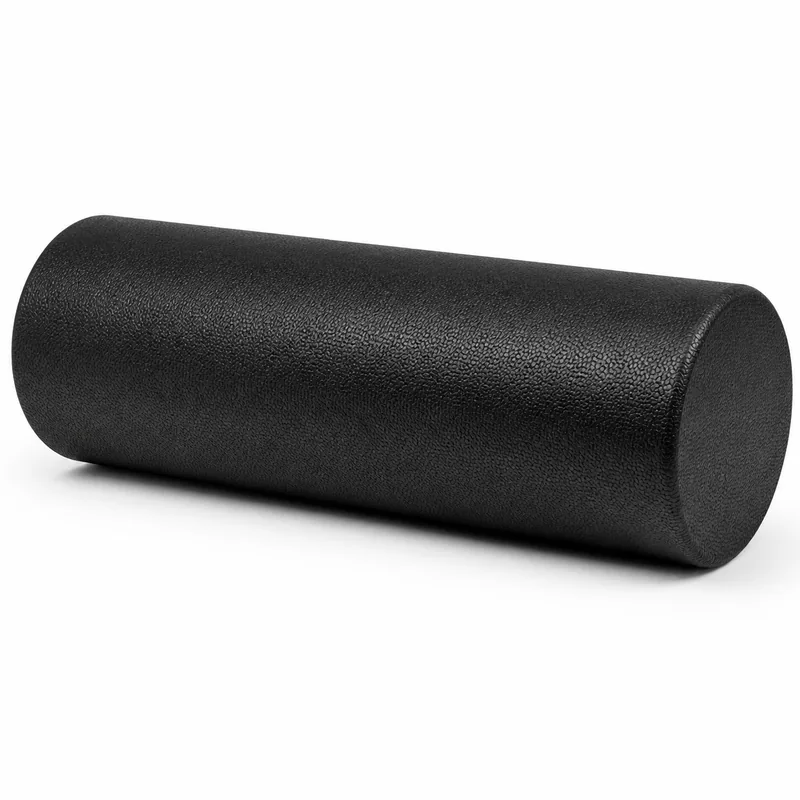
- A foam roller: for releasing the calves, peroneals, and tibialis posterior, all of which pull on the plantar fascia.
- A frozen water bottle: rolled under the arch combines cold therapy with massage. Free, effective.
- A resistance band: for foot strengthening exercises and dorsiflexion work.
- A yoga mat for floor exercises.
8 Plantar Fasciitis Exercises That Work
1. Massage Ball Foot Roll
Sit in a chair. Place a massage ball under one foot. Roll slowly from heel to toe and back, applying as much pressure as you can tolerate. Spend extra time on tender spots. 90 seconds per foot, 2-3 times per day. The massage ball roll is the single most effective home treatment for plantar fasciitis. You should feel measurably better within 1-2 weeks of consistent practice.
2. Towel Stretch
Sit on the floor with your legs extended. Loop a towel or yoga strap around the ball of one foot. Pull the towel toward you, dorsiflexing your foot. Hold for 30 seconds. The towel stretch elongates the plantar fascia and the calf simultaneously. Three sets per side, multiple times per day, especially before standing up first thing in the morning.
3. Calf Stretch (Wall)
Stand facing a wall. Place your hands on the wall at shoulder height. Step one foot back about a metre, keeping it flat on the floor with the toes pointing forward. Bend your front knee while keeping your back leg straight. You'll feel a deep stretch in the back leg's calf. Hold for 45 seconds, three sets per side. Then bend the back knee slightly to shift the stretch to the soleus (deeper calf muscle), another 45 seconds per side.
4. Calf Raise
Stand at the edge of a step with your heels hanging off. Slowly raise your heels as high as possible, then lower them as far below the step as your range allows. Three sets of 15. Eccentric calf raises are evidence-based, research shows they reverse plantar fasciitis when done daily for 12 weeks.
5. Toe Curl with Towel
Sit in a chair. Place a small towel on the floor in front of you. Use your toes to scrunch the towel toward you. Three sets of 10. The toe curl strengthens the foot intrinsic muscles, the ones modern shoes have weakened.
6. Marble Pickup
Place 20 marbles on the floor and a small bowl beside them. Use your toes to pick up each marble and drop it into the bowl. Two rounds per foot. The marble pickup might sound silly, but it's one of the best foot intrinsic strengthening exercises in physiotherapy.
7. Toe Spread
Sit barefoot. Spread your toes as wide apart as possible, try to create gaps between every toe. Hold for 5 seconds. Relax. Repeat 10 times. Most adults have completely lost the ability to spread their toes due to decades of wearing pointed shoes. Restoring this ability strengthens the small muscles that support the arch.
8. Banded Foot Eversion / Inversion
Sit on the floor with your legs extended. Anchor a resistance band around something sturdy. Loop the other end around your foot. Pull your foot in different directions against the band, point, flex, turn in, turn out. Three sets of 12 in each direction. Banded foot work strengthens the muscles that support the arch from the inside.
The Daily Routine That Actually Fixes It
Plantar fasciitis responds to consistency more than intensity. Here's a proven daily protocol:
- Morning (before getting out of bed): Towel stretch 3×30s per foot, calf stretch on a wall once you're up.
- Mid-morning / lunch break: Massage ball foot roll 90 seconds per foot.
- Afternoon / evening session (15 minutes): Calf stretch 3×45s per side, calf raise 3×15, towel scrunches 3×10, marble pickup 2 rounds per foot, banded foot work 3×12 in each direction.
- Before bed: Massage ball foot roll 90 seconds per foot. Optional ice (frozen water bottle) for 5-10 minutes if symptomatic.
Most people experience 50% improvement within 2 weeks and 90% improvement within 8 weeks of consistent daily work. Total resolution typically takes 8-12 weeks.
What NOT to Do
- Don't ignore it. Plantar fasciitis worsens dramatically with time. Two weeks of daily exercises catches it early.
- Don't run through pain. Aggressive running on inflamed fascia produces tears that take months to heal. Switch to swimming, cycling, or low-impact cardio until you're 80% better.
- Don't rely on cortisone injections. They produce dramatic short-term relief but research shows higher recurrence rates and a small but real risk of fascial rupture.
- Don't buy expensive arch supports without trying barefoot strengthening first. Strong feet support themselves. Adding artificial support without addressing underlying weakness can perpetuate the problem.
- Don't go barefoot on hard floors all day. During recovery, supportive shoes (or cushioned slippers indoors) reduce inflammation. Once symptoms improve, gradually reintroduce barefoot time.
Footwear Considerations
The right shoes accelerate recovery. The wrong shoes can prevent it entirely. During acute plantar fasciitis:
- Choose shoes with firm midfoot support and slight heel-to-toe drop (8-10mm)
- Avoid completely flat shoes (Converse, ballet flats, minimalist runners) until pain is fully resolved
- Avoid shoes with negative heel drop or zero drop during acute symptoms
- Replace running shoes that have over 800km on them, worn cushioning aggravates the fascia
- Use cushioned slippers indoors rather than going barefoot on tile or hardwood
Once recovered, gradually transition to less supportive footwear over months, strong feet, not arch supports, are the long-term solution.
Recommended Gear
Lacrosse-style massage balls in three densities. The single most effective home treatment for plantar fasciitis.
$25 Foam Roller (45cm)Release the calves, peroneals, and tibialis posterior, all of which pull on the plantar fascia.
$39 Resistance Bands Set (5-Pack)Banded foot work for strengthening the arch from the inside.
$29 Yoga Strap with D-RingUse for towel-stretch alternative. Get a deeper, more controlled foot stretch.
$15 Premium Yoga MatCushion for floor work and toe exercises. Essential for sitting comfort during massage routines.
$59 Vibrating Foam RollerVibration enhances calf muscle release significantly faster than standard rolling.
$89Frequently Asked Questions
How long does plantar fasciitis take to heal?
With daily exercises, most people experience significant improvement within 2 weeks and full resolution within 8-12 weeks. Cases that have lasted longer than 6 months can take 4-6 months of consistent work to fully resolve.
Should I keep walking?
Yes, in moderation. Complete rest deconditions the fascia further. Walk in supportive shoes, avoid hard surfaces, and reduce daily step count by 30-50% if symptoms are acute. Increase gradually as pain decreases.
Can I run with plantar fasciitis?
Not during the acute phase. Running compounds inflammation faster than the body can heal. Switch to swimming, cycling, elliptical, or rowing for cardiovascular maintenance. Return to running gradually once you've been symptom-free for 2 weeks.
Do I need orthotics?
Most people don't. Strong feet are better than supportive arch supports long-term. Orthotics can help during recovery but should be a temporary tool, not a lifelong solution. Focus on building intrinsic foot strength.
Is plantar fasciitis the same as a heel spur?
No. Heel spurs are bony growths that show up on X-rays. Many people with no pain have heel spurs; many people with severe pain have no spur. Heel spurs are a downstream consequence of long-term fascial tension, not the cause of pain. Treating the fascia treats both.
What about night splints?
Night splints (which dorsiflex the foot during sleep) help some people, especially those with severe morning pain. They're worth trying after 4 weeks of exercises if symptoms haven't improved significantly.
Related Guides
- Foam Roller Recovery: calf and lower leg release techniques
- Hip Mobility Exercises: tight hips alter walking mechanics and contribute to foot pain
- Knee Pain Exercises: kinetic chain, knee, ankle, foot all interconnect
- Stretching for Flexibility: broader stretching routine
- Post-Workout Recovery: general recovery practices
Build Your Foot Recovery Kit
Massage balls, a foam roller, a resistance band set, and a yoga mat. Under $130 buys you the proven toolkit for fixing plantar fasciitis at home. Free shipping on orders over $75.
Shop Now