Mat Pilates vs Reformer Pilates
Walk into any Pilates studio and you will see two distinct worlds. On one side, rows of reformer machines with their springs, straps, and sliding carriages. On the other, a quiet open space with nothing but mats on the floor. Both approaches trace back to Joseph Pilates himself, but here is something most people do not realise: mat work came first. The original 34 exercises Joseph Pilates published in his 1945 book Return to Life Through Contrology were all mat-based. The reformer was developed later as an assistive tool, often used to help injured patients progress toward the mat exercises, not away from them.
That matters because it tells you something fundamental about the method. The mat is not the "budget version" of Pilates. It is the foundation. When you perform a Hundred on a mat, your body has to generate all the stability and control on its own. There are no springs assisting or resisting you in predictable patterns. Your deep stabilisers, transversus abdominis, multifidus, pelvic floor, have to work overtime because nothing else is doing the job for them.
Reformer classes are brilliant if you have access to one, but a quality reformer costs $3,000 to $8,000 and takes up a significant footprint in your home. A full mat Pilates setup, by contrast, fits in a corner cupboard and costs about $250. For the vast majority of Australians wanting to practise Pilates at home, mat work is the practical, effective, and financially sensible choice.
The other advantage of mat Pilates is portability. Your equipment travels with you. Take the bands and a mat to the park, the beach, or a hotel room. Try doing that with a reformer.
The Essential Pilates Equipment
You do not need much, but what you buy matters. Cheap gear creates friction with your practice, a mat that bunches under your spine during roll-ups or bands that snap after three sessions will kill your motivation faster than anything. Here is what to prioritise.
A Good Mat (Non-Negotiable)
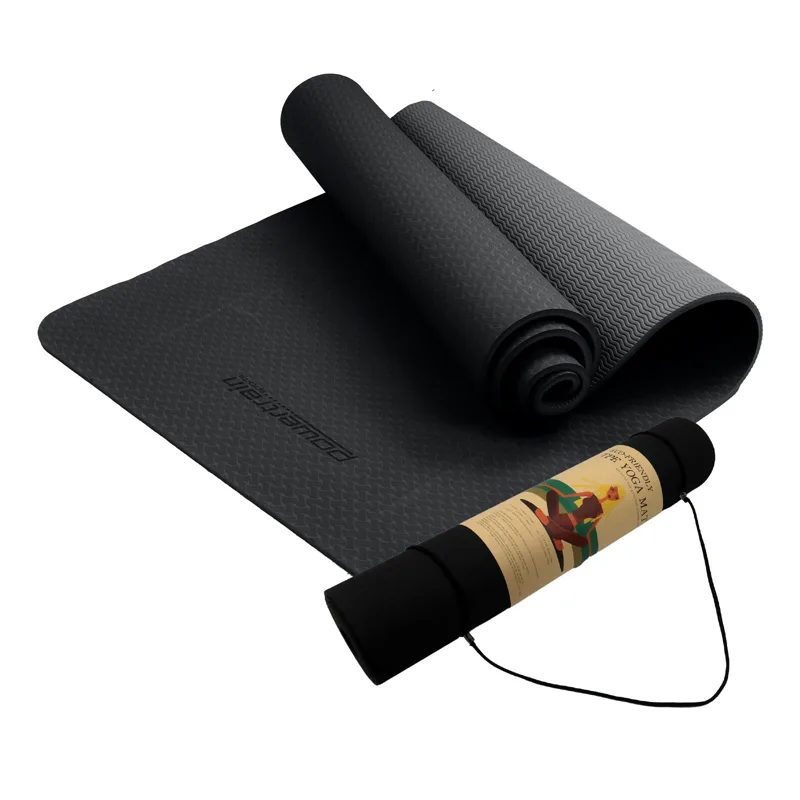
A Pilates mat is different from a standard yoga mat. Yoga mats tend to be 3-4mm thick, which is fine for standing postures but miserable when you are rolling through your spine vertebra by vertebra or pressing your sacrum into the floor during leg lowers. For Pilates, you want a minimum of 6mm thickness. Some people prefer 8-10mm, particularly if they have a bony spine or exercise on hard flooring like tiles or timber.
The surface texture matters too. You need enough grip that your feet do not slide during footwork and your hands stay planted in plank variations, but not so much tackiness that it pulls at your skin during supine movements. Closed-cell foam or TPE materials strike the right balance for Pilates, they are dense enough to cushion without being so squishy that you lose proprioceptive feedback from the floor.
Some mats have alignment marks, and a centre line gives quick visual feedback when your instructor says "align your hips with your shoulders." Our mat does not have them; the long edges of the mat do the same job for most movements.
If you practise on hard flooring, polished concrete, tiles, or timber boards, consider placing a dense rubber gym mat underneath your Pilates mat. It absorbs impact, reduces noise for downstairs neighbours, and protects your floor from the repetitive friction of mat work. The combination of a thin, grippy Pilates mat on top of a dense base mat is how many serious home practitioners set up.
Resistance Bands
In a reformer studio, the springs provide variable resistance throughout each movement. At home, resistance bands replicate this beautifully. They give you progressive resistance, the further you stretch them, the harder they pull, which mirrors the spring mechanics of a reformer more closely than any other piece of portable equipment.
For Pilates specifically, you want a set that includes light and medium resistance levels. Heavy bands have their place in strength training, but Pilates is about controlled, precise movement against moderate resistance. A light band is perfect for the Hundred with added arm resistance, chest expansion, and seated rowing. A medium band works well for leg press variations, standing side kicks with resistance, and breaststroke preparation.
The key difference between using bands in Pilates versus general fitness is tempo. In Pilates, you control both the stretch and the return. You do not snap the band back. The eccentric (return) phase is just as important as the concentric (pulling) phase. A four-count stretch and a four-count return is standard. This slow, deliberate movement under tension is what builds the long, lean muscle tone that Pilates is famous for.
Foam Roller
The foam roller is not just a recovery tool in the Pilates world. It is a training device. Place a foam roller lengthwise under your spine (from head to tailbone) and suddenly every familiar exercise becomes a balance challenge. Arm circles, chest press, hip rolls, all of them recruit your deep stabilisers when you are balancing on an unstable surface.
Thoracic extension over a foam roller is one of the most valuable exercises you can do for modern posture. If you spend any time at a desk, driving, or looking at a phone, your upper back rounds forward. Draping over a foam roller at mid-back height and gently extending opens up the thoracic spine, stretches the chest, and counteracts that forward hunch. Joseph Pilates would have loved foam rollers, they are perfectly aligned with his emphasis on spinal articulation and extension.
A 45cm roller is the right length for most home Pilates work. Full-length 90cm rollers are useful in clinical settings but unnecessarily bulky for home use. Medium density is ideal, firm enough to provide feedback without being so hard that it bruises you.
Yoga Blocks
Blocks serve two purposes in Pilates. First, they act as support and modification tools. If your hamstrings are tight and you cannot reach the floor in a standing roll-down, a block bridges the gap. If your hip flexors grip during supine leg work, placing a block between your inner thighs engages the adductors and takes the hip flexors out of the equation. These modifications are not shortcuts, they are how you do the exercise correctly until your body catches up.
Second, blocks are surprisingly effective as proprioceptive tools. Squeeze a block between your knees during bridging and you instantly feel your inner thighs and pelvic floor engage. Hold a block between your hands during the Hundred and your chest muscles activate to stabilise the arm position. The block provides external feedback that teaches your body internal awareness, which is the entire point of the Pilates method.
High-density EVA foam blocks are best. They are firm enough to bear weight, light enough to hold overhead, and they do not crumble or compress over time the way cheaper foam does.
Nice-to-Have Additions
Once you have the four essentials, these items add variety and challenge to your home practice without breaking the bank.
Fabric Loop Bands ($30): These sit around your thighs or ankles and add resistance to lateral movements, clamshells, and glute bridges. In a reformer studio, the footbar and spring resistance target the glutes effectively. At home, fabric loop bands are the closest equivalent. They are also more comfortable than rubber loops because the fabric grips your skin without rolling or pinching. Put one above your knees during side-lying leg work and your gluteus medius will be on fire within eight repetitions.
Yoga Stretch Strap with 10 Loops ($24): Tight hamstrings are the single most common limitation in mat Pilates. A strap looped around the ball of your foot allows you to perform leg circles, single-leg stretches, and spine stretches with full range of motion even when your flexibility has not caught up to your ambition. It is also excellent for shoulder stretches and opening the chest, hold the strap behind your back with both hands and slowly lift your arms away from your body. You will feel your shoulders open immediately.
A massage ball: Pilates asks a lot of your feet. All those toe points, foot articulations, and standing balance exercises can leave your plantar fascia tight and your calves knotted. Rolling a massage ball under your foot before a session wakes up the proprioceptors in your sole and improves your balance for the entire workout. Between sessions, use the balls on your thoracic spine, glutes, and hip flexors for targeted myofascial release that complements your Pilates practice. A firm tennis ball does the job.
Non-slip fabric, glute focused
$30 Yoga Stretch Strap (10 Loops)217cm with 10 loops, extends your reach
$24A Beginner Pilates Equipment Workout
This 30-minute mat Pilates session uses all the equipment discussed above. It follows a classical Pilates structure: warm-up to connect breath and centre, a main block building in complexity, and a cool-down that returns the spine to neutral. Rest 10-15 seconds between exercises as needed.
Warm-Up (7 minutes)
Breathing with Band (2 minutes): Wrap a light resistance band around your ribcage, crossing the ends in front. Inhale deeply through your nose, feel the ribs expand into the band laterally, not the belly pushing forward. Exhale through pursed lips, drawing your navel to spine. This is lateral thoracic breathing, the cornerstone of Pilates breath work. 8 breaths, feeling the band resist your ribcage on each inhale.
Pelvic Curls (3 minutes): Lie on your mat with knees bent, feet hip-width apart, block between your inner thighs. Inhale to prepare. Exhale, squeeze the block gently, tilt your pelvis, and peel your spine off the mat one vertebra at a time until you reach a bridge position. Inhale at the top. Exhale, roll down from upper back to tailbone. Maintain gentle pressure on the block throughout. 8 repetitions. The block ensures your knees do not splay and your adductors support your pelvic floor.
Cat-Cow with Foam Roller (2 minutes): Hands on the foam roller in an all-fours position. Inhale, arch your spine letting the belly drop (cow). Exhale, round your spine pushing the roller slightly forward (cat). The roller adds instability, forcing your wrists and shoulders to stabilise while your spine mobilises. 8 repetitions, slow and controlled.
Main Set (18 minutes)
Hundred with Band (3 minutes): Lie on your back, curl your head and shoulders off the mat. Extend legs to your challenge level (tabletop for beginners, 45 degrees for intermediate). Hold a light band taut between your hands, arms extended by your sides. Pump your arms vigorously while maintaining tension on the band. Inhale for 5 pumps, exhale for 5 pumps. Build to 100 pumps (10 breath cycles). The band adds resistance to the arm pumps and forces your shoulder stabilisers to engage.
Single Leg Stretch (2 minutes): Curl up, one knee to chest, other leg extended. Hands on the bent knee. Switch legs with control, maintaining your curl. 8 per side. Focus on keeping your pelvis absolutely still as the legs move, if your hips rock side to side, raise your extended leg higher.
Roll-Up with Foam Roller (3 minutes): Sit with the foam roller behind your lower back. Hold the strap in both hands, looped around your feet. Slowly roll back onto the foam roller, letting it support your lower back. Then use the strap for assistance as you roll up to sitting, articulating through each vertebra. 6 repetitions. The roller supports you at the sticking point (lower back) while the strap prevents you from collapsing and using momentum.
Side-Lying Leg Work with Loop Band (4 minutes): Place a fabric loop band above your knees. Lie on your side, hips stacked, bottom arm extended under your head. Top hand on the floor in front of your chest for balance. Perform: 10 clamshells (open knees, keep feet together), 10 top leg lifts (straight leg, slight external rotation), 10 small circles each direction. The band makes your gluteus medius work through its full range. Repeat on the other side.
Swan with Blocks (3 minutes): Lie face down with your hands on two yoga blocks placed shoulder-width apart. Inhale, press gently into the blocks and lift your chest, extending through the upper back. Keep your lower ribs on the mat. Exhale, lower with control. 8 repetitions. The blocks raise your hands, reducing the range of motion slightly and making this extension exercise more accessible for beginners while still building the thoracic extensors.
Swimming (3 minutes): Remaining face down, extend arms overhead and legs behind you. Lift your right arm and left leg simultaneously, then switch. Build speed gradually while maintaining length through your spine. 30 seconds on, 15 seconds rest, 3 sets. This cross-pattern exercise targets the posterior chain and challenges coordination.
Cool-Down (5 minutes)
Spine Twist (2 minutes): Sit tall, legs extended, arms wide. Inhale, grow taller. Exhale, rotate to the right, pulsing gently twice. Inhale, return to centre. Exhale, rotate left. 6 per side. If your hamstrings pull you into a rounded back, sit on a folded towel or yoga block to raise your pelvis.
Thread the Needle (2 minutes): From all fours, reach your right arm under your body, lowering your right shoulder and temple to the mat. Hold for 30 seconds, breathing into the stretch through your upper back and shoulder. Repeat on the left. This is a beautiful counterpose to all the flexion and extension work in the main set.
Rest Position (1 minute): Sit back onto your heels, arms extended forward, forehead on the mat (child's pose). Breathe deeply for 60 seconds. Allow your spine to decompress and your nervous system to shift from effort to recovery.
How Much Should You Spend?
The beauty of home Pilates is that it scales to any budget. Here are three tiers based on where you are in your journey.
Essential Kit, $119: 6mm Non-Slip TPE Yoga Mat ($60) + Resistance Band Loop Set ($59). This covers 80% of what you need. The mat gives you a comfortable surface, and the bands replace reformer springs for upper and lower body work. If you are starting out and want to test whether home Pilates sticks before investing further, start here.
Recommended Kit, $189: Add the Foam Roller ($45) and Yoga Blocks ($25) to the essential kit. The roller opens up thoracic extension and balance work, while the blocks provide support for modifications and proprioceptive feedback. This is the setup most intermediate home practitioners land on.
Complete Kit, $243: Add Fabric Loop Bands ($30) and the Yoga Stretch Strap ($24) to the recommended kit. This gives you the full range of resistance options, flexibility assistance, and glute-targeting tools that replicate a well-equipped studio session. All of it fits in a drawer. Prices are for the goods; delivery is calculated by postcode in the cart.
Pilates Equipment Myths
"You need a reformer to do real Pilates." This is the biggest misconception in the Pilates world. As discussed above, Joseph Pilates designed mat work as the core of his method. Reformer work is an excellent supplement, but it is not superior. Many elite Pilates instructors argue that mat work is actually harder because your body provides all the resistance and stabilisation.
"A magic circle is essential." The magic circle (or Pilates ring) is a useful prop, but it is far from essential. Everything a magic circle does, a yoga block or resistance band can approximate. Squeezing a block between your knees during bridging mimics the inner-thigh engagement of a ring. Pressing against a band provides the same chest and arm resistance. Unless you are following a program that specifically prescribes ring exercises, your money is better spent on the four essentials listed above.
"Expensive brands are better." Some premium Pilates equipment brands charge $150 for a mat or $80 for a set of bands. The quality difference between a well-made mid-range product and a luxury brand is marginal for home use. What matters is material quality (closed-cell foam, not open-cell; latex or TPE bands, not cheap rubber), density, and durability. You do not need a designer label on your foam roller for it to improve your thoracic extension.
"Thick gym mats are best for Pilates." This is a trap that many beginners fall into. Ultra-thick gym mats (15-20mm) are designed for high-impact activities and heavy equipment. They are too soft and unstable for Pilates balance work. When you stand on one foot during a standing Pilates sequence, you need to feel the floor beneath you. When you perform a roll-up, you need a firm surface to articulate against. A 6-8mm mat on a hard floor is the sweet spot, enough cushion for your spine, enough firmness for control.
"Pilates is just for flexibility." Pilates builds serious functional strength. The slow, controlled movements under tension create muscular endurance and stability that transfers directly to daily life, picking up children, carrying shopping, maintaining good posture at a desk. The resistance bands and body weight exercises in a mat Pilates session can leave your muscles shaking in a way that surprises people who assume Pilates is gentle stretching.
Related Guides
- Yoga for Beginners at Home
- Stretching Routine for Flexibility
- Foam Roller Recovery Guide
- Best Yoga Accessories Australia
- Best Exercises for Back Pain
- Best Exercise Mat for Pilates (Australia): The best mat for Pilates in Australia, why Pilates needs more cushion than yoga, the ideal thickness and...
- Best Equipment to Lose Belly Fat at Home (And the Honest Truth): The honest truth about losing belly fat at home, what equipment actually helps, what doesn't, and the...
- Pregnancy-Safe Exercise Equipment for Home: Safe exercise equipment for every trimester.
Build Your Pilates Studio
Everything you need for mat Pilates at home. Delivery is calculated by postcode in the cart, and we deliver within Australia.
Shop Now