Why Your Neck Hurts (It's Probably Not Your Neck)
Here's the thing most people don't realise: neck pain is almost never just a neck problem. Your neck is paying the price for what's happening below it, rounded shoulders, a stiff thoracic spine, weak deep neck flexors, and overworked upper traps. Fix those, and the neck pain goes away.
The average person spends 7+ hours a day looking at screens. Every centimetre your head sits forward of your shoulders adds roughly 4.5kg of effective load on your cervical spine. At a typical "phone posture" angle of 45 degrees, your neck muscles are supporting the equivalent of 22kg, four times your head's actual weight. Every day. For hours.
The muscles at the back of your neck are in a constant state of contraction trying to hold your head from falling forward. Meanwhile, the deep stabilising muscles at the front of your neck (the deep cervical flexors) get weaker because they're stretched and inactive. This imbalance is the root cause of most non-traumatic neck pain.
Common Causes of Neck Pain
- Forward head posture: Screen time, driving, and slouching push your head forward, overloading the posterior neck muscles.
- Upper trap dominance: Stress, poor desk setup, and heavy bag carrying cause your upper traps to work overtime, compressing the cervical spine.
- Thoracic spine stiffness: A stiff mid-back forces your neck to compensate for mobility it should be getting from below. The cervical spine becomes hypermobile to make up for a locked thoracic spine.
- Pillow problems: A pillow that's too high, too low, or too flat changes your cervical curve overnight. Eight hours in a bad position adds up.
- Weak deep neck flexors: These small muscles at the front of your cervical spine are meant to stabilise your head position. When they're weak, the larger superficial muscles take over, creating tension and pain.
- Jaw clenching (bruxism): Stress-related teeth grinding tenses the muscles of your jaw and skull base, referring pain into your neck and temples.
When to See a Professional
These exercises are for chronic, tension-related neck pain, the stiffness and aching that builds up from posture and lifestyle. See a health professional immediately if:
- Pain started after a car accident, fall, or head impact
- You have numbness, tingling, or weakness in your arms or hands
- Pain is accompanied by severe headache, fever, or nausea
- You can't turn your head at all (locked)
- Pain radiates down one arm in a specific pattern (nerve root compression)
- You have difficulty with balance or coordination
The 10 Best Neck Pain Relief Exercises
No equipment needed for most of these. A massage ball (a tennis ball works) and a resistance band are helpful additions but not essential. Do these sitting or standing, they're designed to be doable at your desk.
1. Chin Tucks (The Most Important Exercise)
Targets: Deep cervical flexors (stabilisers)
Sit or stand tall. Without tilting your head up or down, draw your chin straight back as if making a double chin. Imagine a string pulling the back of your skull upward and backward. Hold for 5 seconds. Relax. Repeat 10 times.
Why it works: This is the number one exercise for neck pain and it's embarrassingly simple. The chin tuck activates the deep cervical flexors, the muscles that hold your head in proper alignment over your shoulders. When these are strong, your superficial neck muscles don't have to work as hard, and tension decreases dramatically. Do these at your desk, in the car (at red lights), and before bed. Every day.
2. Upper Trapezius Stretch
Targets: Upper traps, levator scapulae
Sit tall. Tilt your right ear toward your right shoulder. Place your right hand gently on the left side of your head, don't pull, just let the weight of your hand add a light stretch. You should feel the stretch along the left side of your neck. Hold 30 seconds. Switch sides. Repeat twice each side.
Why it works: The upper trapezius connects your skull to your shoulder. When it's chronically tight (from stress, desk work, or heavy bags), it compresses the cervical spine from the side. Stretching it twice daily is the fastest way to reduce that "shoulders around your ears" tension.
3. Levator Scapulae Stretch
Targets: Levator scapulae (the muscle that lifts your shoulder blade)
Sit tall. Turn your head 45 degrees to the right. Then tilt your chin down toward your right armpit. Place your right hand behind your head and gently guide the stretch. You should feel this deep in the back-left of your neck, between your spine and shoulder blade. Hold 30 seconds. Switch sides.
Why it works: The levator scapulae runs from your upper cervical spine to the top corner of your shoulder blade. It's the muscle responsible for that deep, gnawing ache between your neck and shoulder that won't go away. It gets tight from shrugging, carrying bags on one shoulder, and holding a phone between your ear and shoulder.
4. Thoracic Extension (Seated)
Targets: Thoracic spine mobility
Sit in a chair with your hands behind your head, fingers interlaced. Keeping your lower back against the chair, arch your upper back over the top of the chair back, opening your chest toward the ceiling. Hold 3 seconds. Return to neutral. Repeat 10 times.
Why it works: Your thoracic spine (mid-back) should contribute significantly to looking up, turning, and extending. When it's locked from sitting, your cervical spine picks up the slack, leading to overuse and pain. Restoring thoracic extension immediately reduces the demand on your neck. You can do this version at your office desk, no floor or foam roller required.
5. Neck Rotation Stretch
Targets: Sternocleidomastoid (SCM), scalenes, deep rotators
Sit tall. Slowly turn your head to the right as far as comfortably possible. Hold for 5 seconds. Use your right hand on your chin to gently add a few degrees of rotation, never force it. Return to centre. Repeat to the left. Do 5 times each direction.
Why it works: Neck rotation is often the first movement to become restricted in people with neck pain. The brain limits range of motion to protect perceived damage. Gentle, controlled rotation tells the nervous system that the movement is safe, gradually restoring full range. Notice if one side is more restricted than the other, that's your priority side.
6. Scapular Retraction (Shoulder Blade Squeeze)
Targets: Mid traps, rhomboids
Sit or stand with arms at your sides. Squeeze your shoulder blades together and down, as if you're trying to put them in your back pockets. Hold 5 seconds. Relax. Repeat 10 times.
Why it works: Rounded shoulders push the head forward. Strengthening the muscles that pull your shoulder blades back corrects this posture from the source. This exercise is deceptively effective, do it 5-10 times every hour while at your desk and you'll notice less neck tension by the end of the day.
7. Suboccipital Release (Massage Ball)
Targets: Suboccipital muscles (base of skull)
Lie on your back. Place a massage ball or tennis ball at the base of your skull, in the soft tissue just below the bony ridge (not on the spine). Let the weight of your head press into the ball. Slowly nod your head, a tiny yes motion, to massage the area. Then slowly shake your head, a tiny no motion. Spend 2 minutes per side.
Why it works: The suboccipital muscles are four small muscles at the base of your skull. They're involved in fine head movements and proprioception (knowing where your head is in space). When tight, they compress the greater occipital nerve, causing tension headaches that radiate from the back of the skull to behind the eyes. Releasing them often eliminates these headaches within one session.
8. Band Neck Flexion (Deep Cervical Flexor Strengthening)
Targets: Deep cervical flexors
Loop a light resistance band around the back of your head. Hold both ends in front of you, creating light tension. Tuck your chin (as in exercise 1) against the band's resistance. Hold 5 seconds. Relax. Do 3 sets of 10.
Why it works: This is the progressive overload version of the chin tuck. Once bodyweight chin tucks become easy (usually after 2 weeks), adding resistance with a band continues to strengthen the deep cervical flexors. These muscles fatigue quickly because they're small and undertrained, start with the lightest band.
9. Neck Side Flexion (Isometric)
Targets: Lateral cervical stabilisers
Place your right palm against the right side of your head, above your ear. Push your head into your hand, your head should not move. Hold for 6 seconds. Relax. Repeat 5 times each side.
Why it works: Isometric exercises strengthen muscles without movement, which is ideal for a painful neck because there's zero joint stress. The lateral cervical muscles stabilise your head against sideways forces (wind, a jolt, looking over your shoulder). Weak lateral stabilisers contribute to the feeling that your neck is "fragile" or vulnerable.
10. Neck Extension (Isometric)
Targets: Posterior cervical extensors
Interlace your fingers behind your head. Push your head backward into your hands. Resist with your hands so your head doesn't move. Hold 6 seconds. Relax. Repeat 5 times.
Why it works: This strengthens the extensors that are already chronically overworked, which sounds counterintuitive. But overworked does not mean strong. These muscles are in a constant state of low-level contraction to hold your head up, which causes fatigue and tightness. Training them with higher-intensity isometric contractions actually increases their strength and endurance, meaning they don't have to work as hard at rest.
The 10-Minute Daily Neck Routine
Do this every day. It takes 10 minutes and can be done at your desk, on your couch, or on the floor. No equipment required for the basic version.
- Chin Tucks: 10 reps, 5-second holds (1.5 min)
- Upper Trap Stretch: 30 sec each side (1 min)
- Levator Scapulae Stretch: 30 sec each side (1 min)
- Neck Rotation: 5 reps each direction (1 min)
- Thoracic Extension (Seated): 10 reps (1.5 min)
- Scapular Retraction: 10 reps, 5-second holds (1 min)
- Isometric Side Flexion: 5 reps each side, 6-second holds (1 min)
- Isometric Extension: 5 reps, 6-second holds (1 min)
Advanced add-ons (when basic routine is easy):
- Suboccipital release with massage ball: 4 min before the routine
- Band chin tucks: replace bodyweight chin tucks from week 3
- Thoracic extension on foam roller: replace seated version for deeper mobilisation
Lifestyle Changes That Accelerate Recovery
- Screen height: Your eyes should meet the top third of your monitor. Laptops are the worst offenders, use a laptop stand or stack of books to raise the screen. Your phone should be at eye level, not in your lap.
- 20-20-20 rule: Every 20 minutes, look at something 20 metres away for 20 seconds. This breaks the static posture cycle.
- Pillow check: Your cervical spine should maintain its natural curve while sleeping. Side sleepers need a thicker pillow than back sleepers. Stomach sleeping forces rotation and extension, avoid it if you have neck pain.
- Bag habits: Switch shoulders regularly or use a backpack. A heavy bag on one shoulder all day is a guaranteed levator scapulae trigger point.
- Driving position: Headrest should support the back of your skull, not your neck. Sit close enough to the steering wheel that your shoulders stay relaxed (not reaching).
- Stress management: Jaw clenching and shoulder shrugging are unconscious stress responses that directly cause neck tension. If you catch yourself clenching, drop your jaw, let your tongue rest on the floor of your mouth, and exhale slowly.
How Long Until the Pain Goes?
Most people notice a reduction in neck stiffness within 3-5 days of starting the daily routine. Significant pain reduction typically takes 2-4 weeks. Full resolution of chronic neck pain takes 6-12 weeks of consistent exercise, depending on how long you've had the problem.
The exercises that feel most important are the ones you should do most frequently. Chin tucks and upper trap stretches can be done 5-10 times per day in micro-sessions of 30 seconds. The more often you interrupt the forward head posture pattern, the faster it resolves.
Recommended Gear
Progressive neck flexor strengthening
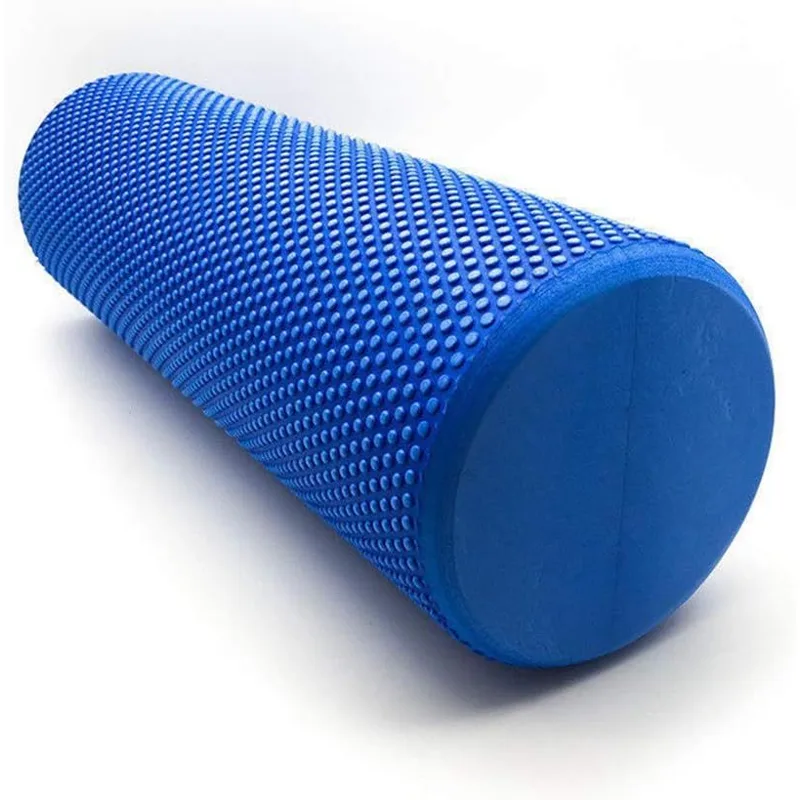
$59 Foam Roller (45cm)Thoracic spine extension & mobility
$45 Percussion Massage GunUpper trap release, 30 speed levels
$48Related Guides
- Shoulder Pain Exercises at Home
- Best Exercises for Back Pain
- Daily Stretching Routine for Flexibility
- Foam Roller Recovery Guide
- Massage Gun Benefits Guide
- Sciatica Relief Exercises at Home: Seven evidence-based exercises to relieve sciatica at home.
- Stress Relief Exercises You Can Do at Home: Stress relief exercises you can do at home with minimal equipment.
Ready to Gear Up?
Browse our range of fitness gear, shipped from Australian warehouses. Delivery is calculated by postcode in the cart.
Shop Now