Why Most Lower Back Pain Is a Strength Problem
Around 80% of adults experience significant lower back pain at some point in their lives, and modern medicine has been remarkably bad at fixing it. Painkillers, surgery, and rest produce poor long-term outcomes for most patients. The treatments that consistently work, confirmed by hundreds of randomised controlled trials, are exercise-based programmes that strengthen the muscles supporting the spine and improve movement quality.
Your spine is held together by ligaments, discs, and bones, but it's stabilised by muscles. When those muscles are weak, the spine relies on its passive structures (discs and ligaments) to absorb every load. Over years, that produces disc compression, ligament strain, and chronic pain. When the muscles are strong, they take the load before it ever reaches the passive structures. Strong people's spines age better.
The eight exercises below are the highest-return movements for the lower back. They're drawn from the work of Stuart McGill (the world's leading spine biomechanics researcher), modern physiotherapy practice, and decades of strength training tradition. They're safe for almost everyone, but if you're in acute pain or have been diagnosed with a specific spinal condition, see a physiotherapist before starting any new programme.
Anatomy: The Muscles That Protect Your Lower Back
- Erector spinae: three columns of muscle running parallel to your spine from the pelvis to the skull. Their job is to extend the back and stabilise the spine during loaded movements.
- Multifidus: small but vital muscles connecting individual vertebrae. Multifidus is the deepest and most important spinal stabiliser. It atrophies dramatically after even short periods of inactivity, which is one reason bedrest worsens back pain.
- Quadratus lumborum: sits between the lowest rib and the top of the pelvis on each side. It side-bends and stabilises the spine. Tight QL is one of the most common sources of lower back pain.
- Glutes: the muscles that should be doing most of your hip extension. When the glutes are weak, the lower back compensates, which is why "core strengthening" without glute work often fails to fix back pain.
- Transverse abdominis: the deep abdominal muscle that wraps the trunk like a belt. Strong TA reduces shear forces on the lumbar spine.
What You Need at Home
- A non-slip mat with at least 6mm of cushion. A yoga mat works for most exercises; a thicker gym mat is better if you have bony spine prominences or sensitive vertebrae.
- A foam roller for the back muscle release work that complements strengthening.
- A pair of light dumbbells (3-8kg) for loaded exercises in the second half of the programme.
- A long resistance band for hip-hinging and pull-through exercises.
8 Exercises That Build a Pain-Resistant Lower Back
1. McGill Curl-Up
Stuart McGill's modified curl-up is the safest abdominal-strengthening exercise that exists. Lie on your back with one knee bent and one leg straight. Place your hands under the small of your lower back to support its natural arch (don't flatten it against the floor). Lift your head and shoulders just a few centimetres off the floor, barely enough to clear the mat. Hold for 8-10 seconds. Lower with control. Three sets of 5-8 reps.
2. Side Plank
Lie on your side, prop yourself on one forearm with your elbow under your shoulder. Lift your hips so your body forms a straight line. Hold 20-45 seconds per side. The side plank trains the quadratus lumborum and obliques without the heavy compressive load that plagues many traditional back exercises. Three sets per side.
3. Bird-Dog
On all fours. Slowly extend your right arm forward and your left leg back simultaneously, holding for 8-10 seconds at full extension. Return to start and switch sides. The bird-dog is the most-prescribed lower back exercise in physiotherapy, it trains the deep stabilisers (multifidus and transverse abdominis) without spinal flexion or compression. Three sets of 8 per side.
4. Glute Bridge
Lie on your back with your knees bent and feet flat. Squeeze your glutes and lift your hips toward the ceiling. Hold for 2 seconds at the top. Lower with control. Three sets of 12-15. The glute bridge trains hip extension with the glutes, exactly the pattern that protects the lower back during squatting, lifting, and deadlifting.
5. Cat-Cow
On all fours. Inhale and arch your back, lifting your head and tailbone (cow). Exhale and round your spine, dropping your head and tucking your tailbone (cat). Move slowly, three seconds in each direction. Cat-cow isn't a strength exercise, it's a mobility movement that lubricates the spine and reduces stiffness. Five minutes daily produces noticeable improvement in chronic stiffness within 2-3 weeks.
6. Romanian Deadlift (Light)
Hold a light dumbbell in each hand (3-5kg to start). With knees slightly bent, hinge at the hips and lower the weights along the front of your legs. Keep your back flat throughout. Drive your hips forward to return. The Romanian deadlift trains the entire posterior chain, glutes, hamstrings, and lower back, in the exact movement pattern that protects you when lifting things in real life. Three sets of 10-12 with light weight, focusing on form.
7. Banded Pull-Through
Anchor a resistance band low to a sturdy point. Stand facing away from the anchor with the band passing between your legs and held in both hands. Hinge at the hips and let the band pull you back. Drive your hips forward to return to standing, squeezing your glutes hard. Three sets of 10-15. The pull-through teaches you to extend the hip with the glutes rather than the lower back, the most important pattern for back pain prevention.
8. Reverse Hyperextension
Lie face-down on a sturdy surface (a bed or bench works) with your hips at the edge and your legs hanging off. Squeeze your glutes and lower back to lift your legs to body height. Lower with control. The reverse hyperextension trains spinal extension under load and is one of the most rehabilitative back exercises that exists. Three sets of 10-15.
The McGill Big 3, A Daily Maintenance Routine
Stuart McGill, after decades of research on spinal health, settled on three exercises he calls the "Big 3", essential daily movements for healthy backs and rehabilitating ones. Even five minutes of these every morning produces measurable improvement in spinal stability:
- McGill Curl-Up: 3 sets of 8 reps, 10-second holds.
- Side Plank: 3 sets per side, 20-45 seconds.
- Bird-Dog: 3 sets of 8 reps per side, 8-second holds at full extension.
These three exercises take five minutes total. Done daily, they build the deep spinal stabilisers and reduce back pain in 80%+ of people who try them consistently for 6 weeks.
What NOT to Do for Lower Back Pain
- Avoid loaded spinal flexion early in rehab. High-rep crunches and sit-ups can aggravate disc problems. Switch to McGill curl-ups, planks, and dead bugs.
- Avoid bedrest. The old advice of "rest until it feels better" is outdated. Movement (walking, gentle mobility, the exercises above) heals back pain faster than rest. Two days of complete bedrest is roughly the maximum.
- Avoid hyperextending the spine in cobra or upward-facing dog if you have disc issues. Some yoga poses can aggravate stenosis or facet problems.
- Avoid heavy compound lifts (squats, deadlifts) until you've built a base. Once you can do 5 minutes of McGill Big 3 daily without pain, gradually add light Romanian deadlifts and goblet squats.
- Avoid "stretching the back" by twisting or bending. Most chronic back pain isn't tightness, it's instability. Strengthening fixes it; stretching often makes it worse.
When to See a Physiotherapist
The exercises in this guide are safe for the vast majority of people with general lower back pain. See a physiotherapist if:
- Pain shoots down a leg below the knee (possible disc herniation or sciatica)
- You have numbness, tingling, or weakness in a leg or foot
- Pain wakes you up at night and doesn't respond to position changes
- You've lost bladder or bowel control (this is a medical emergency)
- Pain has lasted more than 6 weeks despite consistent exercise
- You have a history of cancer, recent significant trauma, or unexplained weight loss alongside the pain
In Australia, you don't need a referral to see a physiotherapist. Most consultations cost $70-$120 and produce a personalised programme that's worth far more than the visit fee.
Recommended Gear
6mm cushioned surface for floor exercises. Essential for comfort during McGill curl-ups, side planks, and bird-dogs.
$59 PeterMat ZeroHeavy-duty 1m × 1m gym mat with 14kg of recycled rubber. Perfect for floor-based rehab work and added cushion under bony spines.
$79 Foam Roller (45cm)Release tight thoracic spine, glutes, and hip flexors that pull on the lower back. Essential maintenance tool.
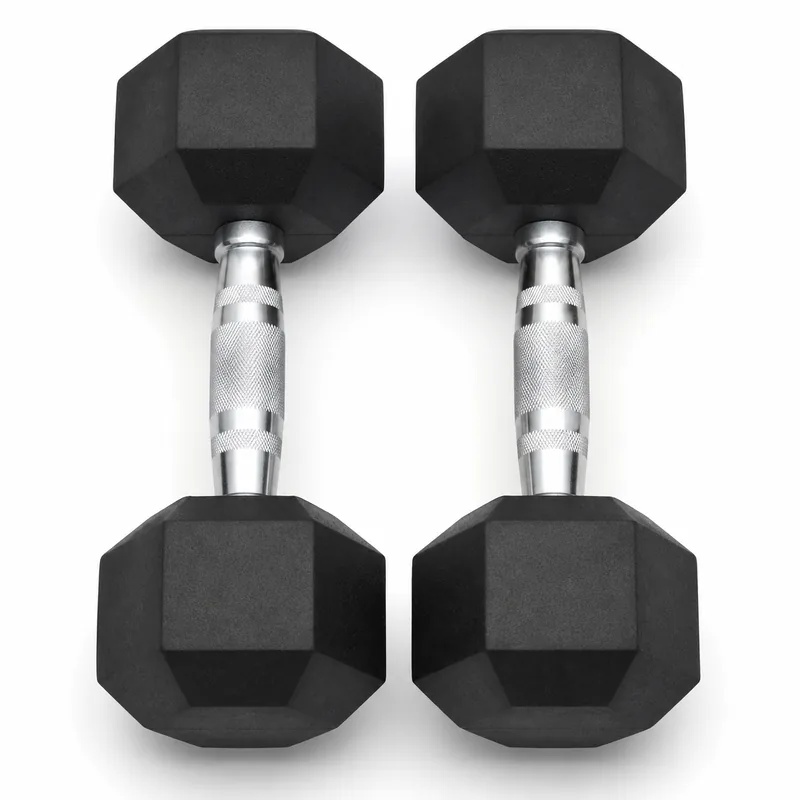
$39 Rubber Hex Dumbbells (5kg pair)Light dumbbells for Romanian deadlifts and farmer's carries. Start light when rebuilding back strength.
$49 Resistance Bands Set (5-Pack)Long bands for pull-throughs and pull-aparts. Five resistance levels accommodate progression from rehab to performance.
$29 Massage Ball Set (3-Pack)Pinpoint release for the QL, glutes, and TFL, the muscles whose tightness most often refers pain into the lower back.
$25Frequently Asked Questions
Should I exercise if my back hurts?
Yes, gentle movement is almost always better than rest. The McGill Big 3 (curl-up, side plank, bird-dog) are safe even with mild current pain. Stop any exercise that produces sharp or shooting pain, and ease into intensity gradually.
How long until my back feels better?
Most people who do the Big 3 daily plus glute bridges and gentle hip-hinging see 30-50% improvement within 2 weeks and substantial improvement within 6 weeks. Full strength rebuilding takes 12 weeks. Chronic patterns can take 6 months but consistent training reliably produces results.
Should I stretch my back?
Less than you think. Most chronic back pain isn't caused by tightness, it's caused by instability and weakness. Aggressive back stretching can worsen the underlying problem. Stretch the muscles around the back (hip flexors, hamstrings, glutes) instead. Mobilise the spine gently with cat-cow rather than aggressively stretching it.
Can I do squats and deadlifts?
Eventually, yes, they're some of the best back-strengthening exercises that exist when done properly. Start with bodyweight squats and Romanian deadlifts with very light weight (3-5kg). Build up over 6-12 weeks. By month four, most rehabilitated trainees can return to moderate compound lifting safely.
What about yoga?
Yoga is excellent for back health overall but contains some poses that are risky for specific conditions. If you have disc problems, avoid deep forward folds, twists, and aggressive backbends until you've stabilised. Yin yoga and gentle vinyasa are usually safe; hot yoga can be aggressive.
Are foam rolling and massage balls helpful?
For the muscles around the spine, yes. Roll your glutes, hip flexors, lats, and thoracic spine. Avoid rolling directly on the lumbar spine itself, which has no protective muscle layer and can be aggravated by direct pressure. A massage ball on the glutes for 2 minutes per side often relieves more lower back pain than direct back work.
Related Guides
- Exercises for Back Pain: broader pain-relief routine including upper back work
- Hip Mobility Exercises: tight hips are the #1 cause of lower back pain, fix the source
- Core Strengthening Exercises: build the deep stabilisers that protect your spine
- Posture Correction Exercises: fix the postural patterns that overload the lumbar spine
- Foam Roller Recovery: complete rolling techniques including back release
Build Your Back-Health Kit
A cushioned yoga mat, a foam roller, a pair of light dumbbells, and a set of resistance bands. Under $200 buys you the complete toolkit for a pain-resistant lower back. Free shipping on orders over $75.
Shop Now