The One-Line Answer
Interlocking foam tiles for cheap, comfortable, expandable coverage of a bodyweight/floor-work area; rubber mats for durability, weights, machines, floor protection and noise. They're not really competitors, they solve different problems, and a lot of home gyms sensibly use both. Here's how to decide what you need.
Coverage and Expandability
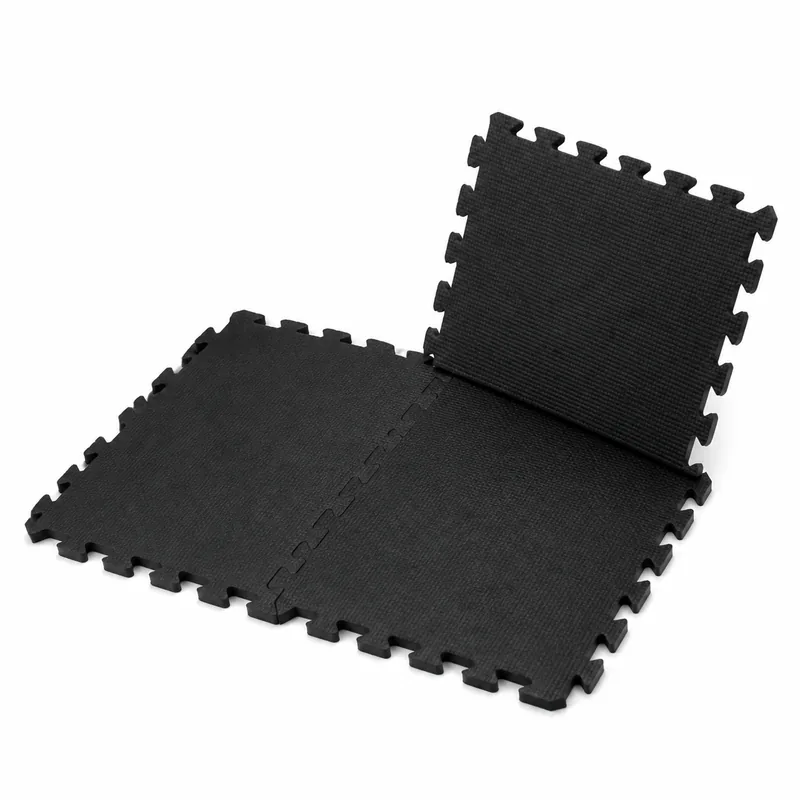
Foam tiles win here. A 4-tile pack covers 1.2m × 1.2m and you simply add packs to grow the floor, perfect for progressively kitting out a room or an oddly shaped corner. Rubber mats come in fixed 1m × 1m units; you expand by buying more mats and butting them together (also works, but per-square-metre coverage costs more than foam).
Durability Under Weights
Rubber wins decisively. Foam tiles dent under dumbbell handles, gouge under rack and machine feet, and tear if you drop weight on an edge or seam. Rubber shrugs all of that off for years. If weights are anywhere near the area, the weights zone needs rubber even if the rest of the room is foam tiles.
Comfort
Foam wins. EVA tiles are softer and warmer underfoot, nicer for planks, stretching, kneeling, kids' play and barefoot floor work. Rubber is firmer (which is exactly what you want under weights and machines, but less plush for lying-down floor work). This is the core reason the two coexist: foam where you lie down, rubber where you load up.
Floor Protection and Noise
Rubber wins both. Dense rubber stops dropped-weight impact reaching the floor and is the best domestic vibration/noise dampener. Foam cushions your body but transmits a sharp drop through to the floor and does little for structure-borne noise. For renters, hard floors, or apartments, the protective zone must be rubber.
Cost
Foam wins up front, rubber wins long-term. Foam tiles (~$65 for 1.2m × 1.2m) are cheaper per square metre and let you spread spend over time. Rubber costs more per square metre but lasts far longer and works where it matters most, so it's better value over its life. Cheapest-now isn't cheapest-overall if you replace torn foam repeatedly.
Our Recommendation
Mixed home gym (most people): a PeterMat Zero ($79) for the weights/cardio/machine station, plus an Interlocking Foam Tiles pack ($65) for the adjacent floor-work/stretching zone. Pure bodyweight room on a budget: foam tiles, expanded pack by pack. Any weights at all, hard floors, renting, or apartment: rubber is non-negotiable for the loaded area.
Recommended Gear
1m × 1m, 14kg recycled-rubber mat, the do-it-all home-gym base. Free delivery.
$79 Interlocking Foam Tiles (4-Pack)EVA tiles, 60×60cm, soft, expandable, ideal for a quiet floor-work zone.
$65 PeterMat RoundCircular mat for mobility, kettlebell and stretching zones.
$89 Premium Yoga Mat6mm non-slip mat with alignment marks, grippy and supportive for yoga, Pilates and floor work.
$59 Foam Roller (45cm)Daily mobility and post-session recovery for every training style.
$39 Carrying StrapRoll and carry a mat to class or the park in one hand.
$18Frequently Asked Questions
Should I buy foam tiles or rubber mats for a home gym?
Foam tiles for cheap, comfortable, expandable coverage of a bodyweight/floor-work area; rubber mats for durability, weights, machines, floor protection and noise. Many home gyms use both, foam where you lie down, rubber where you load up.
Are foam tiles strong enough for weights?
No, they dent under dumbbell handles, gouge under rack/machine feet and tear at seams if you drop weight. Any weights zone needs rubber even if the rest of the room is foam tiles.
Which is more comfortable, foam tiles or rubber?
Foam, it's softer and warmer underfoot for planks, stretching, kneeling and barefoot work. Rubber is firmer, which is ideal under weights and machines but less plush for lying-down floor work.
Which protects my floor better?
Rubber, clearly. Dense rubber stops dropped-weight impact reaching the floor and dampens noise; foam cushions your body but transmits a sharp drop through to the floor. Renters and hard-floor users need rubber for the loaded area.
Are foam tiles or rubber mats cheaper?
Foam tiles are cheaper per square metre up front and expandable pack by pack. Rubber costs more per square metre but lasts far longer and performs where it matters, so it's better long-term value.
Can I use foam tiles and rubber mats together?
Yes, and it's the smart setup for most home gyms, rubber for the weights/machine station and foam tiles for the adjacent floor-work and stretching zone.
Related Guides
- Rubber vs Foam Gym Mats: the material deep-dive
- Flooring Options Compared: all options
- Gym Mat Buying Guide: the full framework
- Garage Gym Flooring: concrete-floor version
- Gym Mat Size Guide: how much to cover
Get the Rubber Where It Counts
The PeterMat Zero ($79) for the weights zone, foam tiles ($65) for the floor-work zone. The smart split for most home gyms.
Shop Now