Why Your Hips Are Tight (And Why It Matters)
If you sit for more than four hours a day, and let's be honest, most of us do, your hip flexors are in a shortened position for the majority of your waking life. Over months and years, those muscles adapt. They shorten. They stiffen. And because your hips are the central junction between your upper and lower body, that stiffness radiates everywhere.
Tight hips cause lower back pain because your pelvis tilts forward, compressing the lumbar spine. They cause knee pain because your femur can't track properly in the hip socket, changing your gait. They reduce your squat depth, limit your running stride, and make bending down to pick something up feel like a negotiation with your own body.
The good news is that hip mobility responds remarkably well to consistent daily work. Ten minutes a day, every day, will produce noticeable improvements within two weeks. You don't need to be a yoga instructor. You just need a mat and the discipline to show up.
A Quick Anatomy Lesson (Stay With Me)
You don't need a physiology degree, but understanding which muscles are tight helps you target the right exercises. The hip joint is a ball-and-socket joint, it's designed for a massive range of motion in every direction. When it doesn't have that range, something is restricting it.
- Hip flexors (psoas and iliacus): These run from your lower spine and pelvis to your thigh bone. They lift your knee toward your chest. They're shortened by sitting and become the primary culprit in "tight hips" for desk workers.
- Glutes (gluteus maximus, medius, minimus): Your glutes extend and externally rotate your hip. When they're weak or inhibited (common from prolonged sitting), other muscles compensate, creating further stiffness and imbalance.
- Piriformis: A small muscle deep in your glute that externally rotates the hip. When it gets tight, it can compress the sciatic nerve, causing pain that radiates down your leg.
- Adductors (inner thigh): These pull your leg toward your midline. Tight adductors limit how wide you can spread your legs, relevant for squat width, lateral movement, and general mobility.
- TFL and IT band (outer hip/thigh): These stabilise your pelvis during walking and running. When they're tight, they pull the pelvis into dysfunction and contribute to lateral knee pain.
10 Hip Mobility Exercises With Progressions
1. 90/90 Hip Switch
Sit on your mat with both legs bent at 90-degree angles, one in front of you (external rotation) and one beside you (internal rotation). Your shins should be roughly perpendicular to each other. Sit tall, then lift both knees and rotate to switch which leg is in front and which is beside you. Move slowly and deliberately.
- Beginner: Use your hands behind you for support. 8 switches total.
- Intermediate: Hands off the floor, torso upright. 12 switches.
- Advanced: Lean forward over the front shin in each position for 3 seconds before switching. 16 switches.
2. Deep Squat Hold (Malasana)
Stand with feet slightly wider than shoulder-width, toes turned out 30-45 degrees. Squat down as deep as you can with your heels on the floor. Bring your elbows inside your knees and press outward while pressing your palms together. If your heels lift, place a rolled towel or yoga block under them.
- Beginner: Hold for 20 seconds with heel support.
- Intermediate: Hold for 45 seconds, heels flat.
- Advanced: Hold for 60 seconds while shifting weight side to side.
3. Half-Kneeling Hip Flexor Stretch
Kneel on your mat with one foot forward, both knees at 90 degrees. Squeeze the glute of your back leg and gently push your hips forward until you feel a stretch in the front of your back hip. Don't arch your lower back, tuck your tailbone slightly. This is the single most important stretch for desk workers.
- Beginner: Hold 30 seconds each side. Hands on front knee for balance.
- Intermediate: Raise the same-side arm as the back leg overhead, adding a lateral stretch.
- Advanced: Add a gentle twist toward the front leg while maintaining the hip flexor stretch.
4. Pigeon Pose
From a push-up position, bring your right knee forward and place it behind your right wrist, shin angled across your body. Extend your left leg straight behind you. Lower your hips toward the floor. You'll feel this deep in your right glute and piriformis. If this is too intense, place a yoga block under your right hip for support.
- Beginner: Block under hip, hold 30 seconds each side.
- Intermediate: No block, fold forward over front shin, hold 45 seconds.
- Advanced: Walk hands forward until chest is on the floor, hold 60 seconds.
5. Leg Swings (Front-to-Back and Side-to-Side)
Stand beside a wall or chair for balance. Swing one leg forward and backward in a controlled arc, letting it swing naturally like a pendulum. Start with a small range and gradually increase. Then face the wall and swing the leg side to side across your body. This is dynamic mobility, your muscles actively move through range rather than passively holding a position.
- Beginner: 10 swings each direction, each leg. Small range.
- Intermediate: 15 swings, larger range.
- Advanced: 20 swings, maximum controlled range, no support.
6. Frog Stretch
Start on all fours, then widen your knees as far apart as comfortable, keeping your feet in line with your knees (toes pointing outward). Slowly push your hips backward toward your heels. You'll feel a deep stretch in your inner thighs (adductors). This stretch can be intense, go slowly and breathe through it.
- Beginner: Hold 20 seconds, knees moderately wide.
- Intermediate: Hold 40 seconds, knees wider, forearms on floor.
- Advanced: Gently rock forward and backward in the position for 60 seconds.
7. Supine Figure-Four Stretch
Lie on your back on your mat. Cross your right ankle over your left knee, creating a figure-four shape. Pull your left thigh toward your chest, threading your right hand through the gap and clasping behind your left thigh. You'll feel this deep in your right glute and piriformis. This is the stretch your physio tells you to do for sciatica.
- Beginner: Hold 30 seconds each side. Left foot stays on floor if flexibility is limited.
- Intermediate: Hold 45 seconds, pulling thigh closer to chest.
- Advanced: Gently press your right elbow against your right knee while pulling, hold 60 seconds.
8. Cossack Squat
Stand with feet wide apart, toes slightly turned out. Shift your weight to one side, bending that knee deeply while straightening the opposite leg. The straight leg's toes point to the ceiling. Go as deep as your mobility allows. This exercise simultaneously stretches the inner thigh of the straight leg and strengthens the hip of the bent leg.
- Beginner: 5 each side, holding a chair or doorframe for balance.
- Intermediate: 8 each side, hands at chest height (prayer position).
- Advanced: 10 each side with a light dumbbell held at chest (goblet style).
9. Hip Circles on All Fours
Get on your hands and knees. Lift one knee off the floor and draw circles with it, forward, up, out to the side, and back. Think of it like stirring a pot with your knee. This actively takes your hip through its full range of motion in every plane. It's also an excellent warm-up before any lower body workout.
- Beginner: 8 circles each direction, each leg. Small circles.
- Intermediate: 12 circles, larger range.
- Advanced: 15 circles with a resistance band around your thighs for added challenge.
10. Wall-Assisted Hip Flexor Release
Kneel facing away from a wall, then place the top of your back foot against the wall behind you (shin vertical against the wall). Step your front foot forward into a lunge position. You'll feel an extremely deep stretch in the hip flexor and quad of the back leg. This is one of the most aggressive hip flexor stretches available, and one of the most effective.
- Beginner: Keep torso upright, hold 20 seconds each side.
- Intermediate: Squeeze back glute and push hips forward, hold 40 seconds.
- Advanced: Raise same-side arm overhead and add a gentle side bend, hold 60 seconds.
Your Daily 10-Minute Hip Mobility Routine
Do this every day, morning, before a workout, or before bed. Consistency matters more than intensity.
- Minutes 1-2: Leg swings (10 each direction, each leg)
- Minutes 2-3: Hip circles on all fours (8 each direction, each leg)
- Minutes 3-4: Deep squat hold (45 seconds)
- Minutes 4-6: Half-kneeling hip flexor stretch (60 seconds each side)
- Minutes 6-8: Pigeon pose (60 seconds each side)
- Minutes 8-9: 90/90 hip switch (10 switches)
- Minutes 9-10: Supine figure-four stretch (30 seconds each side)
That's it. Ten minutes. The first few sessions will feel awkward and restricted. By day 14, you'll notice your squat is deeper, your lower back feels better, and getting up off the floor is no longer an event.
Equipment That Helps
You can do every exercise on this page with nothing but floor space. However, a few pieces of equipment make the movements more comfortable and effective:
- A mat: Knee-friendly surface for half-kneeling and pigeon pose. Any PeterMat works.
- Yoga blocks: Support under your hips in pigeon pose, under your heels in deep squat. They make difficult positions accessible while you build range.
- Resistance bands: Add load to hip circles and cossack squats once you've built baseline mobility. The variable resistance teaches your muscles to be strong through the new range, not just flexible.
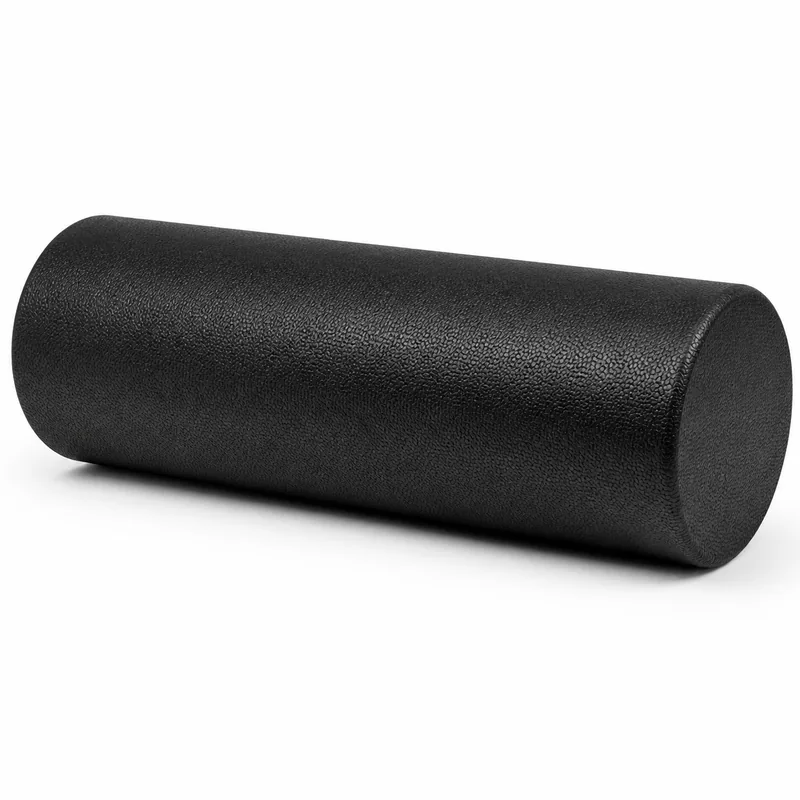
- Foam roller: Pre-stretching foam rolling on your quads, IT band, and glutes increases blood flow and reduces tone, making your mobility work more effective.
- Massage balls: Target your piriformis (the muscle deep under your glute) and the bottom of your foot. Massage balls reach spots a foam roller physically can't access.
Common Mistakes
- Bouncing in stretches: Ballistic stretching triggers your stretch reflex, making muscles tighten rather than relax. Move into the stretch slowly and hold. The only exception is dynamic swings, which are controlled pendulum movements, not bounces.
- Stretching through sharp pain: A deep stretch should feel like tension, not a stabbing sensation. Sharp pain in a joint (not a muscle) means you've gone too far or you have an underlying issue that needs professional assessment.
- Only stretching one side: Even if your left hip feels fine, stretch both sides equally. Asymmetric flexibility creates new compensation patterns.
- Expecting instant results: Mobility is earned over weeks, not minutes. Two weeks of daily work produces meaningful change. Two months produces transformative change. Two days produces nothing.
- Skipping activation after stretching: Mobility without strength creates instability. After stretching your hip flexors, activate your glutes (bodyweight bridges, clamshells). After stretching your adductors, do lateral lunges or monster walks. Your body needs to learn to use the new range under load.
Recommended Gear
6mm cushion for knee comfort
$59 Yoga Blocks (Pair)High-density EVA foam support
$25 Resistance Bands (5-Pack)Add load to mobility drills
$29 Foam Roller (45cm)Pre-stretch tissue release
$39 Massage Balls (3-Pack)Deep piriformis and glute release
$25Related Guides
- Stretching Routine for Flexibility: full-body stretching programme beyond just hips
- Knee Pain Exercises at Home: hip mobility directly impacts knee health
- Best Exercises for Back Pain: tight hips and back pain are closely connected
- Yoga for Beginners at Home: many yoga poses are excellent hip openers
- Foam Roller Recovery Guide: rolling techniques for hip and IT band release
Ready to Unlock Your Hips?
Grab a mat and a pair of yoga blocks. Ten minutes a day is all it takes.
Shop Now