What Makes HIIT Different (and What Equipment You Actually Need)
High-Intensity Interval Training works on a simple principle: short bursts of maximum effort followed by brief recovery periods. The magic is in the ratio. A classic Tabata protocol uses 20 seconds of all-out work followed by 10 seconds of rest, repeated 8 times for a brutal 4-minute block. Other common structures include 30:30 (30 seconds work, 30 seconds rest), 40:20 (favoured by most personal trainers for beginners), and the EMOM format, every minute on the minute, where you perform a set number of reps and rest for whatever remains of that 60 seconds.
What all these protocols share is intensity. You're not cruising at 60% effort like a jog around the block. You're pushing to 85-95% of your maximum heart rate during work intervals. That changes the equation for equipment. The gear you use in a steady-state session, adjustable dumbbells, cable machines, complicated pulley systems, is actively dangerous in HIIT. When your heart rate is at 170 bpm and you've got 3 seconds to transition between exercises, fiddling with a spin-lock collar or threading a cable attachment is a recipe for a dropped weight or a jammed finger.
HIIT equipment needs to meet three non-negotiable criteria:
- Grab-and-go. No adjustments between intervals. Fixed-weight dumbbells, not adjustable ones. Bands you can pick up without untangling. A mat that stays put when you dive onto it for burpees.
- Durable enough for hard use. You're going to drop dumbbells. You're going to slam your hands down for mountain climbers. You're going to throw bands onto the ground between sets. Everything needs to survive that treatment without chipping, cracking, or snapping.
- Safe on floors. When you're moving at speed and fatigue is high, things get dropped. Rubber-coated weights protect your tiles. A thick mat absorbs impact noise so your downstairs neighbours don't file a complaint at 6am. Hex-shaped dumbbells don't roll away when you set them down between sets.
The good news: you don't need much. Three items will cover 90% of every HIIT workout you'll ever do at home. Add another two or three pieces down the line if you want variety. But don't let the fitness industry convince you that you need a $3,000 functional trainer to do intervals. You are the machine. The equipment just adds resistance.
The Essential HIIT Kit
These three items, in this order of priority, will equip you for hundreds of different HIIT workouts. If you're on a tight budget, buy them one at a time, the bands first (most versatile), then the mat (protects your joints and your floor), then the dumbbells (adds load to everything).
Band pull-aparts, banded squats, banded push-ups. Five 208cm loops from light to heavy.
$59 Rubber Hex Dumbbell Pair (5kg)Thrusters, snatches, renegade rows. Rubber-coated hex design won't roll or chip your floor.
$48Bands and dumbbells: $107 for the goods. Add a dense rubber floor mat and you have the full kit. Delivery is calculated by postcode in the cart, and we deliver within Australia. That's cheaper than two months of F45 membership, and you'll own this gear for years.
Let's break down why each piece earns its spot.
Resistance bands ($59 for five 208cm loops) are the single most underrated piece of HIIT equipment. They add tension to bodyweight movements without adding bulk, and the elastic resistance means the hardest point of the exercise matches where your muscles are strongest. Banded squat jumps hit your quads and glutes harder than bodyweight alone. Band pull-aparts between pressing sets keep your shoulders healthy. Banded push-ups add progressive overload without needing heavier dumbbells. Five different resistance levels mean you can scale any exercise from gentle warm-up to genuinely challenging. They also take up zero floor space, toss them in a drawer when you're done.
A 5kg dumbbell pair ($48) might sound light if you're used to gym work. But in a HIIT context, where you're doing 40 seconds of thrusters followed by 20 seconds of rest followed by 40 seconds of renegade rows, 5kg per hand is humbling. The sustained effort under fatigue makes moderate weight feel heavy fast. Rubber hex coating means they won't damage your floor when you set them down hard between intervals, and the hex shape means they won't roll under your feet, a genuine safety issue when you're moving fast and sweating.
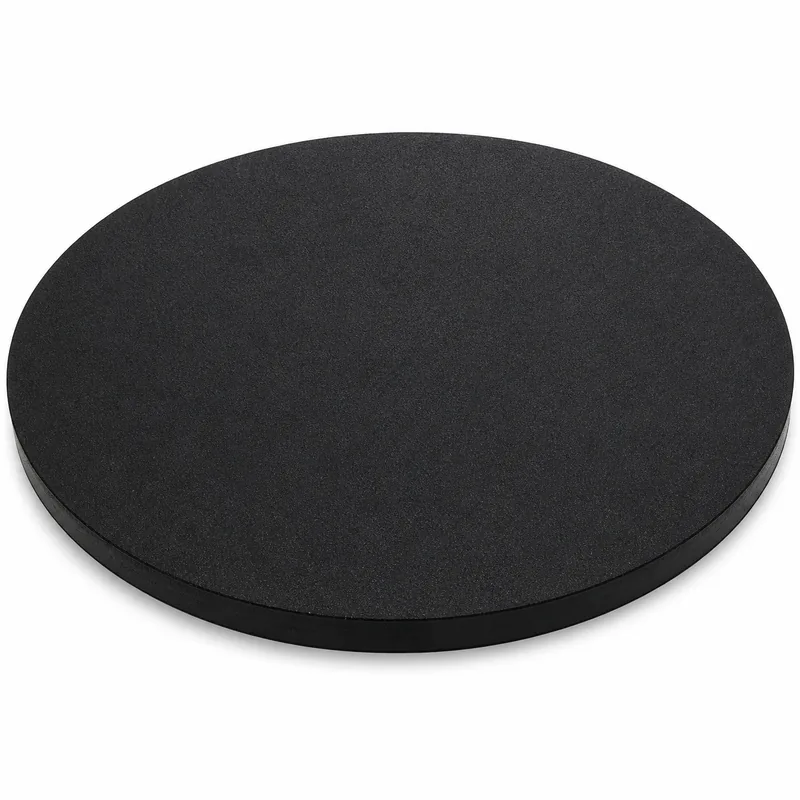
A dense rubber floor mat of about 1 metre by 1 metre and 15mm or more is the third piece. A heavy rubber mat doesn't slide when you're doing burpees. It doesn't bunch up during mountain climbers. It absorbs noise from jumping and dropping dumbbells, which matters if you're training in a flat or before anyone else in the house wakes up. The firm surface provides stable footing for plyometric work while still cushioning your joints on impact. A yoga mat won't cut it here, too thin, too slippery, too narrow. You need a surface that can handle the intensity of HIIT without folding, sliding, or wearing through in three months.
Level Up Additions
Once you've been doing HIIT consistently for a month, you might want to expand your exercise library. These three additions are the best bang-for-buck upgrades, in order of usefulness:
Rollout intervals are brutal. 30 seconds of ab rollouts followed by 30 seconds of rest will challenge anyone.
$31 Fabric Loop Bands (3-Pack)Banded lateral walks between sets. Glute activation that turns your warm-up into a mini-workout.
$30 Rubber Hex Dumbbell Pair (10kg)Heavier thrusters, goblet squats, and deadlifts when 5kg stops challenging you.
$114The double wheel ab roller ($31) is deceptively simple and devastatingly effective in an interval format. Unlike crunches, which only work your rectus abdominis through a short range, rollouts engage your entire anterior chain: deep core stabilisers, obliques, hip flexors, lats, and even your triceps. In a HIIT circuit, slot 30 seconds of ab rollouts between lower-body exercises. Your heart rate stays raised because the movement demands full-body tension, and your core gets direct training without a single sit-up.
The fabric loop bands ($30) are different from the long latex loop bands in your starter kit. These sit around your thighs or ankles and add lateral resistance, meaning they fire up your glutes and hip stabilisers in ways that forward-and-back movements can't. Banded lateral walks, banded clamshells, and banded squat holds are excellent as active recovery between high-intensity rounds. They also reduce knee injury risk by strengthening the muscles that keep your knees tracking properly during jumps and lunges.
The 10kg dumbbell pair ($114) becomes necessary once your conditioning improves and 5kg thrusters no longer challenge you within a 40-second interval. Use them for goblet squats, Romanian deadlifts, and single-arm rows. The weight jump from 5kg to 10kg is significant, you'll feel it immediately in exercises like devil presses and dumbbell snatches.
A 20-Minute HIIT Workout Using This Kit
Here's a complete session you can do with just the essential kit (bands, 5kg dumbbells, mat). The structure is 4 rounds of 5 exercises. Each exercise is 40 seconds of work followed by 20 seconds of rest. After each round, take 60 seconds of complete rest before starting the next. Total time including warm-up and cool-down: approximately 20 minutes.
Warm-Up (3 Minutes)
Don't skip this. Cold muscles and HIIT are a fast track to a pulled hamstring.
- Jumping jacks: 30 seconds (on mat, get your heart rate moving)
- Bodyweight squats: 30 seconds (full depth, no rush)
- Arm circles: 15 seconds forward, 15 seconds backward
- Inchworms: 30 seconds (walk hands out to plank, walk back, stand)
- Banded lateral walks: 30 seconds (resistance band around ankles, 10 steps each direction)
The Circuit: 4 Rounds / 40s Work / 20s Rest
Exercise 1: Dumbbell Thrusters (5kg dumbbells)
Hold dumbbells at shoulder height. Squat until your thighs are parallel, then drive up explosively and press the dumbbells overhead in one fluid motion. That's one rep. Aim for 10-12 reps in 40 seconds. This is the hardest exercise in the circuit because it uses your legs and shoulders simultaneously, your heart rate will spike fast.
Exercise 2: Banded Squat Jumps (resistance band around thighs)
Place a medium-resistance band just above your knees. Squat to parallel, then jump as high as you can. Land softly on the mat with bent knees. The band forces your knees outward, which protects them during landing and makes your glutes work harder. Aim for 8-10 reps in 40 seconds.
Exercise 3: Renegade Rows (5kg dumbbells, on mat)
Start in a plank position with hands gripping the dumbbells, placed shoulder-width apart on your mat. Row the right dumbbell to your hip, lower it, then row the left. Keep your hips square to the ground, no rotating. This hits your back, core, and arms simultaneously. Aim for 6-8 rows per side in 40 seconds.
Exercise 4: Mountain Climbers (on mat, no equipment)
Plank position on the mat. Drive your right knee toward your chest, then switch to the left. Move as fast as you can while keeping your hips level. This is your cardio-focused exercise, it keeps your heart rate high between the strength-based movements. Aim for 30+ total reps in 40 seconds.
Exercise 5: Dumbbell Devil Press (5kg dumbbells, on mat)
Hold both dumbbells. Perform a burpee (chest to mat), then as you stand, swing the dumbbells between your legs and overhead in one explosive arc, like a kettlebell swing with dumbbells. This is the finisher for a reason: it's a full-body movement that demands coordination when you're fatigued. Aim for 6-8 reps in 40 seconds.
Rest 60 seconds between rounds. Walk around, shake out your arms, take a sip of water. You should feel recovered enough to go hard again, but not fully rested. That's the point.
Cool-Down (3 Minutes)
- Standing quad stretch: 30 seconds each leg
- Standing hamstring stretch: 30 seconds each leg (foot on a chair or step)
- Chest doorway stretch: 30 seconds (or hands behind head, elbows back)
- Child's pose on mat: 30 seconds (deep breathing, let your heart rate come down)
For a more thorough cool-down routine, see our post-workout recovery guide. Adding a foam roller ($45) to your cool-down significantly reduces next-day soreness.
HIIT Equipment Mistakes
After a decade of training clients and running group HIIT sessions, these are the most common equipment mistakes I see people make when setting up a home HIIT station. Every one of them costs money, wastes time, or creates injury risk.
Mistake #1: Buying adjustable dumbbells. Adjustable dumbbells are brilliant for slow, controlled strength training where you change weights between sets over a 90-second rest. They're terrible for HIIT. Spin-lock collars come loose when you set dumbbells down quickly. Dial-select models like Bowflex aren't rated for dropping. And the 10-15 seconds it takes to change the weight mid-circuit is 10-15 seconds of your work interval wasted. For HIIT, buy fixed-weight rubber hex dumbbells. Pick one weight that challenges you for upper-body work (usually 5kg for beginners, 10kg for intermediate), and stick with it.
Mistake #2: Not having a mat. "I'll just work out on the carpet" lasts exactly one session. Carpet fibres get embedded in your palms during push-ups. Sweat doesn't evaporate from carpet, leaving a damp patch that smells terrible within a week. And if you're on hard flooring, tiles, timber, concrete, your wrists, knees, and joints take a beating during plank-based work and burpees. A proper gym mat isn't a luxury item for HIIT. It's a safety requirement. Choose a heavy rubber mat that stays exactly where you put it, which matters when you're launching into burpees at 170bpm.
Mistake #3: Buying cardio machines. An exercise bike or rowing machine is great for steady-state cardio. But for HIIT, you are the cardio machine. Burpees, squat jumps, mountain climbers, and high knees all spike your heart rate faster than any machine because they're explosive, full-body movements with no seat supporting your weight. A $2,000 assault bike does the same job as a $0 set of burpees. Save the money for resistance equipment that actually adds exercise variety.
Mistake #4: Overspending on a single piece. A $500 smart jump rope or a $1,200 connected rower locks your entire training into one movement pattern. HIIT is about variety, rotating through exercises that hit different muscle groups so you can maintain high intensity without any single muscle failing too early. Spread your budget across 3-4 versatile pieces and you'll have dozens of exercise options instead of one.
HIIT vs Steady-State Cardio: Why Equipment Matters
Both training styles have their place, but they demand very different equipment. Understanding this saves you from buying the wrong gear for your goals.
Steady-state cardio: jogging, cycling, swimming, is sustained effort at a moderate heart rate (roughly 60-70% of your max), typically for 30-60 minutes. Equipment for this style is about comfort and repetition: a decent pair of running shoes, maybe a stationary bike with an adjustable seat, good cushioning for long-duration impact. The focus is endurance, and the equipment just needs to support that one movement pattern for a long time.
HIIT is the opposite: short, violent bursts of maximum effort across multiple movement patterns, with equipment transitions happening in seconds. Your gear needs to be multi-purpose (one set of dumbbells works for rows, presses, squats, and deadlifts), quick to grab, and resilient to the kind of rough handling that comes with fatigued muscles and time pressure. You'd never drop a spin bike in frustration, but you will set dumbbells down hard when you've got 3 seconds to transition to mountain climbers.
The practical takeaway: if HIIT is your primary training style, invest in versatile resistance equipment (bands, dumbbells, a mat) rather than single-purpose cardio machines. You'll get more exercise variety, spend less money, and take up a fraction of the floor space. Our home gym on a budget guide covers both approaches if you want to mix styles.
Related Guides
- 30-Minute Home Workout Plan: a structured 4-week program using the same equipment
- Best Exercise Equipment for Weight Loss: if fat loss is your primary goal
- Resistance Band Workout Guide: band-only sessions for travel or active recovery days
- Full Body Dumbbell Workout: slow, controlled strength work to complement your HIIT sessions
- Home Gym on a Budget: build a complete training space under $500
- Best Equipment to Lose Belly Fat at Home (And the Honest Truth): The honest truth about losing belly fat at home, what equipment actually helps, what doesn't, and the...
Build Your HIIT Station
Bands and a 5kg dumbbell pair are $107 for the goods. Add a rubber floor mat and you have everything you need for hundreds of different HIIT workouts. Delivery is calculated by postcode in the cart, and we deliver within Australia.
Shop Now