Why the Goblet Squat Is the Best Squat to Learn First
Strength coach Dan John popularised the goblet squat in the early 2000s as a teaching tool, his observation was that anyone, regardless of mobility, strength, or experience, could learn a passable squat by holding a dumbbell or kettlebell against the chest. Twenty years later, the goblet squat is recognised as one of the most efficient lower-body exercises that exists. It's used by elite athletes, prescribed by physiotherapists, and forms the backbone of countless home training programmes.
The reason it works so well comes down to mechanics. When you hold a weight at chest height in front of your body, your centre of mass moves forward, which forces you to keep your torso upright during the squat. This is the position most lifters spend years trying to learn with the back squat. The goblet squat skips that learning curve entirely. The weight in front also engages your core in a way that bilateral squats don't, producing simultaneous lower body and core training in a single exercise.
Equipment You Need
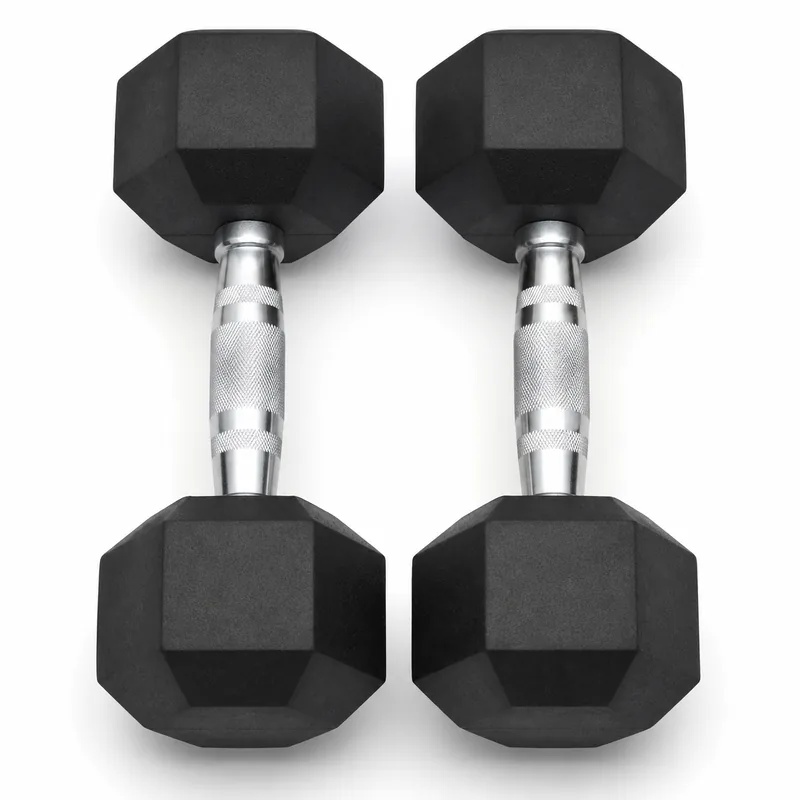
A single dumbbell. That's it. Most adults start with 5-10kg and progress to 15-25kg over months. Rubber hex dumbbells work perfectly because their hex shape sits comfortably against the chest. Kettlebells also work but typically cost more for equivalent weight.
A non-slip mat is helpful but not required. Heel-raised platforms (small wedges or weight plates) help if you have limited ankle mobility, but most people don't need them.
Step-by-Step Form
1. Set Up the Grip
Hold a dumbbell vertically against your chest with both hands cupping the top end. The dumbbell should feel secure and stable, your hands act as a basket cradling the top end. Imagine the dumbbell is a goblet you don't want to spill (hence the name). The bottom of the dumbbell sits at chest level.
2. Set Your Stance
Stand with feet shoulder-width apart or slightly wider. Toes turned out 15-25 degrees. Your stance should feel athletic and stable, not narrow, not wide. Most people benefit from a slightly wider stance than they instinctively choose.
3. Initiate the Squat
Push your hips back as if reaching to sit in a chair behind you. Simultaneously bend your knees, tracking them in line with your toes (not collapsing inward). Keep your chest up and the dumbbell pulled close to your body.
4. Descend
Continue descending until your elbows touch the inside of your knees, or until you can't go deeper without your back rounding. Most people can squat to parallel (thighs parallel to the floor) easily; many can go below parallel with practice. Don't force depth that compromises your back position.
5. Stand
Drive through your heels and the middle of your feet (not your toes). Squeeze your glutes hard at the top. Stand fully tall before starting the next rep. Don't bounce out of the bottom, the deliberate pause is what builds strength.
The Top 5 Form Mistakes
1. Knees Caving Inward
The most common error. Your knees should track over your toes throughout the movement. Cue: "break the floor with your feet", actively press your feet outward against the ground. If your knees still cave, add a loop band above your knees and press out against it.
2. Heels Lifting
If your heels come off the floor at the bottom of the squat, you have insufficient ankle mobility for your current depth. Solutions: don't squat as deep, raise your heels with a small wedge or 5kg plate, or work on ankle mobility separately.
3. Forward Lean
If your chest collapses forward, the dumbbell pulls you down. Your goal is to keep the dumbbell against your chest throughout the squat. Common cause: insufficient core engagement. Brace your abs as if expecting a punch before each rep.
4. Lower Back Rounding
At the bottom of the squat, your lower back should maintain its natural curve. If your tailbone tucks under, you've gone too deep for your current mobility. Stop the descent at the point your back position can be maintained.
5. Bouncing
Using stretch reflex to spring out of the bottom looks impressive but builds less muscle than a controlled descent and a deliberate pause. Lower for 2-3 seconds. Pause for 1 second. Drive up. Slow eccentrics build twice as much muscle.
Programming the Goblet Squat
Beginner (Months 1-3)
3 sets of 8-10 reps with a weight you can handle with strict form. Most beginners start with 5-10kg dumbbells. Progress weight every 1-2 weeks once 10 reps feel comfortable.
Intermediate (Months 3-9)
4 sets of 6-10 reps with 12.5-20kg dumbbells. Add accessory exercises like Bulgarian split squats and Romanian deadlifts. Progress weight every 2 weeks.
Advanced (Months 9+)
Progress to 25kg+ dumbbells. At this point, consider transitioning to barbell front squats or sticking with goblet squats as a finisher after heavier compound work.
Variations and Progressions
Pause Goblet Squat
Hold the bottom position for 3-5 seconds before standing. Builds tremendous strength out of the hole and exposes any form weaknesses.
Tempo Goblet Squat
Lower for 4 seconds, pause for 1, stand for 1. Tempo work amplifies time-under-tension and produces different growth signal than standard reps.
Goblet Box Squat
Squat down to a box or chair, sit briefly, then stand. Removes the stretch reflex, builds raw strength, and teaches proper depth.
Heel-Elevated Goblet Squat
Stand on a 2-5cm wedge with your heels raised. Allows deeper squats and shifts more emphasis to the quadriceps. Useful for trainees with limited ankle mobility.
1.5 Reps
Squat down, come up halfway, squat back down, then stand fully. One "1.5 rep" counts as one rep. Sets of 8 = 12 "sets" of effort. Brutal but effective.
Goblet Squat Pulse
At the bottom of the squat, perform 3 small pulses (1-2 inches up and down) before standing. Increases time-under-tension and metabolic stress.
What the Goblet Squat Trains
- Quadriceps: primary mover during the standing phase
- Glutes: primary hip extensor at the top of the rep
- Hamstrings: assist at the bottom and during the standing drive
- Adductors: inner thigh muscles, engaged during a wider stance
- Core: particularly the deep stabilisers, due to the front-loaded position
- Upper back: must stay tight to support the dumbbell
- Forearms: grip the dumbbell throughout
Common Questions About Form
How Deep Should I Squat?
As deep as you can while maintaining a neutral spine. For most people that's parallel to slightly below parallel. Forcing depth your mobility doesn't allow produces lumbar flexion and increases injury risk. Improve depth gradually with mobility work.
Should My Knees Go Past My Toes?
Usually yes. The "knees behind toes" rule is decades-old physiotherapy advice that doesn't match current biomechanics research. Your knees naturally travel forward during deep squats, that's normal and safe. What matters is that your knees track in line with your toes (not caving inward).
How Wide Should My Feet Be?
Most people benefit from shoulder-width to slightly wider. Narrower stances emphasise quadriceps; wider stances emphasise glutes and adductors. Experiment within a 30cm range and find what feels strongest for you.
Where Should I Look?
Straight ahead at a fixed point. Looking up arches your neck and lower back excessively; looking down rounds your upper back. A neutral neck is best.
Recommended Gear
Use one for the goblet squat, the bread-and-butter starting weight for most adults.
$79 Rubber Hex Dumbbells (15kg pair)Progression weight. Most lifters reach this within 2-3 months of consistent practice.
$109 Rubber Hex Dumbbells (20kg pair)Advanced weight. By the time you can goblet squat 20kg for sets of 10, you've built genuine lower body strength.
$139 Rubber Hex Dumbbells (25kg pair)The heaviest dumbbell most home lifters need. Goblet squatting 25kg for reps puts you in the top 5% of home trainees.
$169 PeterMat ZeroHeavy-duty 1m × 1m mat. Floor protection for heavy goblet squats and deadlift work.
$79 Fabric Loop Bands (3-Pack)Above-knee placement during goblet squats fixes knees-caving-inward. Banded squats also build glute activation.
$35Frequently Asked Questions
How heavy should my goblet squat dumbbell be?
Heavy enough that 8-10 reps are challenging. Most adults start with 5-10kg, progress to 12.5-20kg within 6 months, and reach 20-25kg by 12 months. The goal is consistent progression, not absolute weight.
Are goblet squats better than barbell squats?
Different, not better or worse. Goblet squats are easier to learn, safer at home, and more accessible. Barbell squats allow heavier loads (eventually). For most home trainees, goblet squats produce equivalent or better results for the first 1-2 years of training.
How often should I goblet squat?
2-3 times per week is the sweet spot. Once for heavy strength (sets of 6-8), once for volume (sets of 10-15), and optionally once for tempo or pause work. Daily goblet squats are too much for most trainees.
Can goblet squats replace deadlifts?
Partially. Goblet squats train the legs and core but underemphasise the posterior chain (hamstrings, lower back, glutes). Pair goblet squats with Romanian deadlifts for complete lower body coverage.
Why do my knees hurt during goblet squats?
Most commonly: insufficient ankle mobility, weak glute medius (knees caving), or going too deep too soon. Address each separately. If pain persists, see a physiotherapist.
Will goblet squats build big legs?
Yes, substantial quadriceps, glute, and hamstring development is achievable with goblet squats alone. Combined with Romanian deadlifts, hip thrusts, and Bulgarian split squats, the leg development possible from home dumbbell training rivals most gym-based programmes.
Related Guides
- Dumbbell Only Workout Plan: structured 4-week dumbbell programme
- Lower Body Home Workout: full lower body session
- Romanian Deadlift Guide: the perfect partner exercise
- Glute Exercises for Women: complete glute training
- Dumbbell Weight Guide: choose the right starting weight
Get Your Goblet Squat Dumbbells
Three pairs of dumbbells (10kg, 15kg, 20kg), a heavy-duty mat, and loop bands. Under $400 buys you a goblet squat progression that'll last for years. Free shipping on orders over $75.
Shop Now