They Overlap More Than People Admit
The dumbbell-vs-kettlebell debate is overblown, there's huge overlap. You can press, row, squat, lunge, swing and carry with either. The real question for a home gym isn't 'which is better', it's 'which should I buy first and most of'. For the vast majority of home trainers, that answer is dumbbells.
What Dumbbells Do Better
- Versatility: every basic strength movement (press, row, curl, lunge, fly, raise) is natural with dumbbells.
- Progression in small steps: fixed pairs at 5/10/15kg let you add load in manageable jumps.
- Beginner-friendly: the movements are intuitive and low-skill; you can start day one.
- Bilateral and unilateral: train both arms together or fix imbalances one side at a time.
Dumbbells are the broadest, lowest-skill, most progressable strength tool, the right backbone for a home gym.
What Kettlebells Do Better
- Ballistic work: swings, cleans and snatches build power and conditioning brilliantly thanks to the offset handle.
- Grip and conditioning: flow complexes and high-rep ballistic work torch conditioning.
- Single-implement workouts: one well-chosen bell gives a complete session.
Kettlebells shine for power, conditioning and dynamic flows, a brilliant complement once your strength base exists.
Which to Buy First
Dumbbells, almost always. They cover more of what a beginner-to-intermediate home trainer needs (general strength, hypertrophy, accessible movements) with less technique risk. The kettlebell swing is fantastic but technique-sensitive; getting it wrong loads the lower back. Build strength and movement competence with dumbbells first, then add a kettlebell for swings and conditioning if you want it.
The Realistic Home Setup
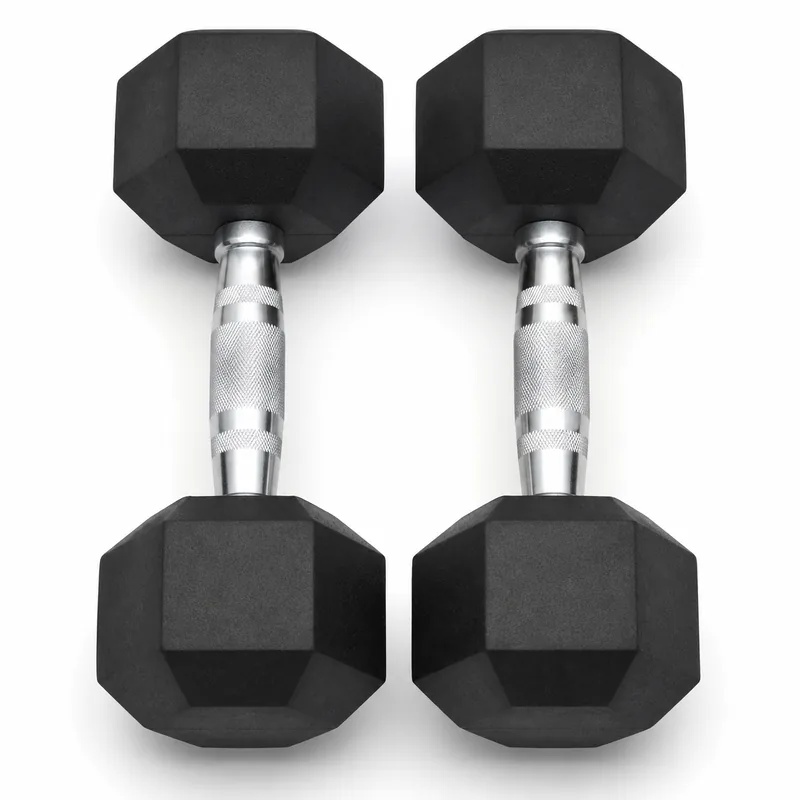
For most people: two or three pairs of rubber hex dumbbells (a light, a mid, a heavier) as the strength backbone, plus resistance bands for variety and joint-friendly work. That covers strength, hypertrophy and conditioning for years. Add a single kettlebell later specifically for swing-based conditioning if it appeals, it's an addition, not a replacement.
Our Recommendation
Start with rubber hex dumbbells, 5kg and 10kg pairs cover most beginners, add 15kg as you progress. Floor-safe rubber heads, nothing to break, intuitive movements from day one. Train on a dense rubber mat so set-downs never threaten the floor. Add a kettlebell down the track if you fall in love with swings.
Recommended Gear
Light pair for beginners, conditioning and high-rep work. Rubber heads protect floors.
$49 Rubber Hex Dumbbells (10kg)The mid-weight workhorse for most home strength training.
$79 Rubber Hex Dumbbells (15kg)Heavier pair for compound lifts as you progress.
$109 PeterMat Zero1m × 1m, 14kg recycled-rubber mat. Thick, dense and joint-friendly, the do-it-all home-gym base. Free delivery.
$79 Resistance Bands SetFive tension levels in one set, the most exercises per dollar in any home gym.
$29 Foam Roller (45cm)Firm EVA roller for daily mobility and post-session recovery.
$39Frequently Asked Questions
Should I buy dumbbells or kettlebells first?
Dumbbells, for almost every home trainer. They cover more general strength and hypertrophy work with less technique risk and easier progression. Add a kettlebell later specifically for swing-based power and conditioning.
Are dumbbells or kettlebells better for a home gym?
Dumbbells are the better backbone, more versatile, lower-skill, progressable in small steps. Kettlebells are an excellent complement for ballistic power and conditioning once a strength base exists.
Can dumbbells do everything kettlebells can?
Most of it, pressing, rowing, squatting, lunging, carrying and even swings. Kettlebells' offset handle makes ballistic swings, cleans and snatches smoother, but for general training the overlap is large.
How many dumbbells do I need to replace kettlebell workouts?
Two to three pairs (e.g. 5kg, 10kg, 15kg) plus resistance bands cover strength, hypertrophy and most conditioning. A single kettlebell adds swing-specific power work if you want it later.
Are kettlebell swings dangerous for beginners?
They're technique-sensitive, done wrong they load the lower back. It's safer to build strength and a hip-hinge pattern with dumbbells first, then add kettlebell swings with attention to form.
What dumbbells should a beginner buy?
Rubber hex dumbbells, start with 5kg and 10kg pairs, add 15kg as you progress. Floor-safe, nothing to break, intuitive from day one.
Related Guides
- How to Choose a Dumbbell Set: sizing your weights
- What Size Dumbbells?: picking the weights
- Adjustable vs Fixed: the dumbbell-type choice
- Full Body Dumbbell Workout: what to do with them
- Best Dumbbells for Home Gym: ranked picks
- Best Mat for Skipping Rope & Jump Rope Training: The best mat for skipping rope at home, why jumping needs the right surface, how a mat protects joints, rope...
- Bodyweight vs Weights: Which Is Better for Home Training?: Bodyweight vs weights for home training: honest pros, cons and science.
- Strength Training for Cyclists at Home: Strength training for cyclists at home: eight exercises for power, hill performance and the injury prevention...
- Strength Training for Runners at Home: Strength training is the most underrated factor in running performance and injury prevention.
Start With the Backbone
Rubber hex dumbbells, 5kg ($49) and 10kg ($79) cover most beginners. Floor-safe, progressable, intuitive. Free delivery over $75.
Shop Now