Why a Dumbbell-Only Programme Works
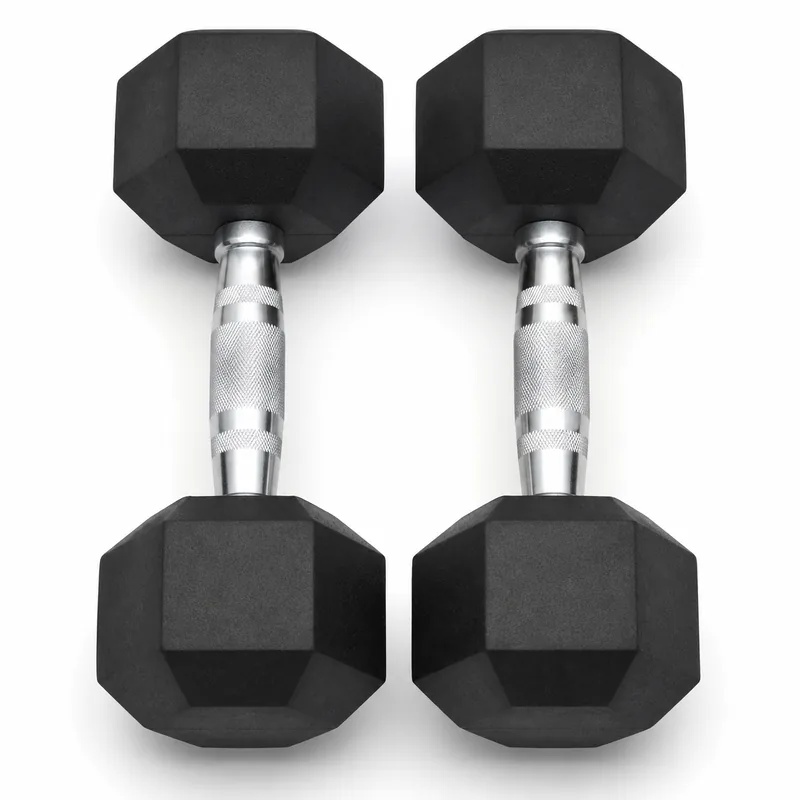
You don't need a rack of equipment. You don't need a cable machine. You don't even need a bench. A single pair of rubber hex dumbbells and a decent mat can build real strength, genuine muscle, and lasting fitness, if you follow a structured programme with progressive overload built in.
The reason dumbbell-only training works so well at home is simple: dumbbells force each side of your body to work independently. There's no barbell letting your dominant arm compensate. Your stabiliser muscles fire on every rep. And because you're standing, kneeling, or lying on the floor rather than locked into a machine, your core works overtime whether you're targeting it or not.
This four-week plan trains your entire body three days per week. Weeks 1-2 build your foundation with moderate volume and controlled tempos. Weeks 3-4 increase the intensity through added reps, slower eccentrics, and supersets. By the end, you'll be measurably stronger than when you started, and you'll know exactly how to keep progressing.
How to Pick the Right Weight
This is where most people either go too light and waste their time, or too heavy and wreck their form. Here's the honest rule of thumb:
- Too light: You finish your set and could easily do 5 more reps. Your muscles aren't really challenged.
- Just right: The last 2-3 reps of each set feel genuinely hard. Your form stays clean, but you're working.
- Too heavy: You can't complete the prescribed reps without swinging, arching your back, or losing control.
If you're brand new to training, start with 5kg dumbbells for upper body and 10kg for lower body. If you've been training for a few months, 10kg upper and 15-20kg lower is a solid starting point. Not sure? Our dumbbell weight guide walks through it in detail.
For this programme, ideally you'd have two pairs, a lighter set for pressing and isolation work, and a heavier set for squats, deadlifts, and rows. But if you only have one pair, that works too. Just adjust your rep tempo: slower on exercises that feel too easy, faster on those that feel too heavy.
The Programme Structure
Train three days per week with at least one rest day between sessions. A Monday, Wednesday, Friday split works well, but any three non-consecutive days are fine.
Each session has 6 exercises covering push, pull, squat, hinge, carry, and core. Rest 60-90 seconds between sets in Weeks 1-2, and 45-60 seconds in Weeks 3-4 to keep the intensity higher.
Weeks 1-2: Foundation Phase
The goal here is to learn the movements properly, build work capacity, and establish a baseline. Don't rush. Every rep should be controlled: 2 seconds up, 2 seconds down.
Day A, Push & Squat Focus
- Goblet Squat: 3 sets × 10 reps. Hold one dumbbell vertically at your chest. Feet shoulder-width, toes slightly out. Squat until thighs are parallel, chest up, heels planted. Drive up through mid-foot.
- Dumbbell Floor Press: 3 sets × 10 reps. Lie on your mat, knees bent, feet flat. Press dumbbells from chest height to full extension. Lower until upper arms touch the floor, this limits range of motion and protects your shoulders.
- Standing Overhead Press: 3 sets × 8 reps. Stand tall, core braced, dumbbells at shoulder height. Press straight up without arching your lower back. If you need to lean back to press, the weight is too heavy.
- Dumbbell Lunge (Alternating): 3 sets × 8 each leg. Dumbbells at your sides. Step forward, both knees at 90 degrees, back knee hovering above the floor. Push through front foot to return.
- Farmer's Carry: 3 sets × 30 seconds. Hold a dumbbell in each hand at your sides. Walk slowly with tall posture, shoulders packed down. This builds grip, core, and mental toughness.
- Dead Bug (Bodyweight): 3 sets × 8 each side. Lie on your back, arms extended to ceiling, knees at 90 degrees. Extend opposite arm and leg toward the floor without letting your lower back arch off the mat.
Day B, Pull & Hinge Focus
- Romanian Deadlift: 3 sets × 10 reps. Dumbbells in front of your thighs. Push hips back, sliding dumbbells along your legs until you feel a deep hamstring stretch. Back stays flat, think about pushing your bum toward the wall behind you.
- Bent-Over Row: 3 sets × 10 reps. Hinge forward at the hips, slight knee bend, back flat. Pull dumbbells to your ribcage, squeezing shoulder blades together at the top. Lower under control.
- Dumbbell Curl to Press: 3 sets × 8 reps. Curl dumbbells to shoulders, then immediately press overhead. Reverse the movement. Two exercises in one, efficient and effective.
- Single-Leg Deadlift: 3 sets × 8 each leg. Hold one dumbbell in the opposite hand to your standing leg. Hinge forward, extending the free leg behind you. Keep your hips square, don't let them rotate open.
- Renegade Row: 3 sets × 6 each side. Push-up position with hands on dumbbells. Row one dumbbell to your hip, bracing your core to prevent rotation. This is as much a core exercise as a back exercise.
- Suitcase Carry: 3 sets × 30 seconds each side. One dumbbell in one hand. Walk without leaning to that side. Your obliques will thank you, eventually.
Day C, Full Body
- Dumbbell Thruster: 3 sets × 10 reps. Squat with dumbbells at shoulders, then drive up explosively and press overhead in one fluid motion. This is the exercise that reminds you why you train.
- Dumbbell Floor Press (Neutral Grip): 3 sets × 10 reps. Same as before but palms facing each other. Slightly easier on the shoulders, works your triceps harder.
- Reverse Lunge: 3 sets × 8 each leg. Step backward instead of forward. Generally easier on the knees and better for balance development.
- Bent-Over Reverse Fly: 3 sets × 12 reps. Hinge forward, arms hanging. Raise dumbbells out to the sides with a slight elbow bend, squeezing your upper back. Use light weight, this is a precision movement.
- Dumbbell Swing: 3 sets × 15 reps. Hold one dumbbell with both hands. Hinge and swing it between your legs, then drive hips forward to swing to chest height. Don't use your arms to lift, the power comes from your hips.
- Plank with Dumbbell Pull-Through: 3 sets × 6 each side. Plank position with a dumbbell beside one hand. Reach under with the opposite hand, drag it across to the other side. Brutal core challenge.
Weeks 3-4: Progression Phase
Same exercises, higher intensity. Here's what changes:
- Add 2 reps to every set. If you did 10 reps in Weeks 1-2, you're doing 12 now.
- Slow the eccentric to 3 seconds. The lowering phase of each rep takes a full 3-count. This dramatically increases time under tension.
- Reduce rest to 45-60 seconds. Less recovery means your cardiovascular system works harder alongside your muscles.
- Add a superset on Day C. Pair the thruster with the reverse lunge, do one set of each back-to-back with no rest between them, then rest 60 seconds before repeating.
If the added reps feel manageable by the end of Week 4, you're ready to move up in dumbbell weight. Increase by 2-3kg and drop back to the Week 1-2 rep scheme. That's progressive overload in action.
Warm-Up and Cool Down
Don't skip these. Five minutes of warming up prevents injuries and makes your working sets feel better.
Warm-Up (5 Minutes)
- 30 seconds of jumping jacks or marching in place
- 10 bodyweight squats
- 10 arm circles each direction
- 5 inchworms
- 10 hip circles each direction
Cool Down (5 Minutes)
Spend 30-60 seconds in each stretch: quad stretch, hamstring stretch, chest doorway stretch, child's pose, and a seated spinal twist. A foam roller on your quads, IT band, and upper back after training will significantly improve your recovery between sessions.
What to Do After the 4 Weeks
You've got three options:
- Repeat with heavier dumbbells. Drop back to Week 1 rep ranges with a weight that's 2-3kg heavier. This is the simplest and most effective approach.
- Add a fourth training day. Split into upper/lower: two upper body days and two lower body days per week. This allows more volume per muscle group.
- Introduce new equipment. Resistance bands add variable tension that dumbbells can't replicate. A pull-up bar opens up an entirely new category of back and bicep exercises.
The key is to keep challenging yourself. Your body adapts to stimulus, if you lift the same weight for the same reps indefinitely, you'll plateau. Change something every 4-6 weeks: weight, reps, tempo, rest periods, or exercise selection.
Common Mistakes to Avoid
- Going too heavy too soon. Your connective tissue (tendons, ligaments) adapts slower than your muscles. Respect the foundation phase.
- Skipping lower body. Nobody loves leg day at first. But squats and deadlifts produce the biggest hormonal response, which helps your entire body grow stronger.
- Training through pain. Muscle soreness is normal. Joint pain is not. If something hurts in the joint, stop that exercise and find an alternative.
- Neglecting recovery. Muscles grow during rest, not during training. Sleep 7-8 hours, eat enough protein (1.6-2g per kg bodyweight), and take your rest days seriously.
Recommended Gear
Rubber hex, chrome handles. Perfect all-rounder.
$114 5kg Dumbbell PairIdeal for presses and isolation work
$48 15kg Dumbbell PairFor squats, deadlifts, and rows
$170 Insulated Water Bottle (750ml)Insulated stainless steel
$29Related Guides
- Full Body Dumbbell Workout: single-session workout if you want a one-off rather than a programme
- Dumbbell Exercises for Women: tailored exercise selection and weight recommendations
- What Size Dumbbells Should I Buy?: choose the right starting weight
- Dumbbell Weight Guide for Beginners: understand weight progression
- Best Dumbbells for Home Gym Australia: compare hex, chrome, and adjustable options
Ready to Start Your 4-Week Plan?
Grab a pair of rubber hex dumbbells and a mat. That's all you need to begin.
Shop Now