Why Cyclists Need Strength Training
Cycling is the most repetitive endurance sport. The same pedal stroke, with the same muscles, in the same hip and knee range, repeated 5,000-10,000 times per ride. The body adapts brilliantly to that demand, but only within that demand. Cyclists who don't strength train develop chronic muscular imbalances: tight hip flexors, weak glutes, hunched thoracic spines, and weak posterior chains. The result is the classic cyclist's body, strong quads but weak everywhere else, perpetually battling lower back pain, knee pain, and neck stiffness from hours in aero position.
Strength training fixes all of this. It improves power output (especially for sprinting and climbing), increases bone density (cyclists have measurably lower bone density than sedentary controls because cycling is non-weight-bearing), prevents the muscular imbalances that produce chronic pain, and extends your competitive lifespan by decades. Every Tour de France team has full-time strength coaches; recreational cyclists who don't lift are leaving free performance and injury prevention on the table.
Where Cyclists Are Weak
- Posterior chain. The pedalling motion barely uses the glutes and hamstrings. Cyclists are notoriously quad-dominant, and the imbalance contributes to lower back and knee problems.
- Core and trunk. Holding a cycling position for hours doesn't train the core dynamically, it loads it isometrically. Cyclists often have weak rotational core strength.
- Upper body. Almost completely untrained by cycling. Underdeveloped upper bodies contribute to neck and shoulder pain on long rides.
- Bone density. Cycling is non-weight-bearing. Without resistance training, cyclists develop measurably lower bone density than sedentary controls, a serious long-term concern.
- Single-leg stability. Cycling is technically a single-leg activity, but the bike provides stability the body never has to produce on its own. Off the bike, many cyclists are surprisingly unstable on one leg.
Equipment You Need
- A heavy pair of dumbbells: 15-25kg pair. Cyclists are stronger than they think; light weights waste training time.
- A medium pair of dumbbells: 8-12kg for accessory work and unilateral exercises.
- Resistance bands: for glute activation and accessory work.
- A pull-up bar: for upper body strength and the hanging spinal traction that cyclists need.
- A non-slip mat with cushion.
8 Strength Exercises Every Cyclist Needs
1. Romanian Deadlift
Hold a dumbbell in each hand. With knees slightly bent, hinge at the hips and lower the weights along the front of your legs. Keep your back flat. Drive your hips forward to return. Three sets of 6-8 with heavy dumbbells. The Romanian deadlift trains the glutes and hamstrings, the muscles most underdeveloped by cycling and most responsible for back protection.
2. Goblet Squat
Hold a single dumbbell vertically against your chest. Squat down deeply by pushing your hips back and bending your knees. Drive through your heels to stand. Three sets of 8-10 with a heavy dumbbell. The goblet squat builds the leg strength that translates to climbing power and out-of-the-saddle attacks.
3. Bulgarian Split Squat
Place the top of one foot on a sturdy bench. Hold dumbbells in each hand. Lower into a single-leg squat until your back knee is just above the floor. Drive through your front heel to return. Three sets of 8 per leg. Bulgarian split squats train single-leg power, exactly the pattern cycling demands but never trains.
4. Hip Thrust
Sit with your upper back against a couch or bench. Place a dumbbell across your hips. Drive your hips up until your torso is parallel to the floor. Squeeze your glutes hard at the top. Three sets of 10 with a heavy dumbbell. Hip thrusts directly target the glutes, the single most underdeveloped muscle in cyclists and the one most responsible for sprint and climbing power.
5. Bent-Over Row
Hinge forward at the hips with a dumbbell in each hand. Pull the weights toward your hips, squeezing your shoulder blades together. Three sets of 8-10 with heavy dumbbells. Rows train the upper back muscles that counter the forward-flexed cycling posture and prevent the upper back pain that defines long rides.
6. Standing Overhead Press
Stand with a dumbbell in each hand at shoulder height. Press the weights overhead. Three sets of 6-8. The overhead press loads the spine vertically, exactly the pattern cyclists never get on the bike. Essential for bone density.
7. Pallof Press
Anchor a resistance band at chest height. Stand sideways to it. Hold the band with both hands at your chest. Press the band straight out. The band pulls you toward the anchor; your obliques fight to keep you square. Three sets of 10 per side. Anti-rotation training is the single most important core work for cyclists, it builds the trunk stability needed for high-power efforts.
8. Dead Hang
Hang from a pull-up bar with straight arms. Hold for as long as you can. Three sets, working up to 60-second holds. Dead hangs decompress the spine and reverse the rounded thoracic posture cyclists develop. The single most underrated cycling-recovery exercise.
Two-Day Programme for Cyclists
Schedule strength work on easy or rest days. Avoid heavy lifting in the 24-48 hours before quality cycling sessions or races.
- Day A: Romanian deadlift 4×6, goblet squat 3×8, hip thrust 3×10, bent-over row 3×8, side plank 3×30s.
- Day B: Bulgarian split squat 3×8 per leg, overhead press 3×6, Pallof press 3×10 per side, dead hang 3×30s, banded lateral walk 3×15 per side.
Strength Training and Cycling Performance
Multiple meta-analyses now confirm that 8-12 weeks of heavy strength training (sets of 4-6 reps with heavy weights, not endurance-style high-rep work) improves cycling power output by 5-10% in trained cyclists. The improvement comes from neural adaptations (better recruitment of muscle fibres) and improved economy (less energy wasted on stabilisation). Heavy strength training does NOT produce significant muscle mass gains in endurance athletes consuming normal calories, so the fear of getting heavier is unfounded.
The strength gains are particularly valuable for sprinting, climbing, and time trial efforts, where peak power output matters. Long-distance steady riders see smaller direct performance gains but enormous injury prevention benefits.
Bone Density: A Hidden Crisis
Studies consistently show that competitive cyclists have lower bone mineral density than age-matched controls, even sedentary controls. A 30-year-old elite cyclist often has the bone density of a 60-year-old non-athlete. The cause is the non-weight-bearing nature of the sport plus the high training volume that produces calcium loss through sweat.
Strength training is the most effective treatment. Heavy compound lifts (squats, deadlifts, overhead presses) load bones in the patterns that drive density adaptations. Two sessions per week, sustained over years, produce measurable bone density improvements that cycling alone cannot.
Common Cyclist Mistakes
- High-rep, light weight "endurance" lifting. Doesn't produce strength adaptations. Lift heavy with low-to-moderate reps.
- Skipping upper body work. Adds bike fit problems, neck pain, and bone density issues.
- Avoiding strength training during racing season. Maintenance work (1 weekly session) preserves gains and prevents the late-season collapse common in cyclists who only lift in the off-season.
- Only training the legs. Cycling is a whole-body activity in terms of stabilisation, even if the legs do most of the visible work.
- Forgetting recovery. Combine high training volume with low recovery and the strength gains never come. Sleep, eat well, and don't add strength work without removing some cycling volume during high-stress training periods.
Recommended Gear
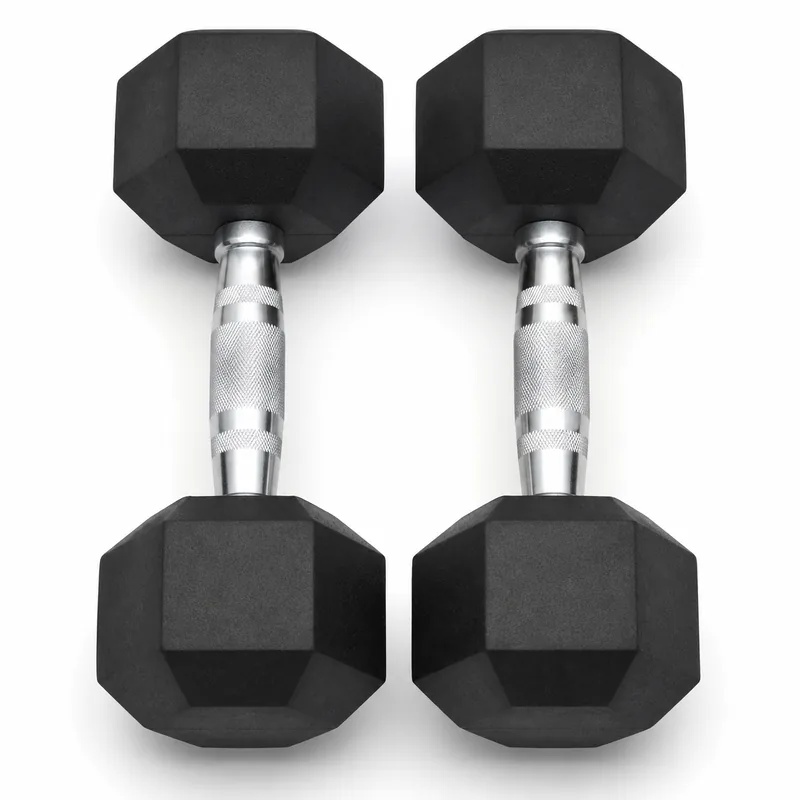
Bread-and-butter weight for cyclist strength training. Romanian deadlifts, rows, hip thrusts.
$109 Rubber Hex Dumbbells (20kg pair)Heavy enough for serious strength gains. Most cyclists progress here within 6 months.
$139 Rubber Hex Dumbbells (10kg pair)Single-leg work and overhead pressing. The most-used weight for accessory exercises.
$79 Doorway Pull-Up BarDead hangs and pull-ups. Essential for spinal traction and upper body strength.
$55 Resistance Tube Set with HandlesPallof presses and accessory work. The variable resistance bands provide is ideal for stability training.
$45 PeterMat ZeroHeavy-duty 1m × 1m mat for floor work and heavy lifting. Protects floors during heavy dumbbell sets.
$79Frequently Asked Questions
Will strength training make me bulky?
Not at the volumes endurance athletes train. Significant muscle mass gains require deliberate caloric surplus and high-volume hypertrophy programming, incompatible with high-volume cycling. Two strength sessions per week produce strength adaptations without significant mass.
How heavy should I lift?
Heavy. 4-8 reps with weights that genuinely challenge you. Endurance-style high-rep light work doesn't produce strength adaptations and adds fatigue without benefit.
When should I strength train?
On easy days or rest days, never in the 24-48 hours before quality cycling sessions. The fatigue from heavy lifting impairs running and cycling mechanics for 1-2 days.
Will I lose strength gains during racing season?
Not if you maintain. One strength session per week through racing season preserves gains. Two-week complete breaks won't lose much. Multi-month off-season-only strength training produces a sawtooth pattern that's worse than consistent year-round work.
What about during a build phase?
Reduce strength volume but maintain frequency. One full session and one shorter maintenance session per week is enough to preserve adaptations without compromising cycling fitness.
Do I need a barbell?
No. Heavy dumbbells (20-25kg pairs) produce enough stimulus for almost all cyclists. By the time you've outgrown 20kg pairs, you're stronger than 95% of cyclists.
Related Guides
- Posture Correction Exercises: fix the rounded thoracic spine cyclists develop
- Hip Mobility Exercises: address the tight hips from hours in cycling position
- Lower Back Strengthening: prevent the back pain that plagues most cyclists
- Bone Density Exercises: address the low bone density caused by non-weight-bearing cycling
- Foam Roller Recovery: release the tight cyclist hip flexors and IT bands
- Isometric Exercises at Home: Low-Impact Strength Building: Isometric exercises build real strength without joint stress.
- Strength Training for Runners at Home: Strength training is the most underrated factor in running performance and injury prevention.
Build Your Cyclist Strength Kit
Heavy dumbbells (10kg, 15kg, 20kg pairs), a doorway pull-up bar, resistance tubes, and a heavy-duty mat. The complete cycling-strength toolkit. Free shipping on orders over $75.
Shop Now